5 Evidence-Based Breathing Techniques That Cut Stress in Under Two Minutes
Take a slow, deep breath. Right now, before you read another word. Inhale through your nose, and let it out with a sigh. Did you feel that? That subtle shift from tension to release, from scattered th
Take a slow, deep breath. Right now, before you read another word. Inhale through your nose, and let it out with a sigh. Did you feel that? That subtle shift from tension to release, from scattered thoughts to a moment of stillness? This isn't just a feeling; it’s a profound physiological event, a direct line of communication to your body's stress-control center. In a world that constantly demands more of our attention and energy, we often forget that the most powerful tool for managing stress is not in an app or a pill, but is already within us, rising and falling with every moment. So, let’s explore how to harness this innate superpower with simple, evidence-based techniques that can bring you back to your center in less than two minutes.

What is Breathwork and Why Does It Work?
Breathwork refers to any practice that involves conscious control of your breathing patterns. Its primary benefit for stress reduction lies in its ability to influence the autonomic nervous system (ANS). The ANS has two main branches: the sympathetic nervous system (our "fight-or-flight" response) and the parasympathetic nervous system (our "rest-and-digest" response). When we're stressed, the sympathetic system is in overdrive, flooding us with cortisol and adrenaline. Intentional breathing, especially with a focus on long exhales, activates the parasympathetic system, telling your body it's safe to calm down. 🌱
This magical switch is flipped in large part by the vagus nerve, the longest cranial nerve in the body, which runs from the brainstem down to the abdomen. It acts as a superhighway of information between your brain and your major organs, including your heart and lungs. When you breathe slowly and deeply, you stimulate the vagus nerve, which in turn slows your heart rate, lowers your blood pressure, and signals your brain to relax. It’s a direct, biological hack to move from a state of high alert to one of calm and control. Different breathing patterns create slightly different effects, but all of them leverage this powerful mind-body connection.
7 Evidence-Based Breathing Techniques to Try Today
Ready to reclaim your calm? Here are seven powerful breathing exercises you can try right now. Each one is backed by science and can be done anywhere, anytime you need a reset. We'll explore how to do them, why they work, and what situations they're best for.
1. The Physiological Sigh
The physiological sigh is what your body naturally does to reset itself. You’ve probably done it without thinking after a good cry or when you’re finally falling asleep. Research from Stanford University has shown that it is the fastest way to offload carbon dioxide and reduce feelings of stress in the moment. It involves a unique double inhale that re-inflates collapsed alveoli (tiny air sacs) in your lungs.
To practice it, take a deep inhale through your nose. Then, without fully exhaling, take another short, sharp inhale to fill your lungs completely. Finally, let it all go with a long, slow, extended exhale through your mouth. That’s it. Just one to three rounds can create a noticeable shift in your state of being, making it an incredibly effective tool for moments of acute stress or overwhelm.
- Best for: Immediately calming down during a moment of high stress or panic.
- Pro tip: Don't force the second inhale. Think of it as just "sneaking in" a little more air at the very top of your breath before the long, relaxing release. 💧
2. Box Breathing (or Square Breathing)
Box breathing is a simple yet powerful technique for regulating your nervous system and promoting focus. It’s famously used by Navy SEALs, athletes, and doctors to stay calm and centered under pressure. The practice gets its name from its four-sided, symmetrical structure: inhale, hold, exhale, hold, all for the same duration. This rhythmic pattern is incredibly grounding.
To try it, find a comfortable seat. Exhale all the air from your lungs. Then, inhale slowly through your nose for a count of four. Hold your breath for a count of four. Exhale slowly through your mouth for a count of four. Hold your breath at the bottom for a count of four. Repeat this square pattern for one to two minutes, focusing on the counting and the sensation of your breath. The equal pacing helps balance your nervous system and the cognitive load of counting gives your anxious mind a simple job to do.
- Best for: Reducing anxiety before a stressful event, like a presentation or difficult conversation.
- Pro tip: Visualize yourself tracing a square as you breathe. Inhale as you trace up one side, hold as you trace across the top, exhale as you trace down the other side, and hold as you trace the bottom.
3. The 4-7-8 Technique
Developed by Dr. Andrew Weil, the 4-7-8 breathing technique is a deeply relaxing practice often called a "natural tranquilizer for the nervous system." It is especially effective for combating anxiety and helping you fall asleep. The magic of this technique lies in its extended exhale, which powerfully activates the parasympathetic "rest-and-digest" system.
To practice 4-7-8 breathing, place the tip of your tongue against the ridge of tissue just behind your upper front teeth and keep it there throughout the entire exercise. Exhale completely through your mouth, making a whooshing sound. Close your mouth and inhale quietly through your nose to a mental count of four. Hold your breath for a count of seven. Exhale completely through your mouth, making a whooshing sound, for a count of eight. This completes one breath. Inhale again and repeat the cycle three more times for a total of four breaths.
- Best for: Falling asleep, calming racing thoughts at night, or dealing with a sudden wave of anxiety.
- Pro tip: The absolute time you spend on each phase is not as important as keeping the 4:7:8 ratio. If holding for seven seconds is too long, try a shorter cycle like 2:3.5:4. The key is the long exhale. 🧘
4. Diaphragmatic (Belly) Breathing
Diaphragmatic breathing is the foundational skill for all healthy breathing. Most adults are "chest breathers," taking shallow breaths that only use a fraction of their lung capacity and can contribute to feelings of anxiety. Belly breathing retrains you to use your diaphragm, the large dome-shaped muscle at the base of your lungs, for a deeper, more efficient breath.
Lie on your back or sit comfortably. Place one hand on your upper chest and the other on your belly, just below your rib cage. Breathe in slowly through your nose, focusing on sending the air deep into your belly. The hand on your belly should rise, while the hand on your chest remains relatively still. Exhale slowly through your mouth, feeling the hand on your belly fall as you gently press the air out. Practicing this for just a few minutes a day can strengthen your diaphragm and make this calming breath your natural default.
- Best for: Building a foundational breathing practice, managing general daily stress, and improving lung efficiency.
- Pro tip: Imagine a balloon in your stomach. As you inhale, you fill the balloon with air. As you exhale, the balloon deflates. This visualization can help you engage the correct muscles.
5. Cyclic Hyperventilation (Inspired by Tummo/Wim Hof Method)
Cyclic hyperventilation is a more intense, activating breathing practice. Important safety note: This technique should always be done in a safe, seated or lying position and never in or near water. It is not recommended for individuals who are pregnant or have a history of cardiovascular issues, high blood pressure, or seizures. Please proceed with mindfulness and respect for your body's limits.
The practice involves taking 25-30 deep, rapid breaths, in and out, through the mouth or nose. Don't pause between the inhale and exhale; think of it like blowing up a balloon. After the final exhale, let the air out naturally (don't force it) and hold your breath for as long as you can comfortably. When you feel the urge to breathe, take one deep recovery breath in and hold it for 15-20 seconds before releasing. This cycle typically induces a temporary state of stress (releasing adrenaline) followed by a profound state of calm and clarity.
- Best for: An energizing mental reset, building mental resilience, or preparing for a challenge.
- Pro tip: Start slow. Your first time, aim for just one round of 20 breaths with a shorter breath-hold. Pay close attention to how your body feels. You might experience tingling or light-headedness, which is normal for this practice. ✨
6. Resonance Breathing (Coherent Breathing)
Resonance breathing involves slowing your breath down to a specific rate—typically between 4.5 and 6.5 breaths per minute. At this "resonant frequency," your heart rate, blood pressure, and brainwaves fall into a state of coherence and synchrony, promoting a powerful sense of balance and calm. Many guided meditation apps use this timing.
To practice, simply find a comfortable position and begin to breathe in for a count of five and out for a count of five. You can use a timer or a guided breathing app to help you keep the pace. The goal is to make the inhale and exhale smooth, gentle, and of equal length. This steady rhythm sends a continuous signal of safety to your nervous system, improving your heart rate variability (HRV), a key indicator of your body's resilience to stress.
- Best for: Daily stress management, improving focus, and increasing heart rate variability (HRV).
- Pro tip: Try humming on the exhale. The vibration can further stimulate the vagus nerve, enhancing the calming effect of the practice. 🕊️
7. Integrating Breathwork Into Your Daily Routine
The most effective breathing technique is the one you actually use. The final, and perhaps most crucial, step is to weave these practices into the fabric of your day so they become second nature. This isn't a technique itself, but a strategy to make the others stick. The goal is to move from reactive breathing (using it only when you're already stressed) to proactive breathing (using it to maintain a state of calm).
A great way to do this is through "habit stacking." Link a minute of breathwork to an existing daily habit. For example: "After I pour my morning coffee, I will do three physiological sighs." Or, "Before I open my laptop for work, I will do one minute of box breathing." You can also set gentle reminders on your phone or place a sticky note on your monitor to cue a "breathing break." Over time, these small, consistent efforts build a powerful and resilient nervous system.
- Best for: Turning knowledge into a sustainable, life-changing habit.
- Pro tip: Choose one "trigger" moment in your day—like waiting for the elevator, stopping at a red light, or before answering a phone call—and commit to taking just one conscious, diaphragmatic breath. This micro-practice builds mindfulness throughout the day.
Comparing the Techniques: Which Breath is Best for You?
Choosing the right breathing technique depends on your goal and the situation. While all these practices are beneficial, they have different strengths. The physiological sigh is an emergency brake for acute stress, while diaphragmatic breathing is more like a daily tune-up for your nervous system. Here’s a quick comparison to help you decide which tool to pull from your toolkit.
| Technique | Primary Goal | Best For | Key Feature |
|---|---|---|---|
| Physiological Sigh | Instant Calm | Moments of acute stress, overwhelm | Sharp double inhale, long exhale |
| Box Breathing | Regulation & Focus | Pre-event anxiety, need for concentration | Symmetrical 4-part rhythm |
| 4-7-8 Breathing | Deep Relaxation | Insomnia, bedtime anxiety, racing thoughts | Very long exhale (8 counts) |
| Diaphragmatic Breathing | Foundational Calm | Daily practice, improving lung function | Inhale expands the belly, not the chest |
| Cyclic Hyperventilation | Energizing Reset | Pre-challenge prep, building resilience | Rapid inhales followed by a long breath-hold |
| Resonance Breathing | System Coherence | Daily maintenance, improving HRV | Equal inhale and exhale (around 5-6s each) |
The Science of a Good Exhale
We often talk about the importance of a deep inhale, but the real secret to stress relief is found in the exhale. Your heart rate naturally speeds up slightly when you inhale and slows down when you exhale. By intentionally extending the exhalation phase of your breath, you are directly telling your heart to slow down, which in turn sends a powerful calming signal to your brain via the vagus nerve.
"While we often focus on the inhale as taking in life-giving oxygen, the long, slow exhale is the secret key to unlocking your body's innate relaxation response."
Think of it this way: the inhale is associated with the sympathetic (fight-or-flight) system—it prepares you for action. The exhale is associated with the parasympathetic (rest-and-digest) system—it signals safety and recovery. Techniques like the 4-7-8 method, with its extra-long exhale, or the physiological sigh, with its complete release of air, are so effective precisely because they capitalize on this biological mechanism. When in doubt, just focus on making your next exhale longer than your inhale. 🌿
Charting Your Progress: From Stress to Serenity
How do you know if it's working? Beyond just "feeling better," you can track your progress with a simple tool called the Subjective Units of Distress Scale (SUDs). Before you start a breathing exercise, rate your stress level on a scale from 1 (totally calm) to 10 (highest possible stress). After just one or two minutes of practice, rate it again. You will likely see a noticeable drop. Charting this over time can be incredibly motivating and helps you see the tangible impact of your practice. 📊
Here's an example of what that shift might look like:
Stress Level (1-10)
10 |         XXXXXXX
 9 |        X       X
 8 |       X         X  <-- Before Breathing
 7 |      X           X
 6 |
 5 |
 4 |                     X
 3 |                      X <-- After 2 Mins of Box Breathing
 2 |                       X
 1 +------------------------>
   Time
This simple act of measuring makes the invisible process of stress reduction visible and reinforces the effectiveness of your new habit.
Frequently Asked Questions
Can I practice these breathing exercises too much?
For most of these techniques (like Box Breathing, Diaphragmatic Breathing, and Resonance Breathing), it's very difficult to overdo it. Practicing for 5-20 minutes a day is a wonderful goal. For more intense practices like Cyclic Hyperventilation, it's best to stick to just 1-3 rounds per session and listen closely to your body's signals. The key is consistency, not intensity.
What should I do if I feel dizzy or light-headed?
Feeling a little light-headed, especially when you're new to breathwork, is common. It's often a sign that your body is adjusting to different levels of oxygen and carbon dioxide. If this happens, simply stop the exercise and return to your normal breathing pattern. Sit quietly for a moment until the feeling passes. Usually, this sensation lessens as your body becomes more accustomed to the practice. With Cyclic Hyperventilation, this feeling is an expected part of the process, which is why doing it in a safe, seated position is critical.
How long does it take to see benefits from breathwork?
The beauty of breathwork is that you can feel immediate benefits. A single physiological sigh can reduce stress in seconds. However, the long-term benefits—like a more resilient nervous system, lower baseline stress, and better emotional regulation—come from consistent practice. Think of it like physical exercise. You feel good after one workout, but you build lasting strength by going to the gym regularly. Committing to just five minutes a day can create profound changes over weeks and months.💡
When to See a Professional
While these breathing techniques are powerful tools for managing everyday stress and anxiety, they are not a substitute for professional medical or psychological care. If you are experiencing chronic anxiety, panic attacks, overwhelming stress that interferes with your daily life, or symptoms related to trauma, it is important to speak with a doctor, therapist, or other qualified mental health professional. They can provide a comprehensive diagnosis and a treatment plan tailored to your specific needs.
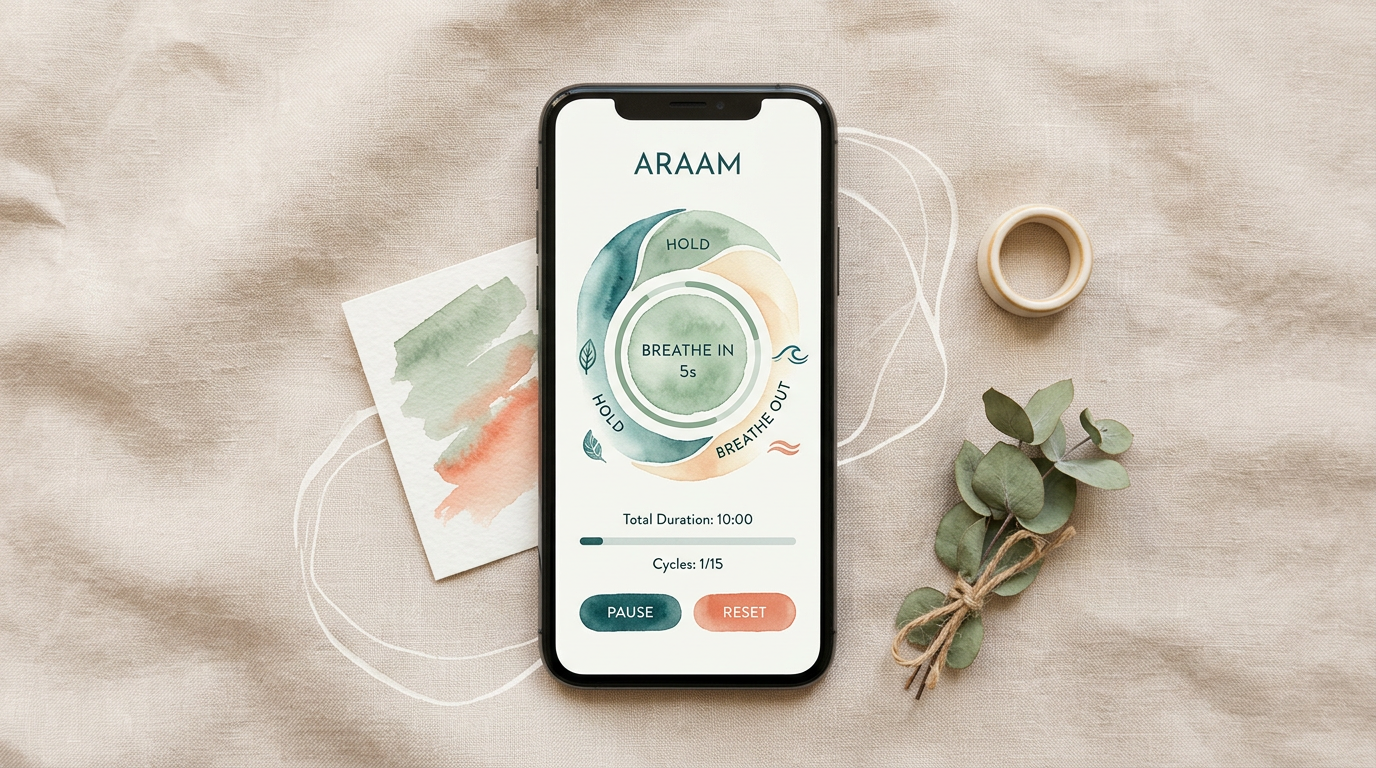
Ready to make mindful breathing a consistent part of your wellness journey? The Araam app offers guided breathing exercises, timers, and progress tracking to help you build a lasting habit. Take your first conscious breath with us today.