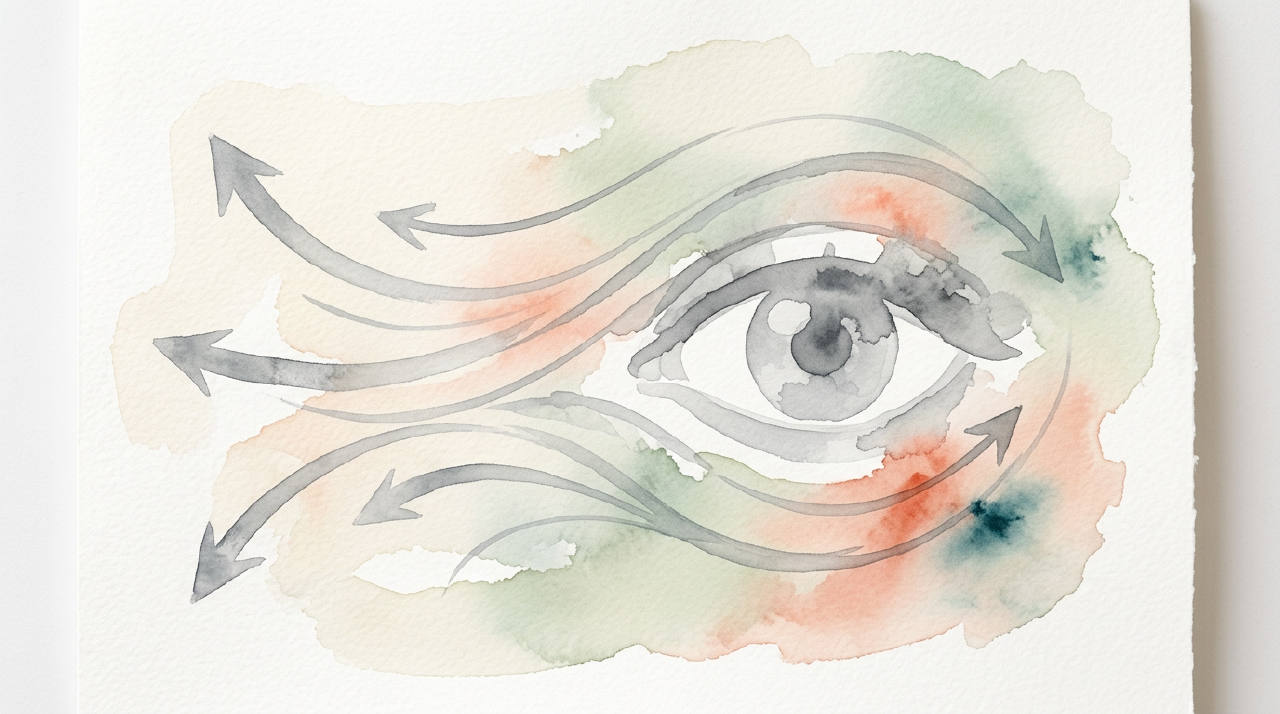
EMDR Explained: How 8 Sessions Can Process Trauma
Have you ever had a memory that feels less like a story you can tell and more like a place you get stuck in? It’s a fragment of the past that refuses to fade, replaying with the same raw intensity, th
Have you ever had a memory that feels less like a story you can tell and more like a place you get stuck in? It’s a fragment of the past that refuses to fade, replaying with the same raw intensity, the same physical sensations, as if it were happening right now. While most of our experiences are neatly filed away by our brains, some—particularly traumatic ones—can become trapped, creating a kind of mental and emotional glitch. This is where a powerful, evidence-based therapy called Eye Movement Desensitization and Reprocessing, or EMDR, comes in. It’s a unique approach that doesn't require you to talk at length about the distressing event, but instead helps your brain do what it does best: heal itself.
[[IMAGE:fig1|A close-up shot of two distinct threads. One is a tangled, knotted mess of gray and dark colors. The other is a smooth, straight, brightly colored thread flowing neatly beside it.|Illustrative representation of an unprocessed, tangled memory versus a smoothly processed, integrated memory.]]
What Exactly Is EMDR Therapy?
EMDR stands for Eye Movement Desensitization and Reprocessing. At its core, EMDR is a structured psychotherapy that helps people heal from the emotional distress and symptoms that result from disturbing life experiences. Developed by psychologist Dr. Francine Shapiro in the late 1980s, it’s most well-known for treating post-traumatic stress disorder (PTSD), but its application has grown to include anxiety, depression, panic attacks, and other issues rooted in distressing memories.
Unlike traditional talk therapy, which often focuses on changing the emotions, thoughts, and behaviors resulting from trauma, EMDR targets the memory itself. The goal is to change the way the memory is stored in the brain, allowing you to recall the event without reliving the overwhelming emotional and physical charge. It's based on the idea that the mind, like the body, can heal from psychological trauma. If a wound is blocked by a foreign object, it festers; remove the block, and healing resumes. EMDR aims to remove that "block" in our neural pathways.
The "Eye Movement" part of the name is the most famous component, but it's just one piece of the puzzle. The therapy uses a form of "bilateral stimulation" (BLS)—rhythmically engaging the left and right sides of the body—which can involve guided eye movements, hand-held tappers that vibrate, or alternating sounds played through headphones. This BLS is thought to help "jump-start" the brain's natural information processing system, much like what happens during Rapid Eye Movement (REM) sleep when our brains work to process the day's events. 🌱
The Science-ish Bit: How Does EMDR Work?
The guiding theory behind EMDR is the Adaptive Information Processing (AIP) model. This model proposes that our brains have a natural, built-in system for processing information and experiences, moving them toward an "adaptive" resolution. Think about a minor argument you had last week. Your brain likely processed it: you learned something, integrated the experience, and moved on. The memory is there, but it doesn't send a jolt of anger through you every time you think about it.
However, a traumatic or highly distressing event can overwhelm this system. The memory gets "stuck" and is stored in its raw, unprocessed form—with all the original pictures, sounds, thoughts, and physical sensations. When this happens, the past is constantly intruding on the present. A car backfiring might trigger the same terror you felt during a past accident, or a certain scent might bring back a flood of grief.
EMDR, with its use of bilateral stimulation while you briefly focus on the traumatic memory, appears to stimulate the AIP system. It allows the brain to finally connect the "stok" memory with more adaptive information that's already stored in other memory networks. For example, the part of your brain that knows "I am safe now" can finally connect with the part that holds the memory of "I was in danger then." The memory doesn't disappear, but it's integrated into your larger life story. It becomes a memory of something that happened, not something that is happening. ✨
[[IMAGE:fig2|An abstract, beautiful illustration of a human brain silhouette. Inside, tangled, dark lines on one side are being re-woven into a neat, glowing, interconnected pattern on the other side, symbolizing neural integration and healing.|Conceptual image of EMDR helping the brain to re-wire and process a traumatic memory, moving from chaos to order.]]
A Journey in Eight Phases: The EMDR Process Unpacked
EMDR is not a single technique but a comprehensive, eight-phase therapeutic approach. While often associated with its rapid results (the "8 sessions" idea comes from the standard protocol for a single-incident trauma), the timeline is flexible and tailored to each individual's needs. Rushing the process is counterproductive; safety and stability are paramount. 🧘
Phase 1: History and Treatment Planning
This is where you and your therapist get to know each other. It’s similar to the intake process in other therapies. You’ll discuss your history, what brings you to therapy, and your goals. The therapist will assess your readiness for EMDR and develop a treatment plan. This isn't about diving deep into trauma details yet; it's about building a trusting relationship and creating a roadmap for your healing journey. The therapist will identify potential target memories to work on in later sessions.
Phase 2: Preparation
This phase is crucial and can take several sessions. Your therapist will equip you with tools and resources for emotional regulation. You can't process a storm without a safe harbor to return to. You’ll learn grounding techniques, stress-reduction skills, and most famously, the "Safe Place" or "Calm Place" visualization exercise. This is an imaginary sanctuary you can mentally retreat to anytime you feel overwhelmed, both during and between sessions. This phase ensures you have the skills to manage any distress that comes up, empowering you to feel in control of your own healing process. 💧
Phase 3: Assessment
Once you have your coping skills in place, you and your therapist will select the first specific memory to target. For this target, you'll identify a few key components:
- The Image: The most vivid, representative image of the memory.
- The Negative Cognition (NC): The negative belief you hold about yourself related to the memory (e.g., "I am worthless," "I am not safe," "It was my fault").
- The Positive Cognition (PC): The positive belief you'd rather hold (e.g., "I am worthy," "I am safe now," "I did the best I could").
- Emotions and Body Sensations: You'll rate the level of distress the memory causes and identify where you feel it in your body.
Phases 4-7: The Core Processing Work
These phases are the heart of EMDR and are often repeated within a single session.
-
Phase 4: Desensitization: This is where the bilateral stimulation begins. You’ll hold the target memory in mind while following the therapist’s moving fingers, listening to alternating tones, or feeling alternating taps. You aren’t asked to talk, just to let your brain go wherever it needs to go. The therapist will periodically stop and ask, "What are you noticing now?" New insights, memories, or feelings may arise. The goal here is to lower your distress level associated with the target memory until it’s neutral or minimal.
-
Phase 5: Installation: Once the distress is significantly reduced, the focus shifts to strengthening your preferred Positive Cognition (PC). You’ll pair the PC with the original memory while more sets of BLS are administered. The goal is to fully integrate the positive belief, making it feel true and authentic.
-
Phase 6: Body Scan: Our bodies often hold onto trauma. In this phase, you'll be asked to mentally scan your body for any residual tension or discomfort while thinking of the original target memory and the new positive belief. If any lingering physical distress is found, it's targeted with more BLS until it resolves.
-
Phase 7: Closure: Every session, whether processing is complete or not, ends with Closure. The therapist ensures you leave the session feeling calm and grounded. You might use the "Safe Place" exercise or other relaxation techniques you learned in Phase 2. The goal is to help you return to a state of equilibrium before you walk out the door. Your therapist will also prepare you for what to expect between sessions, as processing can sometimes continue subconsciously. 🌿
I used to think of my trauma as a permanent stain on my life. After EMDR, it's more like a scar. I know it's there, and I know the story of how I got it, but it doesn't hurt to touch anymore. It’s just a part of my skin, a part of my story.
Phase 8: Reevaluation
This happens at the beginning of every new session. You and your therapist will check in on the work from the previous session. How are you feeling about the old target memory? Have any new insights or related memories surfaced? This evaluation guides the current session, ensuring that the healing is stable and complete before moving on to the next target.
EMDR vs. Other Trauma Therapies: A Quick Comparison
It can be helpful to see how EMDR stacks up against other common therapeutic approaches for trauma. While all aim for healing, their methods differ significantly.
| Feature | EMDR Therapy | Trauma-Focused CBT (TF-CBT) | Psychodynamic (Talk) Therapy |
|---|---|---|---|
| Primary Focus | Processing how the memory is stored and the associated bodily sensations. | Changing the relationship between thoughts, feelings, and behaviors related to the trauma. | Uncovering unconscious patterns and understanding how past experiences influence present behavior. |
| Key Technique | Bilateral Stimulation (eye movements, taps, tones) while focusing on the memory. | Cognitive restructuring (challenging unhelpful thoughts) and gradual exposure to trauma reminders. | Free association, dream analysis, and exploring the therapeutic relationship. |
| Role of Talking | Minimal talking during processing. Focus is on internal experience. Client does not have to share details. | Significant verbal processing. Involves creating a "trauma narrative" to read and share. | The primary mode of therapy. Relies heavily on verbal exploration and narrative. |
| Typical Duration | Often shorter-term. An 8-20 session protocol is common for single-incident trauma. | Typically a finite number of sessions (around 12-20) with a clear, structured protocol. | Often long-term and open-ended, lasting months or years. |
How a Memory Gets "Unstuck"
Here's a simplified visual of what EMDR helps the brain accomplish. 📊
          [THE STUCK MEMORY]
   Raw, fragmented, emotionally charged
(Sights, sounds, body sensations, negative beliefs)
                 |
                 V
+------------------------------------------+
|          EMDR PROCESSING SESSION         |
|     (Bilateral Stimulation Applied)      |
|                                          |
|  - Brain's natural processing is engaged |
|  - New connections are formed           |
|  - Links to adaptive info are made       |
|    ("I am safe now," "It is over")       |
+------------------------------------------+
                 |
                 V
           [THE PROCESSED MEMORY]
  Integrated, narrative, adaptively stored
  (It's a story from the past, not a current threat)
Is EMDR Right for You? Exploring the Prerequisites and Limitations
EMDR is a powerful and effective therapy, but it’s not a magic wand, and it’s not for everyone at every stage of their journey. Successful EMDR therapy depends on a foundation of safety and stability. 💡
Who is a good candidate for EMDR?
EMDR can be beneficial for individuals experiencing:
- Post-Traumatic Stress Disorder (PTSD) from a single event (accident, assault) or complex trauma (childhood abuse, domestic violence).
- Anxiety, phobias, and panic disorders.
- Grief and loss.
- Depression that is linked to distressing past events.
- Performance anxiety.
- Chronic pain with a psychological component.
Prerequisites for Starting EMDR
Before beginning the processing phases of EMDR, it's important that a person has:
- A degree of stability: This means having a reasonably safe and stable living situation. It's difficult to process past threats if you are currently in an unsafe environment.
- Willingness to feel discomfort: The process can temporarily bring up distressing emotions and sensations. A willingness to trust the process and your therapist is key.
- The ability to use coping skills: This is why Phase 2 is so important. You need to be able to self-soothe and ground yourself when needed.
- No active substance use disorder: Active, unmanaged addiction can interfere with the brain's ability to process information and regulate emotions, making EMDR less effective and potentially destabilizing. It's often recommended to address substance use first.
- A strong therapeutic alliance: You must trust your therapist and feel safe in the therapeutic relationship.
It's important to have a thorough assessment with a trained EMDR therapist to determine if it's the right fit for you at this time.
Frequently Asked Questions About EMDR
Is EMDR a form of hypnosis?
No. This is a common misconception. In hypnosis, you are guided into a state of focused attention and heightened suggestibility. In EMDR, you are fully awake, alert, and in control the entire time. You are an active participant, and you can stop the process at any moment.
How long does EMDR take to work?
It varies greatly. For a single, straightforward trauma, some people find significant relief in as few as 6-12 sessions. For individuals with complex or developmental trauma (multiple events over a long period), the process will take longer, as more time is needed for the preparation phase and for processing multiple targets.
Does EMDR make you forget the memory?
Absolutely not. The goal of EMDR is not to erase memories. The goal is to reprocess them. The memory will still be there, but it will lose its painful emotional charge. It will become just another memory—one that no longer holds power over your present-day life. You remember it, but you don't relive it.
Finding Peace After Trauma 🕊️
Trauma can make the world feel small and your future feel limited. It can convince you that the past is destined to repeat itself forever. But therapies like EMDR offer a powerful counter-narrative: healing is possible, and the brain has a remarkable capacity to recover. By helping our own internal systems get "unstuck," we can transform memories from sources of pain into integrated parts of our story, allowing us to move forward with greater freedom, resilience, and peace.
When to see a professional
If you are experiencing symptoms of trauma—such as flashbacks, nightmares, severe anxiety, avoidance of certain situations, or feeling constantly on edge—it is vital to seek support from a qualified mental health professional. An EMDR-certified therapist can conduct a full assessment to see if this type of therapy is right for you. You don't have to navigate the echoes of the past alone.
The journey of healing is unique for each of us. As you explore pathways to wellness, remember that support comes in many forms. The Araam app is here to be a companion on your journey, offering tools for mindfulness, grounding, and self-reflection that can complement your therapeutic work and support your mental health every day.