The Complete Guide to Female Hormones and Mood: Cycle to Menopause
From the gentle ebb of your monthly cycle to the transformative tides of menopause, the female body is in a constant, dynamic dance with its hormones. For many, this internal rhythm feels like a myste
From the gentle ebb of your monthly cycle to the transformative tides of menopause, the female body is in a constant, dynamic dance with its hormones. For many, this internal rhythm feels like a mysterious force, one that can fill you with creative energy one week and leave you feeling tearful and depleted the next. But what if we could learn the steps to this dance? Understanding the intricate connection between your hormones and your mood is not about controlling or "fixing" yourself; it's about cultivating a deeper sense of self-awareness and compassion. It’s about learning to work with your body, not against it, empowering you to navigate your own internal weather with grace and wisdom. 🌱
Table of Contents
- Understanding the Main Players: Your Hormonal Orchestra
- The Four Phases of Your Menstrual Cycle & Their Mood Map
- Syncing Your Life With Your Cycle: A Practical Guide
- Beyond the Monthly Cycle: Perimenopause and Menopause
- When the Waves Feel Like a Tsunami: PMDD and Other Considerations
- Frequently Asked Questions
Understanding the Main Players: Your Hormonal Orchestra
Your mood and energy levels are directly influenced by a complex interplay of hormones, primarily estrogen, progesterone, and testosterone. Think of them as the principal musicians in your body's orchestra. When they play in harmony, you feel balanced and well. When one section is too loud or another goes quiet, the entire symphony can feel off-key.
- Estrogen (The Energizer ✨): Produced mainly in your ovaries, estrogen is your "feel-good" hormone. It helps produce serotonin and dopamine, neurotransmitters associated with happiness, motivation, and sharp thinking. When estrogen is high, you might feel more optimistic, social, and energetic. When it drops, it can contribute to feelings of sadness, irritability, and brain fog.
- Progesterone (The Calmer 🕊️): Released after ovulation, progesterone has a soothing, almost sedative-like effect. It helps prepare the uterine lining for a potential pregnancy and can promote calmness and sleep. Its breakdown products interact with GABA receptors in the brain, which have an anti-anxiety effect. However, for some, the shift in progesterone can also lead to low mood or anxiety, especially right before a period.
- Testosterone (The Driver 💡): While often considered a "male" hormone, testosterone is crucial for women, too. Produced in the ovaries and adrenal glands, it plays a key role in libido, motivation, confidence, and muscle mass. Its levels peak gently around ovulation, giving you an extra boost of confidence and drive.
Understanding that these powerful chemicals are constantly rising and falling is the first step to detaching your self-worth from your daily mood. You aren't "crazy" or "unstable"; you are cyclical.
The Four Phases of Your Menstrual Cycle & Their Mood Map
Your menstrual cycle is much more than just your period. The average 28-day cycle is composed of four distinct phases, each with its own hormonal profile and corresponding impact on your mental and emotional state. Tracking your cycle can be a powerful tool for self-discovery, helping you anticipate your needs and plan your life accordingly.
Here's a visual representation of how your key hormones, estrogen (E) and progesterone (P), fluctuate throughout a typical cycle:
Hormone Levels 📊
  ^
High|                  . . . E . . .
    |                .           .
    |              .               .
    |            .                   .
    |          .         . . . P . . .
    |        .         .               .
    |      .         .                   .
    | E  .         .                       .
Low |__/___________|_______________________|_________________> Day
    1 --(Menstrual)-- 7 --(Follicular)-- 14 --(Ovulatory)-- 28
                                           |----(Luteal)----|
### The Menstrual Phase (Days ~1-7)
What's happening: This phase begins on the first day of your period. Both estrogen and progesterone are at their lowest levels.
Your mood map: With hormones at rock bottom, you may feel tired, withdrawn, and introspective. It's a natural time for rest and reflection. Some women experience a sense of relief as the premenstrual tension subsides. Your brain's right and left hemispheres are thought to communicate more freely during this time, making it a great period for journaling, evaluating goals, and intuitive thinking.
### The Follicular Phase (Days ~1-14, overlaps with Menstrual)
What's happening: After your period ends, the pituitary gland releases Follicle-Stimulating Hormone (FSH), telling your ovaries to prepare an egg. This stimulates a steady rise in estrogen.
Your mood map: As estrogen climbs, so does your energy, optimism, and motivation. Serotonin gets a boost, making you feel more social, articulate, and creative. This is often called your "inner spring." It’s a fantastic time to start new projects, brainstorm ideas, learn new skills, and schedule important meetings. You might feel more resilient to stress and physically more capable.
### The Ovulatory Phase (Days ~14-16)
What's happening: Estrogen peaks, triggering a surge of Luteinizing Hormone (LH), which causes the ovary to release an egg. Testosterone also has a small peak.
Your mood map: Welcome to your "inner summer"! At peak fertility, you're hormonally primed to connect. Confidence is high, communication feels effortless, and your libido is likely at its peak. You may feel your most radiant, charismatic, and outgoing. This is the perfect time for public speaking, networking, asking for a raise, or going on a first date. Your energy is at its zenith.
### The Luteal Phase (Days ~16-28)
What's happening: After ovulation, the follicle that released the egg transforms into the corpus luteum and begins producing progesterone. Progesterone levels rise steadily, becoming the dominant hormone, while estrogen takes a backseat (though it has a small secondary rise and fall). If pregnancy doesn't occur, both hormones plummet in the final days of this phase, triggering your period.
Your mood map: This is your "inner autumn," a phase of two halves. In the first half, the gentle rise of progesterone can feel calming and grounding. You might feel like nesting, organizing, and completing tasks. In the second half, as both hormones decline, you enter the premenstrual window. For many, this brings on the classic symptoms of PMS: irritability, anxiety, tearfulness, bloating, and fatigue. This is your body asking you to slow down, turn inward, and tend to your needs. 💧
Syncing Your Life With Your Cycle: A Practical Guide
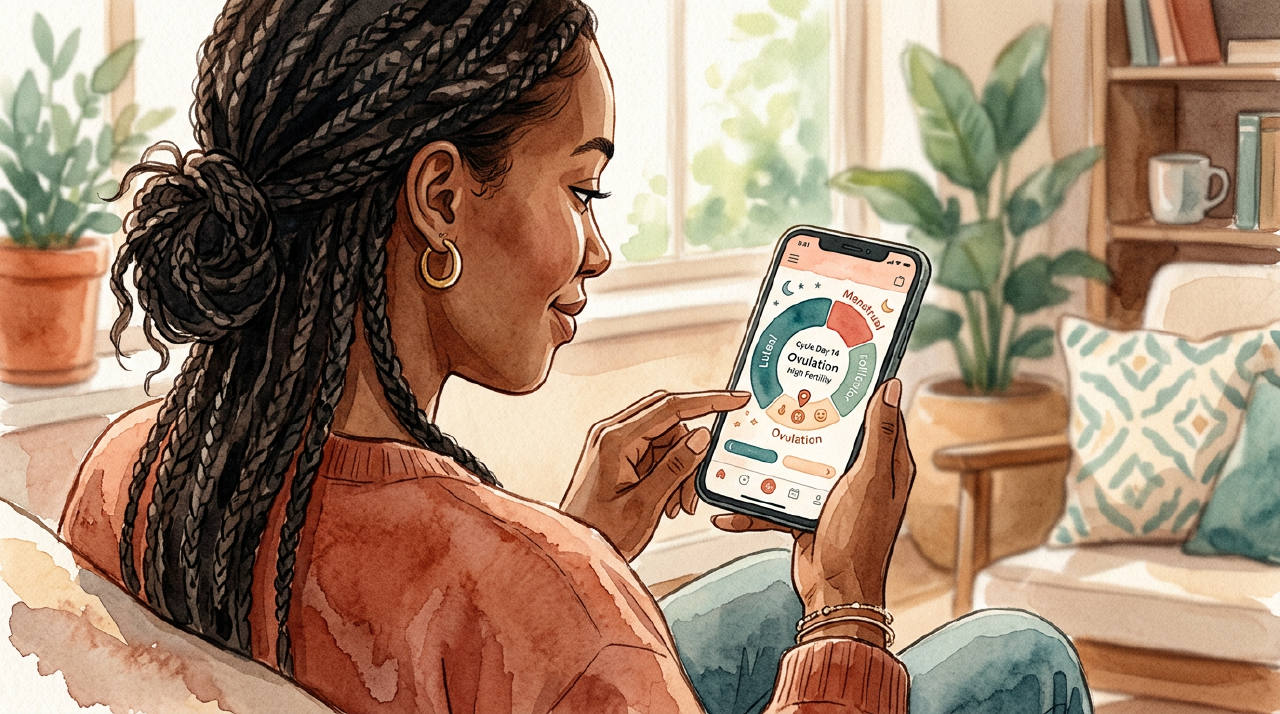
"Cycle syncing" is the practice of aligning your diet, exercise, and social life with the hormonal shifts of your menstrual cycle. It’s not about rigid rules, but about gentle adjustments that honor your body's fluctuating needs and capacities. This can help smooth out mood swings, manage energy levels, and reduce PMS.
"Instead of fighting your body's natural rhythms, what if you learned to flow with them? This shift in perspective from resistance to acceptance is the most profound form of self-care. You are not the same person every day of the month, and that is not a weakness—it is your strength."
Here is a simple guide to get you started:
| Phase | Your Inner Vibe 🌿 | Nourishment Focus | Movement Focus 🧘 |
|---|---|---|---|
| Menstrual | Rest & Reflect | Focus on comfort and replenishment. Iron-rich foods (lentils, dark leafy greens, red meat if you eat it), mineral-rich broths, and healthy fats (avocado, salmon) to reduce inflammation. Drink plenty of water and herbal teas. | Gentle and restorative. Yin yoga, stretching, leisurely walks, or simply resting. Listen to your body and don't push it. |
| Follicular | Create & Initiate | You can handle lighter, fresher foods. Think lean proteins, steamed vegetables, sprouted grains, and fermented foods like kimchi or yogurt to support a healthy gut. Your metabolism may be slightly slower, so focus on whole foods. | Energy is rising! This is the time for more dynamic workouts. Try cardio like running or dance classes, challenging HIIT sessions, or starting a new strength training program. |
| Ovulatory | Connect & Shine | Your body is at its most resilient. Load up on fiber to help process the estrogen peak—think raw salads, lots of colorful vegetables, and whole fruits. Antioxidants are your friend. | Go for peak performance! This is a great time to push for a personal best in a run, lift heavier weights, or enjoy high-energy group fitness classes. Your body is strong and capable. |
| Luteal | Nourish & Complete | Focus on foods that stabilize blood sugar and boost serotonin to combat cravings and mood dips. Complex carbs (sweet potatoes, oats), B vitamins (eggs, leafy greens), and magnesium (dark chocolate, nuts, seeds). Avoid excess salt, sugar, and caffeine in the late luteal phase. | Start to scale back as energy wanes. In the early luteal phase, strength training and moderate cardio are still great. In the late luteal (premenstrual) phase, shift to Pilates, Vinyasa yoga, swimming, or longer walks. |
Beyond the Monthly Cycle: Perimenopause and Menopause
The hormonal dance doesn't end; it just changes its tune as you approach menopause. This transition is a significant life stage with its own unique impact on mood.
### Perimenopause: The Hormonal Rollercoaster
Perimenopause, which means "around menopause," can begin in your late 30s or 40s and last for several years. During this time, your ovaries' estrogen production becomes erratic. You might have cycles with very high estrogen followed by cycles with very low estrogen, while progesterone levels generally decline. This hormonal chaos is responsible for many of the classic symptoms:
- Irregular periods: Cycles may become shorter, longer, heavier, or lighter.
- Intensified PMS: Mood swings, anxiety, and irritability can feel more pronounced.
- Anxiety and Panic Attacks: Fluctuating estrogen can dysregulate cortisol (the stress hormone) and neurotransmitters, leading to new or worsening anxiety.
- Depressive Mood: The decline in estrogen can make you more vulnerable to feelings of sadness and hopelessness.
- Brain Fog: Difficulty with memory, focus, and word-finding is common.
- Sleep Disruption: Hot flashes and night sweats, caused by estrogen withdrawal, can severely impact sleep quality, which in turn affects mood.
### Menopause and Postmenopause: The New Normal
Menopause is officially diagnosed after you have gone 12 consecutive months without a period. At this point, your ovaries have stopped releasing eggs, and estrogen and progesterone levels are consistently low. While the end of the hormonal rollercoaster can bring a sense of stability for some, this new low-hormone state can present its own challenges. The risk for depression can remain elevated, and symptoms like brain fog and low libido may persist.
However, many women also report a newfound sense of freedom, liberation from the monthly cycle, and a "post-menopausal zest." It's a time of profound transformation that, with support and self-knowledge, can be an incredibly empowering chapter.
When the Waves Feel Like a Tsunami: PMDD and Other Considerations
While PMS is common, for 3-8% of menstruating women, the premenstrual phase brings on a level of suffering that is far more severe.
Premenstrual Dysphoric Disorder (PMDD) is a clinical diagnosis characterized by severe mood symptoms that appear in the luteal phase and subside shortly after menstruation begins. It's not just "bad PMS"; it's a serious condition where the brain has an abnormal, severe negative reaction to normal hormonal changes. Symptoms can include debilitating depression, rage, anxiety, and suicidal thoughts, significantly impacting work, relationships, and quality of life. If you suspect you have PMDD, it is crucial to speak with a healthcare provider.
Other factors can also masquerade as or exacerbate hormonal mood issues, including:
- Thyroid disorders
- Chronic stress and high cortisol
- Nutrient deficiencies (like Vitamin D or Iron)
- Blood sugar imbalances
Frequently Asked Questions
Is it normal for my mood to change so much throughout the month?
Yes, it is entirely normal for your mood, energy, and social battery to fluctuate with your menstrual cycle. Acknowledging and honoring these changes is a key part of hormonal health. However, if the mood changes are so severe that they disrupt your daily life, relationships, or work, it's wise to discuss them with a professional.
Can hormonal birth control help regulate my mood?
It's complicated. For some, hormonal contraceptives (like the pill, patch, or hormonal IUD) can be a lifesaver by suppressing the natural hormonal fluctuations that trigger severe PMS or PMDD. For others, the synthetic hormones can cause or worsen depression and anxiety. The effect is highly individual, and finding the right option often requires trial and error in partnership with a knowledgeable doctor.
How long does the perimenopause transition last?
The duration of perimenopause varies widely from person to person. The average length is about 4 years, but for some, it can be as short as a few months or as long as a decade. It officially ends one year after your final menstrual period, at which point you have reached menopause.
When to See a Professional
While cycle syncing and lifestyle adjustments can be incredibly powerful, they are not a substitute for medical care. Please consider speaking with a doctor or a qualified mental health professional if you experience:
- Mood swings, anxiety, or depression that significantly interfere with your ability to function.
- Thoughts of self-harm or suicide at any point in your cycle.
- Rage or anger that feels uncontrollable.
- Symptoms that you suspect might be PMDD.
- Debilitating physical symptoms alongside mood changes.
Understanding your hormonal health is a journey, not a destination. It requires patience, curiosity, and a deep commitment to listening to your body's wisdom.
Feeling overwhelmed by your internal weather? Sometimes, just talking it through can help you find your bearings. Araam is here 24/7 to provide a safe, non-judgmental space to explore your feelings, track your moods, and learn new coping strategies—any day of the month. Start a conversation today.