
Money Anxiety: 6 Steps to Calm a Cash-Obsessed Mind
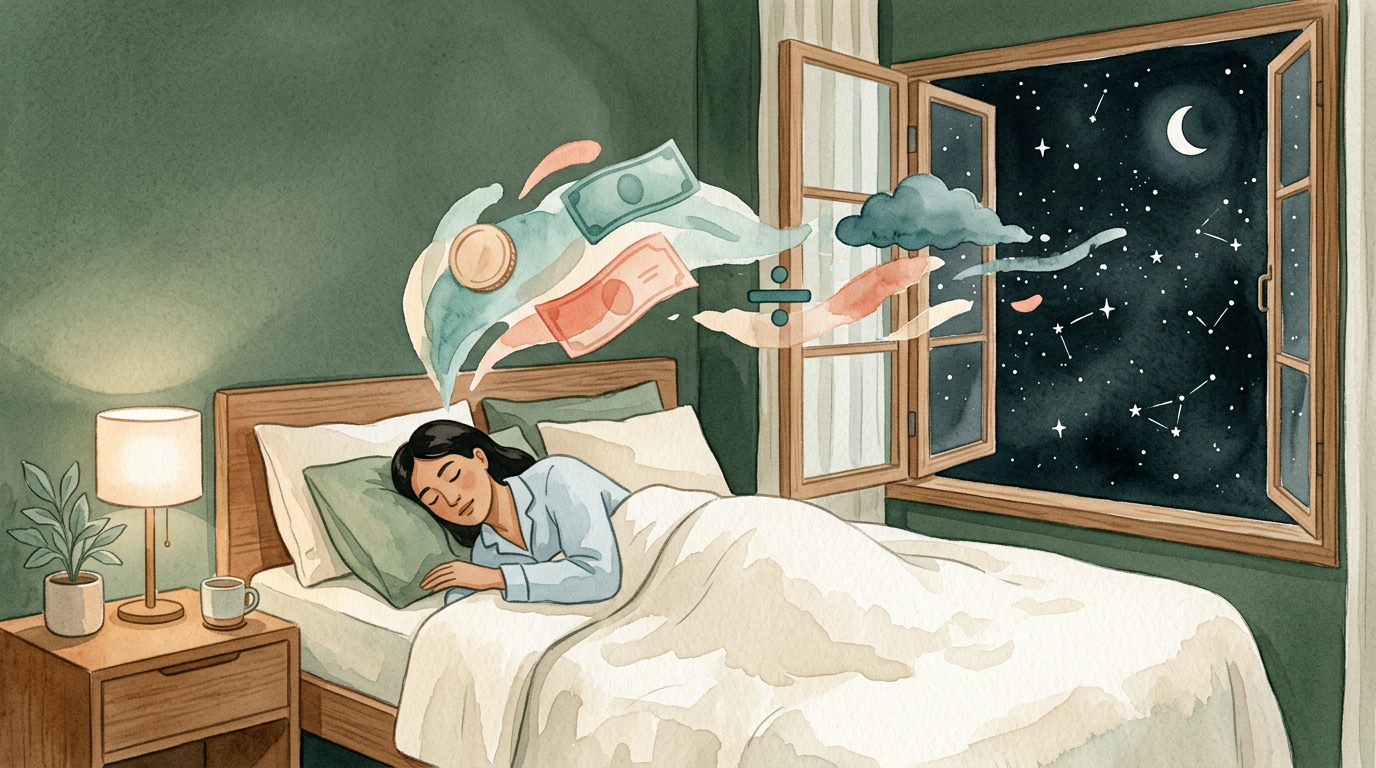
It’s 3 a.m. The city is quiet, but your mind is a stadium of roaring what-ifs. What if I lose my job? What if the market crashes? What if I can’t pay that bill next month? What if I never retire? This
It’s 3 a.m. The city is quiet, but your mind is a stadium of roaring what-ifs. What if I lose my job? What if the market crashes? What if I can’t pay that bill next month? What if I never retire? This nocturnal spiral, fueled by a relentless obsession with your bank balance, is the hallmark of modern money anxiety. It’s a heavy, invisible weight that tethers your mood to your net worth, making it feel impossible to enjoy the present moment. But what if you could soften the grip of this cash-obsessed mindset? What if you could find a sense of peace and stability that isn’t dictated by the daily fluctuations of your finances? You can. By shifting your focus from rigid accounting to emotional alignment, you can learn to manage your money in a way that truly supports your well-being.
This guide provides a step-by-step process to help you calm your financial worries and build a healthier relationship with money. Here’s a quick overview of the journey ahead:
| Step | Action | Goal | Estimated Time |
|---|---|---|---|
| 1 | Acknowledge Your Financial Beliefs | Uncover the roots of your anxiety by exploring your personal money story. | 30-45 minutes |
| 2 | Map Your Spending to Your Values | Create an "emotional budget" that aligns your finances with what truly matters. | 1-2 hours |
| 3 | Curate Your Information Diet | Set boundaries with news and social media to reduce external triggers. | 15 mins setup |
| 4 | Practice Mindful Financial Check-Ins | Turn dreaded budget reviews into a calming, productive ritual. | 20-30 mins weekly |
| 5 | Automate for Peace of Mind 💧 | Build a "worry buffer" fund to create a psychological safety net. | 10 minutes setup |
| 6 | Rewire Your Brain for Sufficiency | Cultivate gratitude to shift your focus from scarcity to abundance. | 5 minutes daily |
Understanding Money Anxiety and Why It’s So Common
To effectively address money anxiety, it's crucial to first understand what it is. Money anxiety is the persistent feeling of stress, fear, or unease related to your financial situation. It’s more than the occasional worry about paying a bill; it's a chronic state of heightened alert where financial thoughts dominate your mind, disrupt your sleep, and impact your relationships. This isn't a personal failing—it's an understandable emotional response to a world filled with financial uncertainty and pressure.
Several factors can trigger or amplify this anxiety:
- Debt: Student loans, credit card debt, or mortgages can feel like a constant, crushing weight.
- Income Instability: The rise of the gig economy and unpredictable job markets can leave many feeling perpetually insecure.
- Social Comparison: Social media feeds filled with lavish vacations, designer goods, and perfect homes create a distorted sense of what's "normal," leading to feelings of inadequacy.
- Market Volatility: Constant news about stock market fluctuations, inflation, and recessions can make the future feel perilous.
- Past Experiences: Growing up in a household where money was a source of conflict or scarcity can hardwire anxiety into your relationship with finances. 🌿
Recognizing these triggers is the first step toward reclaiming your power. You can’t control the economy, but you can control your response to it.
Your 6-Step Guide to Soothing Financial Stress
Calming a cash-obsessed mind is a practice, not a one-time fix. These steps are designed to be a gentle, repeatable process that builds emotional resilience alongside financial stability. Let’s begin.
### Step 1: Acknowledge Your Financial Beliefs
- Estimated Time: 30-45 minutes
- Required Tools: A journal and pen, or a private document on your computer.
- Key Tip: Adopt an attitude of gentle curiosity. The goal here is to observe your history without judgment, like a biographer exploring a character’s past.
Before you can change your financial behavior, you need to understand the story behind it. Many of our core beliefs about money were formed in childhood, often unconsciously. This exercise helps bring them into the light.
Find a quiet space and reflect on these prompts. Write down whatever comes to mind, allowing your thoughts to flow freely.
- Your Earliest Money Memory: What is the first thing you remember about money? Was it receiving an allowance? Watching your parents pay bills? Hearing a specific phrase about being "rich" or "poor"? Describe the scene and the feeling associated with it.
- Money in Your Household: How was money discussed (or not discussed) when you were growing up? Was it a source of tension, joy, secrecy, or open conversation? What messages, spoken or unspoken, did you receive about saving, spending, and earning?
- Your Best & Worst Money Moments: Describe a time you felt powerful and in control of your finances. What made it feel good? Now, describe a time you felt anxious, regretful, or out of control. What were the circumstances?
- Complete These Sentences:
- "People with a lot of money are ______."
- "Money is ______." (e.g., the root of all evil, freedom, a tool, security)
- "If I had more money, I would feel ______."
Reviewing your answers will reveal your "money script"—the subconscious narrative that guides your financial decisions and fuels your anxiety. Simply becoming aware of this script is a monumental step toward rewriting it.
### Step 2: Map Your Spending to Your Values (The Emotional Budget) 🌱
- Estimated Time: 1-2 hours
- Required Tools: Your last 1-2 months of bank and credit card statements, a highlighter, your journal.
- Key Tip: Forget rigid categories like "rent" and "groceries" for a moment. Think in terms of emotional impact and personal values.
A traditional budget often feels restrictive because it focuses on what you can't do. An emotional budget flips the script: it’s an exercise in aligning your financial resources with what brings you genuine joy, security, and meaning. It’s about intentional spending, not deprivation.
First, go through your recent statements and categorize your spending. But instead of typical labels, use value-based categories. For example:
- Security & Stability: Rent/mortgage, utilities, insurance, basic groceries, debt payments.
- Growth & Learning: Books, online courses, workshops, museum visits.
- Joy & Spontaneity: That morning latte, concert tickets, a weekend trip.
- Connection & Community: Dinners with friends, gifts for loved ones, coffee dates.
- Health & Wellness: Gym membership, therapy, fresh produce, yoga classes.
As you categorize each expense, ask yourself: "How did this purchase make me feel? Did it align with my core values?" This process separates fulfilling expenses from mindless or anxiety-driven ones. You might discover you spend a lot on "numb-out" purchases (like impulse online shopping) that provide a fleeting hit but no real satisfaction, while underfunding categories that truly matter to you, like "Connection."
Here's how this new approach stacks up against old-school budgeting:
| Feature | Traditional Budget | Emotional Budget ✨ |
|---|---|---|
| Focus | Restriction & accounting | Alignment & intention |
| Core Question | "Can I afford this?" | "Does this support the life I want?" |
| Feeling | Often induces guilt and shame | Fosters self-awareness and empowerment |
| Goal | To control spending | To direct resources toward what matters |
| Outcome | A spreadsheet of numbers | A roadmap for a values-driven life |
### Step 3: Curate Your Information Diet
- Estimated Time: 15 minutes for initial setup, ongoing daily practice.
- Required Tools: Your smartphone, social media apps, news apps.
- Key Tip: Treat financial news like salt—a little bit is essential, but too much can be toxic. You are the chef of your own mental peace.
Constant exposure to sensationalist headlines about market crashes and economic doom is a direct IV drip of anxiety. It keeps your nervous system in a fight-or-flight state. It's time to set some firm boundaries.
- Schedule Your Consumption: Designate one or two specific times per day to check financial news or your portfolio (e.g., 9 a.m. and 4 p.m. for 10 minutes each). Outside of these windows, log out and tune out.
- Turn Off Notifications: Go into your phone’s settings and disable all push notifications from news apps, stock tracking apps, and even your banking app if it sends you frequent, non-essential updates.
- Mute & Unfollow: On social media, proactively unfollow accounts that promote "hustle porn," unrealistic lifestyles, or fear-based financial commentary. Use the "mute" function on words like "recession," "crash," and "inflation" to filter your feed.
- Choose Your Sources Wisely: Opt for balanced, long-form journalism or weekly summaries instead of minute-by-minute breaking news. Find one or two trusted, level-headed sources and stick to them.
This isn’t about blissful ignorance; it’s about mindful engagement. You're moving from a reactive state (being bombarded by information) to a proactive one (choosing when and how you engage). 🕊️
The Transformative Power of an Emotional Budget
Let’s dive deeper into the emotional budget. This isn't just a feel-good tactic; it's a profound psychological shift. When you map your spending to your values, money transforms from an adversary into an ally. It becomes a tool you can use to consciously build a life that feels good on the inside, not one that just looks good on the outside.
For example, seeing a $150 charge for "Eating Out" might trigger guilt. But reframing it as $150 spent on "Connection & Community" (two dinners with dear friends) changes its entire emotional texture. It becomes an investment in your well-being. This reframe helps you make clearer decisions. You might choose to skip three solo takeout lunches to joyfully fund one memorable dinner with a loved one.
Your emotional budget can be visualized as being built on several core pillars that support your overall life satisfaction.
       Your Financial Well-Being
      /           |            \
     /            |             \
   +-----------+  +-----------+   +-----------+
   | Security  |  |   Growth  |   |    Joy    |
   |-----------|  |-----------|   |-----------|
   | - Housing |  | - Books   |   | - Travel  |
   | - Savings |  | - Courses |   | - Hobbies |
   | - Debt    |  | - Skills  |   | - Fun     |
   |   Paydown |  |           |   |           |
   +-----------+  +-----------+   +-----------+
This chart 📊 helps you see where your money is going in terms of a balanced "life portfolio." Is your security pillar strong? Are you investing enough in your growth or starving your need for joy? The goal is to allocate funds to all areas in a way that feels balanced and authentic to you.

How to Talk About Money With Your Partner
Money is a leading cause of conflict in relationships, largely because a conversation about money is rarely just about money. It’s about our deepest fears, dreams, values, and sense of security. If discussing finances with your partner fills you with dread, you're not alone. The key is to approach it not as a confrontation, but as a collaborative visioning session.
Here’s a script to help you initiate and navigate the conversation with more ease:
- The Opener (Finding the Right Time): "Hey, I've been thinking a lot about our future and all the amazing things I hope we can do together. Part of that involves our finances, and I'd love to find a time to just dream and plan with you. When would be a good, low-stress time for us to chat about it, maybe over coffee this weekend?"
- Set the Tone (Team Mentality): Start the conversation by saying something like, "My goal for this chat is for us to feel like a team, to understand each other better, and to make sure our money is helping us build the life we both want. This isn't about blaming or judging, it's about aligning."
- Share Your Money Story (Step 1, Together): Go through the prompts from Step 1 together. "What's your earliest money memory?" or "What messages did you get about money growing up?" This builds empathy and provides crucial context for each other's behaviors.
- Use "I" Statements: Instead of "You always overspend on gadgets," try "I feel anxious when I see large, unexpected purchases because my sense of security is really important to me."
- Focus on Shared Goals: Move from the past to the future. Ask, "If money were no object, what would our ideal life look like in five years?" Find the overlap in your dreams. Maybe you both value travel, or early retirement, or owning a home. Let these shared goals become the guiding star for your financial decisions.
### Step 4: Practice Mindful Financial Check-Ins
- Estimated Time: 20-30 minutes weekly or bi-weekly.
- Required Tools: Your calendar, your emotional budget tracker (a notebook or simple spreadsheet).
- Key Tip: Ritualize it to make it feel special. Light a candle, put on some calming music, and pour your favorite beverage. This is an act of self-care. 🧘
Instead of avoiding your bank account until a bill is due, schedule a regular "Money Date." This is a dedicated, calm time to review your emotional budget. The goal isn't to scrutinize every penny, but to check in with yourself.
During your Money Date, ask:
- How did my spending this week align with my values?
- Where did I feel great about how I used my money?
- Was there any spending that caused me stress or regret? What can I learn from it?
- Looking ahead, what important value-based expenses are coming up?
This consistent, gentle practice demystifies your finances and transforms budgeting from a source of dread into a moment of mindful reflection and empowerment.
### Step 5: Automate for Peace of Mind 💧
- Estimated Time: 10 minutes for setup.
- Required Tools: Your online banking app.
- Key Tip: Start small. The consistency of the habit is far more important than the amount. Even $5 a week makes a difference.
One of the biggest sources of money anxiety is the fear of the unexpected—a car repair, a medical bill, a sudden job loss. You can directly soothe this fear by creating a "Worry Buffer" or "Peace Fund" (a friendlier term for an emergency fund). The most effective way to do this is to make it automatic.
Log into your online banking and set up an automatic weekly or bi-weekly transfer from your checking account to a separate high-yield savings account. Label this account "Worry Buffer." The trick is to choose an amount so small you barely notice it's gone—$10, $25, $50 per paycheck.
Psychologically, the act of automating this savings is incredibly powerful. You know that, without any additional effort or willpower, you are consistently building a safety net. This buffer creates emotional space, freeing up mental energy that would otherwise be spent worrying.
Reframing Your Relationship with Money
The final phase of this journey involves shifting your fundamental mindset from one of scarcity to one of sufficiency. Anxiety thrives on a feeling of "not enough." Gratitude is the direct antidote.
### Step 6: Rewire Your Brain for Sufficiency
- Estimated Time: 5 minutes daily.
- Required Tools: A journal, a note on your phone, or just your own mind.
- Key Tip: Abundance is not about having millions in the bank; it’s about fully appreciating the resources you already have.
This is the simplest yet potentially most profound step. Every day, take a moment to identify three things you are financially grateful for. They don't have to be monumental.
Examples could include:
- A warm, safe place to sleep.
- The delicious coffee I was able to buy this morning.
- A steady paycheck that covers my needs.
- The health insurance that gives me peace of mind.
- The internet connection that allows me to learn and connect.
This practice, especially when done consistently over time, retrains your brain to scan for evidence of security and abundance rather than for signs of lack and danger. It widens your perspective and reminds you that, even amidst financial challenges, there is much to be thankful for.
"Your financial life is composed of two things: the money and the story you tell yourself about the money. We spend all our time on the money, but it's the story that creates the anxiety. Changing that story is the first, most powerful step toward finding peace."
By intentionally focusing on what you have, you loosen the anxious grip of what you don't have. This creates an inner resilience that can withstand external financial pressures.
Frequently Asked Questions About Money Anxiety
Is money anxiety a real mental health condition?
While "money anxiety" isn't a formal clinical diagnosis in the DSM-5 (the manual used by mental health professionals), it is a very real and widely recognized form of anxiety. It can be a significant stressor that contributes to or exacerbates diagnosed conditions like Generalized Anxiety Disorder (GAD), depression, and sleep disorders. Financial therapists and many psychologists specialize in helping people navigate the emotional and psychological aspects of money. 💡
My partner and I have totally different views on money. How can we get on the same page?
This is incredibly common. The key is to shift the focus from "right vs. wrong" to "understanding and alignment." Start by using the script in this article to explore each other's money stories (Step 1). Often, a "spender" grew up feeling deprived, while a "saver" grew up with financial instability. Understanding these backstories builds empathy. Then, focus on shared future goals (Step 4). You may have different methods, but if you're both aiming for the same destination (e.g., a debt-free life, a down payment), you can work together to build a path that honors both of your needs for security and joy.
I feel like I'm doing everything right—budgeting, saving—but I'm still anxious. What's wrong?
Nothing is "wrong" with you. This is a sign that your money anxiety may be rooted more deeply in your nervous system's response patterns than in your actual financial behaviors. You may be stuck in a scarcity mindset or a state of hypervigilance. This is where steps like curating your information diet (Step 3) and practicing financial gratitude (Step 6) are crucial. It's about calming your mind and body, not just organizing your spreadsheet. If the anxiety persists despite your best efforts, it may be a good time to consider professional support.
When to See a Professional
This guide offers tools for self-management, but sometimes professional support is the most compassionate choice. Consider seeking help from a therapist, financial therapist, or a certified financial planner if:
- Your money anxiety is causing panic attacks, severe depression, or suicidal thoughts.
- Financial stress is constantly disrupting your sleep or ability to function day-to-day.
- You are unable to control spending habits that are causing you harm (e.g., compulsive shopping, gambling).
- Money has become such a source of conflict in your relationship that it feels unresolvable on your own.
A professional can provide a safe space and specialized tools to help you navigate these deeper challenges.
Calming your mind around money is a journey of self-discovery and intentional practice. It’s about treating yourself with the same care and planning you put into your finances. At Araam, we believe that mental wellness is the foundation for a fulfilling life—including a peaceful relationship with money. Our guided exercises and mindfulness tools can be a wonderful companion as you walk this path, helping you manage the underlying stress and build the emotional resilience you need to thrive. 🕊️