
2026 Mental Health Trends: What Actually Sticks and What's Just Hype
The world of wellness can feel like a crowded, fast-moving highway. Every year, new lanes open up, promising a faster route to peace of mind, while others quietly close. As we look toward 2026, the ho
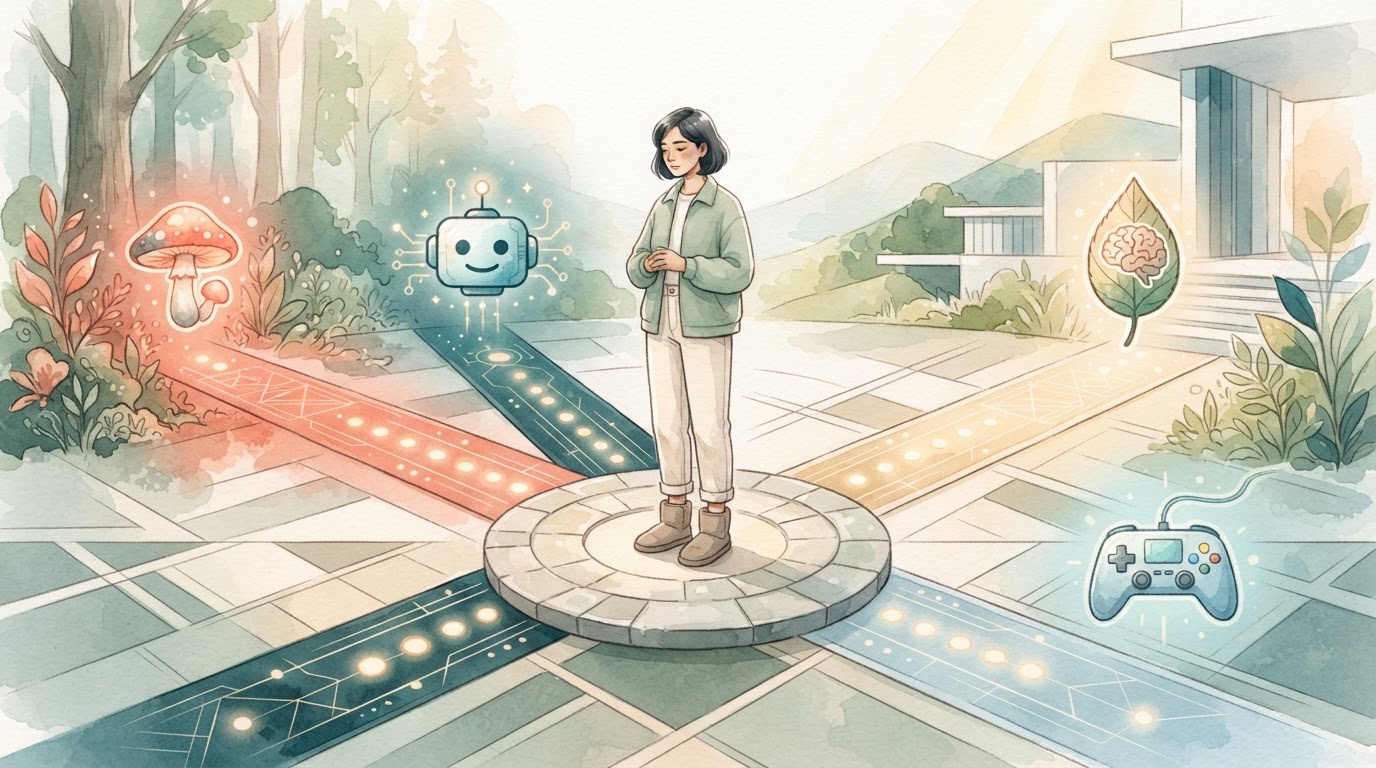
The world of wellness can feel like a crowded, fast-moving highway. Every year, new lanes open up, promising a faster route to peace of mind, while others quietly close. As we look toward 2026, the horizon is shimmering with tantalizing possibilities: psychedelic-assisted therapies going mainstream, AI companions becoming confidantes, and new approaches to address our collective anxieties about the planet. But in this dazzling landscape of innovation, a crucial question emerges for anyone seeking genuine support: which of these paths lead to lasting well-being, and which are merely mirages, destined to fade with the next news cycle? Discerning the truly transformative from the trendy is more than just an intellectual exercise—it's essential for navigating your own mental health journey with clarity and confidence.
The New Frontier: Why Mental Health Innovation is Accelerating
The short answer is: necessity. The seismic shifts of the early 2020s—a global pandemic, economic uncertainty, social upheaval, and a growing climate crisis—collectively cracked the foundation of our mental health infrastructure. Decades-old systems, already strained, proved inadequate to meet the soaring demand for care. This created a vacuum, and into that space rushed a wave of innovation fueled by new technology, evolving regulations, and a cultural shift toward openly discussing mental health. 🕊️
Why it matters is simple: we're living through the most significant re-imagining of mental healthcare in half a century. Traditional one-on-one talk therapy, while still the gold standard for many, is no longer the only option on the table. The trends emerging now aim to solve its most persistent challenges: accessibility, cost, stigma, and effectiveness for treatment-resistant conditions. These new modalities aren't just add-ons; they represent a fundamental rethinking of what it means to seek and receive mental support.
From Stigma to Self-Care: A Cultural Shift
For generations, mental health was discussed in whispers, if at all. Today, it’s the subject of viral TikToks, celebrity interviews, and workplace wellness programs. This destigmatization is arguably the single most important trend, creating the fertile ground in which all other innovations can grow. People are not only more willing to admit they are struggling but are actively seeking tools to feel better. This public demand creates a powerful market incentive for companies, researchers, and clinicians to develop and test new solutions.
The Technology Catalyst
Simultaneously, technologies like artificial intelligence, wearable biosensors, and virtual reality have matured. They've moved from the realm of science fiction to practical tools that can be integrated into healthcare. An AI can offer a listening ear 24/7, a biosensor can track stress levels in real-time, and VR can create safe, immersive environments for exposure therapy. This technological readiness has converged with the cultural shift to create a perfect storm of innovation.
Psychedelic-Assisted Therapy: A Clinical Renaissance or Risky Business?
Psychedelic-assisted therapy is poised to be one of the most disruptive forces in psychiatry in 2026. This isn't about recreational drug use; it's a highly structured clinical model where substances like psilocybin (from mushrooms) or MDMA are administered in a controlled, therapeutic setting. Early-phase clinical trials have shown remarkable promise for conditions that have long been notoriously difficult to treat, including severe PTSD, treatment-resistant depression, and end-of-life anxiety.
The core idea is that these substances can act as catalysts, temporarily increasing brain plasticity and allowing individuals to access and reprocess deeply ingrained trauma, thought patterns, and emotional pain. The psychedelic experience is bracketed by extensive therapy sessions—before, during, and after—to help the person integrate their insights.
Hype vs. Reality: Navigating the Nuances
The hype is immense, with some proponents heralding psychedelics as a "cure" for mental illness. The reality is far more complex. While the initial data is exciting, these are potent substances with significant psychological risks if used improperly. Set (your mindset) and setting (the physical and interpersonal environment) are paramount. Without professional guidance, the experience can be confusing or even harmful.
Furthermore, the path to mainstream adoption is riddled with hurdles:
- Legal & Regulatory: While some states and cities have decriminalized certain substances, federal legality for medical use is still pending. The FDA is reviewing applications, but the timeline is uncertain.
- Accessibility & Cost: This is not a cheap or simple intervention. The treatment protocol involves multiple trained therapists, medical screening, and hours of clinical time, with projected costs running into the thousands of dollars per treatment course.
- Training & Infrastructure: We currently lack a sufficient workforce of therapists trained in this specific modality. Building out the clinical infrastructure to deliver this care safely and ethically will take years.
So, will it stick? Yes, but slowly and carefully. By 2026, we expect to see more FDA-approved protocols and a growing number of specialized clinics in states with favorable laws. However, it will likely remain an intensive, last-resort treatment for specific conditions rather than a widely available option for general wellness. 🌱
| Feature | Psychedelic-Assisted Therapy (PAT) | Traditional Talk Therapy (e.g., CBT) |
|---|---|---|
| Mechanism | Neuroplasticity-enhancing catalyst, facilitates deep psychological processing. | Focuses on changing thought patterns and behaviors through structured conversation. |
| Duration | Acute. 1-3 intensive dosing sessions over several weeks, with integration therapy. | Chronic/Ongoing. Typically weekly or bi-weekly sessions over months or years. |
| Setting | Highly controlled clinical environment with medical supervision. | Therapist's office, telehealth. |
| Professional Role | Facilitator and guide during the experience; integration support after. | Active guide, teacher, and collaborator in cognitive and behavioral change. |
| Potential For | Rapid, profound shifts for treatment-resistant conditions (PTSD, depression). | Gradual skill-building and management of a wide range of mental health issues. |
AI Companions: Is Your Next Therapist an Algorithm?
The idea of talking to a machine about your feelings is no longer a sci-fi trope. AI mental health companions like Araam, Wysa, and Woebot are becoming increasingly sophisticated. They use principles of Cognitive Behavioral Therapy (CBT), mindfulness, and supportive listening to provide on-demand emotional support through a chat interface. By 2026, these tools will be even more personalized, integrated with biometric data from your watch or phone, and capable of more nuanced conversations.
The primary promise of AI companions is radical accessibility. 💡 They offer a 24/7, non-judgmental space to process thoughts and feelings, free from the barriers of cost, scheduling, and stigma that prevent many from seeking traditional therapy. For someone waking up with anxiety at 3 a.m., an AI can provide immediate grounding exercises and a place to vent—something a human therapist simply can't offer.
"The ultimate challenge and opportunity with AI in mental health is not to replace human connection, but to extend its reach. An AI can be a powerful first step, a daily check-in tool, or a bridge to care for the millions who currently have no support at all. The ethical tightrope we walk is ensuring these tools empower users without creating a shallow substitute for the profound healing that happens in a human-to-human therapeutic relationship." — Dr. Anya Sharma, Clinical Psychologist and Digital Ethics Researcher
The Human Element and Ethical Quandaries
Of course, the limitations are significant. An AI, no matter how advanced, cannot replicate the embodied presence, intuitive understanding, and shared human experience of a therapist. It lacks the ability to read subtle non-verbal cues or respond to a true crisis with the nuance it requires.
Key questions we must grapple with by 2026 include:
- Privacy: Where does your data go? Who owns your most intimate conversations? Ensuring robust, transparent privacy policies is non-negotiable.
- Bias: AI models are trained on data, and that data can reflect societal biases. We must be vigilant to ensure these tools are equitable and culturally competent.
- Dependency: Is there a risk of people becoming overly reliant on an AI, isolating them from real-world human connection?
Will it stick? Absolutely. The convenience and low barrier to entry are too powerful to ignore. By 2026, AI companions will be a standard feature of many corporate wellness programs and a common first-line tool for managing mild-to-moderate anxiety and stress. They will be seen not as a replacement for therapy, but as a valuable part of a "stepped-care" model, where you use the level of support that's right for you at that moment. 🧘

Climate-Informed Care: Healing on a Warming Planet
A growing number of people, particularly younger generations, are experiencing profound emotional distress related to the climate crisis. This isn't just standard anxiety; it’s a complex mix of "eco-anxiety," climate grief, and solastalgia (the feeling of loss for a home environment that is changing). Climate-informed therapy is an emerging modality that directly addresses this distress.
It's not a separate school of thought like CBT, but rather a lens that a therapist applies to their existing practice. A climate-informed therapist:
- Validates that climate-related distress is a rational, normal response to a real existential threat, not a sign of pathology.
- Makes space for difficult emotions like grief, anger, and hopelessness without trying to "fix" them.
- Helps clients build psychological resilience to navigate uncertainty and bad news.
- Connects them with community and meaningful action, which can be a powerful antidote to feelings of powerlessness.
Beyond Anxiety to Action and Resilience
The hype around this trend can sometimes misrepresent it as just "therapy for people sad about the weather." The reality is that it's a vital framework for processing our relationship with the planet and our future on it. It moves beyond individual coping mechanisms to acknowledge the systemic nature of the problem.
Will it stick? Yes, out of sheer necessity. As the impacts of climate change become more tangible, the demand for therapists who can competently and compassionately address this unique form of distress will only grow. By 2026, we anticipate that "climate-informed" will become a core competency taught in graduate psychology programs, much like trauma-informed care is today. It’s less of a flashy trend and more of a fundamental adaptation of the therapeutic practice to our modern reality. 🌿
Here's a conceptual look at the rising need for this type of care:
Conceptual Rise in Climate-Related Distress in Therapy Settings

  High |                                ▇▇▇
       |                        ▇▇▇     ▇▇▇
Reported |                ▇▇▇     ▇▇▇     ▇▇▇
Concern  |        ▇▇▇     ▇▇▇     ▇▇▇     ▇▇▇
Level    |        ▇▇▇     ▇▇▇     ▇▇▇     ▇▇▇
   Low |_______________________________________
           2020    2022    2024    2026 (est.)

(Each ▇ represents a unit of reported patient concern over climate issues)
Therapeutic Gaming: Leveling Up Your Mental Health
For years, video games were often blamed for mental health problems. Now, a new genre of "therapeutic games" is flipping that narrative. These are games designed from the ground up by teams of developers, psychologists, and neuroscientists to achieve specific mental health outcomes.
Unlike simple "brain training" apps, these games are often story-driven, immersive experiences. For example:
- EndeavorRX is the first FDA-approved video game treatment, prescribed to children with ADHD to improve attention function.
- Sea of Solitude explores themes of loneliness and depression through a powerful narrative adventure.
- Celeste is a challenging platformer that has been widely praised for its resonant storyline about anxiety and self-acceptance.
The principle is simple: games are incredibly effective at holding our attention, teaching complex systems, and providing rewarding feedback loops. Therapeutic games leverage these mechanics to help players build resilience, practice emotional regulation, and reframe negative thought patterns in an engaging, non-stigmatizing way. ✨
Will it stick? Yes, with a clear distinction. While playing any enjoyable game can be a healthy de-stressor, the market for clinically-validated, "prescription" games will become a serious niche by 2026. We will see more games undergoing rigorous clinical trials for specific conditions like anxiety, ADHD, and depression. For the general public, games that are thoughtfully designed around wellness themes will become a popular and accepted form of digital self-care, sitting alongside meditation apps and journaling.
The Evolution of Mental Health Trends: A Look Back and Forward
To understand where we're going, it helps to see where we've been. The trends of 2026 are not appearing in a vacuum; they are building on the foundations laid over the past decade.
| Time Period | Dominant Trends | Key Characteristics | What to Watch Next (from that era) |
|---|---|---|---|
| Mid-2010s | Mindfulness & Meditation Apps; Wearable Fitness Trackers | Focus on individual self-optimization, stress reduction, and quantifying wellness. Highly accessible, low-touch. | Integration of mental and physical health data. |
| Late-2010s | Rise of Teletherapy; Destigmatization via Social Media | Focus on access to traditional therapy through technology. Culture shift toward openness. | More specialized and on-demand digital services. |
| Early-2020s | Corporate Wellness Platforms; Trauma-Informed Care | Response to pandemic burnout. Recognition of systemic and past trauma. Focus on psychological safety. | A greater need for tools that address severe and systemic issues. |
| Mid-2020s (Projected) | PAT, AI Companions, Climate-Informed Care, Therapeutic Gaming | Focus on treatment-resistant conditions, radical accessibility, systemic anxieties, and novel delivery methods. | Deeper integration of AI, stricter regulation of new therapies, and a focus on building resilient communities. |
What's next after 2026? The next wave will likely focus on integration and personalization. Imagine a system where your AI companion, wearable data, and teletherapy provider are all part of a cohesive ecosystem, providing you with truly personalized, predictive, and proactive mental healthcare. We'll also see a greater emphasis on community and social connection as an antidote to the isolation that technology can sometimes create.
Frequently Asked Questions
Is psychedelic-assisted therapy the same as microdosing?
No, they are very different. Psychedelic-assisted therapy involves one to three high-dose sessions in a controlled clinical setting with trained therapists. The goal is a profound, catalytic experience for deep therapeutic work. Microdosing involves taking sub-perceptual doses of a psychedelic regularly at home. While anecdotally popular, microdosing currently lacks robust clinical evidence and is not a medical procedure.
Can an AI companion diagnose a mental health condition?
No, and it shouldn't. Reputable AI mental health tools are designed as supportive wellness companions, not diagnostic instruments. They can help you track your mood, learn coping skills based on established therapeutic models like CBT, and provide a space to talk. However, a diagnosis can and should only be made by a qualified healthcare professional, like a psychiatrist or psychologist, after a comprehensive evaluation.
How do I find a climate-informed therapist?
This is still an emerging specialty, but resources are growing. You can start by searching directories like the Climate Psychology Alliance or the Climate Psychiatry Alliance. You can also ask potential therapists directly during a consultation call: "Do you have experience or training in helping clients navigate eco-anxiety or climate-related distress?" Their answer will tell you a lot about their familiarity and comfort with the topic.
When to See a Professional
While these emerging trends offer exciting new avenues for support, they are not a replacement for professional medical advice, diagnosis, or treatment. If you are experiencing significant distress, your symptoms are interfering with your daily life, or you are having thoughts of harming yourself or others, it is essential to connect with a qualified mental health professional. A primary care doctor, a psychologist, a licensed therapist, or a psychiatrist can help you understand what you're experiencing and create a safe and effective treatment plan.
And if you're looking for a place to start exploring your feelings or building daily wellness habits, consider a tool like Araam. Our AI companion is designed to provide a supportive, evidence-based space for you to check in with yourself anytime, anywhere. It's a first step on your journey, always available right in your pocket. 💧