
5 Therapy Trends of 2026 That Will Outlast the Hype
The way we think about, talk about, and participate in therapy is undergoing a quiet revolution. For generations, the image of mental healthcare was static: a quiet room, a leather couch, a fifty-minu
The way we think about, talk about, and participate in therapy is undergoing a quiet revolution. For generations, the image of mental healthcare was static: a quiet room, a leather couch, a fifty-minute hour. But as our world rapidly changes, so too do our needs for support, connection, and healing. The whispers of change have grown into a clear conversation, moving beyond niche wellness circles and into the mainstream. We're now looking at a future where care is more accessible, more personalized, and more attuned to the complex realities of modern life. Forget fleeting fads and social media hype; we’re exploring five foundational shifts in therapy that are poised to redefine mental wellness in 2026 and for years to come.
[[IMAGE:fig1|A diverse group of people interacting with different forms of therapy in a warm, sunlit space|A beautifully illustrated montage showing five distinct scenes in a soft, optimistic art style. Scene 1: a person in a calm, clinical setting with two therapists, suggesting psychedelic-assisted therapy. Scene 2: a young person smiling while interacting with a friendly AI companion on their phone. Scene 3: a therapist and client walking together in a beautiful park, representing climate-informed care. Scene 4: a grid of diverse faces on a screen in a video call, showing an online support group. Scene 5: a person and a therapist at a table with a whiteboard, mapping out goals for brief therapy. The scenes blend together seamlessly.]]
The Shifting Landscape of Mental Wellness
The transformation in therapy isn't happening in a vacuum. It’s a direct response to a confluence of powerful forces: technological acceleration, a growing crisis of loneliness, the destigmatization of mental health needs, and a collective grappling with global challenges like the climate crisis. As a result, the "one-size-fits-all" model of therapy is giving way to a rich ecosystem of support. People are seeking options that fit their lifestyles, budgets, and specific needs. This new landscape is being shaped not just by clinicians and researchers, but by the very people seeking help.
Who Is Driving the Change?
Different trends are championed by different groups, each with unique motivations for seeking a new kind of support. Understanding who is driving these shifts gives us a clearer picture of where mental healthcare is headed.
| Trend | Key Demographics | Primary Motivations |
|---|---|---|
| Psychedelic-Assisted Therapy | Veterans, adults with treatment-resistant depression/PTSD, wellness explorers. | Seeking breakthroughs for conditions that haven't responded to traditional treatments; desire for profound, transformative experiences. |
| AI Companions | Gen Z & Millennials, tech-savvy individuals, people in "care deserts" or on waitlists. | Need for immediate, 24/7, low-stigma support; affordability and accessibility; a "first step" into mental health care. |
| Climate-Informed Care | Young adults, climate activists, scientists, and environmentally-conscious individuals. | Addressing feelings of anxiety, grief, and helplessness related to the climate crisis; seeking validation and community. |
| Online Group Therapy | Individuals feeling isolated, people seeking peer support for specific issues (e.g., new parents, chronic illness), budget-conscious users. | Combatting loneliness, gaining diverse perspectives, finding affordable and accessible community. |
| Brief Therapy | Pragmatic individuals, busy professionals, those with specific, solvable problems, people using employer-sponsored benefits. | Desire for concrete strategies and quick results; cost-effectiveness; focus on present challenges rather than deep past exploration. |
Trend 1: Psychedelic-Assisted Therapy Moves into the Mainstream
Psychedelic-assisted therapy is a structured therapeutic model that involves the use of psychedelic substances, such as psilocybin or MDMA, within a clinical setting to facilitate deep psychological exploration and healing. It is always conducted under the supervision of trained therapists.
The Evidence So Far
For decades, these substances were relegated to the counterculture. Now, rigorous science is bringing them into the lab and the clinic. Organizations like the Multidisciplinary Association for Psychedelic Studies (MAPS) have sponsored FDA-approved clinical trials that are yielding remarkable results. Research published in prestigious journals like the New England Journal of Medicine and Nature Medicine has shown that MDMA-assisted therapy can lead to significant and lasting reductions in symptoms for individuals with severe PTSD. Similarly, studies from Johns Hopkins University and Imperial College London have demonstrated the potential of psilocybin (the active compound in "magic mushrooms") to alleviate treatment-resistant depression. ✨
It's crucial to understand that this isn't about "tripping" and hoping for the best. The process is highly controlled and medically supervised. A typical course of treatment involves:
- Preparation: Several non-drug therapy sessions to build trust with the therapeutic team and set intentions for the experience.
- Medicine Session: A day-long session where the patient takes the substance in a calm, comfortable room, usually with two therapists present. The focus is on internal reflection, often with the aid of music and eye shades.
- Integration: A series of follow-up therapy sessions in the days and weeks after the medicine session. This is where the insights, emotions, and memories from the experience are processed and integrated into the person's life.
Our 12-Month Forecast
The momentum is undeniable. In the next 12-24 months, we anticipate the FDA will grant its first approval for MDMA-assisted therapy for PTSD, effectively moving it from an experimental treatment to a prescribed medical procedure. This will open the floodgates for therapist training programs, insurance coverage discussions, and state-level decisions on implementation. While psilocybin is a few years behind MDMA in the federal approval pipeline, state-level initiatives (like those in Oregon and Colorado) will continue to create regulated access points, serving as real-world test cases for broader adoption. The conversation will shift from "if" to "how"—how to ensure equitable access, rigorous training standards, and ethical delivery of this powerful new tool.
Trend 2: AI Companions Offer Accessible, 24/7 Support
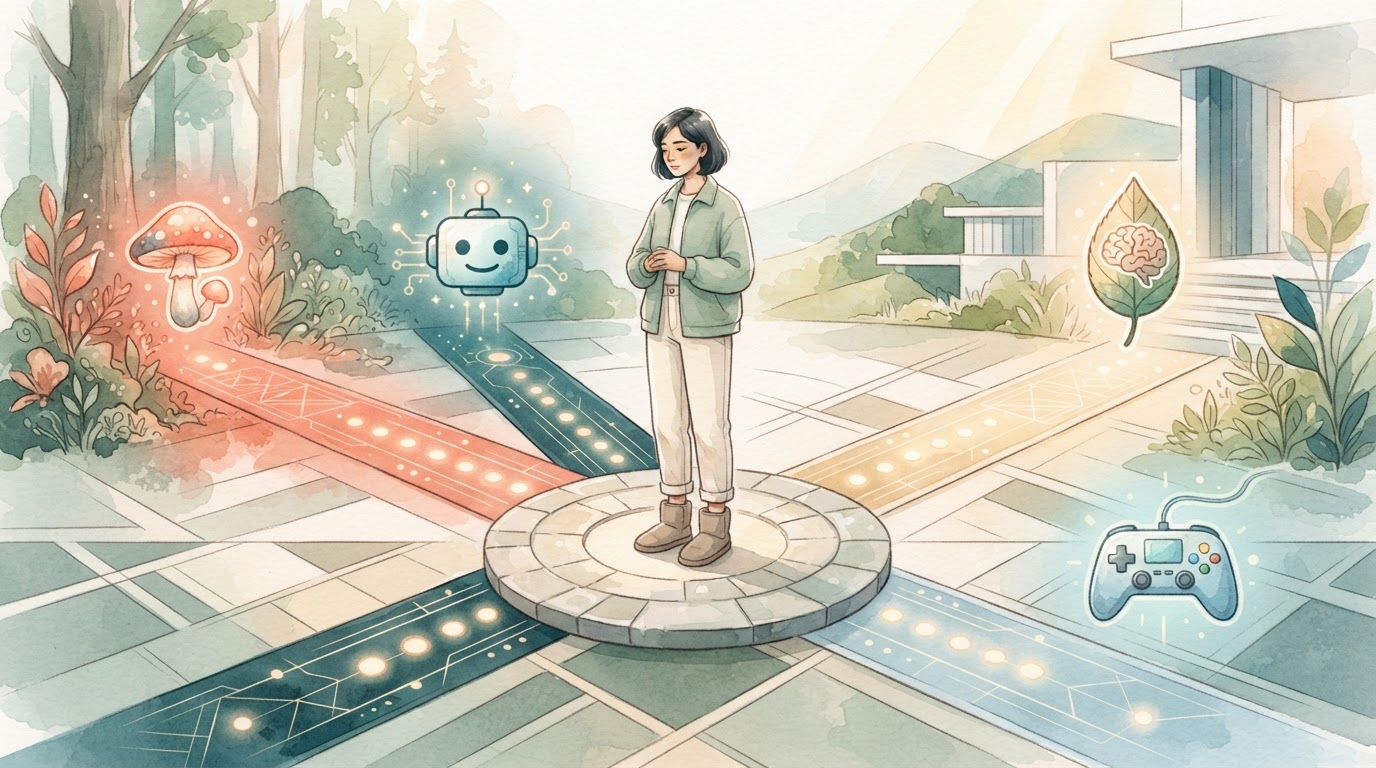
AI therapy companions are sophisticated applications, like Araam, that use artificial intelligence, natural language processing, and principles of cognitive-behavioral therapy (CBT) to provide on-demand mental wellness support. They serve as a conversational partner for journaling, mood tracking, learning coping skills, and processing daily stressors.
Bridging Gaps in Care
Let’s be clear: AI companions are not here to replace human therapists. Instead, they are becoming an essential part of a "stepped care" model, filling crucial gaps in the existing mental health system. Think of the person on a six-month waitlist for a therapist, the student struggling with exam anxiety at 2 AM, or the individual who feels too intimidated to speak to a person just yet. For them, an AI companion is not a lesser-than option; it's a lifeline. 💧
These tools excel at providing what’s known as "psychoeducation"—teaching users the foundational concepts of mental wellness, like identifying cognitive distortions, practicing mindfulness, or setting healthy boundaries. They offer a private, non-judgmental space to vent and reflect, available anytime, anywhere. By tracking mood and journaling entries over time, they can help users identify patterns and triggers they might not have noticed otherwise, empowering them to take a more active role in their well-being.
"The true power of technology in mental health isn't to replace human connection, but to foster it. It can be the bridge that leads someone from lonely suffering to their first conversation about getting help, or the scaffold that supports them between sessions with a therapist."
Our 12-Month Forecast
The evolution of AI companions will accelerate significantly. We’ll see a move beyond text-based chats to more integrated, multi-modal experiences. Expect AI that can analyze vocal tone for emotional cues (with user consent, of course), integrate with wearable devices to correlate biometric data (like sleep patterns and heart rate variability) with mood reports, and offer even more personalized exercises and insights. The key challenge and opportunity will be ethical development, focusing on data privacy, transparency, and building AI that is genuinely helpful, not just engaging. Companies that prioritize clinical validation and user trust will lead the pack.
Trend 3: Climate-Informed Care Addresses Eco-Anxiety
Climate-informed therapy is an approach, not a separate discipline, that acknowledges the profound psychological impact of the climate crisis. It provides therapists with a framework to help clients navigate feelings like eco-anxiety, climate grief, and solastalgia (the distress caused by environmental change to one's home environment).
Acknowledging a Collective Grief 🌱
For a long time, feelings of dread or sadness about the planet's future were often pathologized or dismissed as an overreaction. Climate-informed care does the opposite: it validates these feelings as a sane and rational response to a real, existential threat. It helps people understand that they are not alone in their grief and anxiety.
This therapeutic approach doesn't offer easy answers or false reassurances. Instead, it focuses on building psychological resilience. Key goals include:
- Holding space: Allowing clients to express difficult emotions—fear, anger, sadness, guilt—without judgment.
- Managing uncertainty: Developing coping skills for living with a level of chronic uncertainty about the future.
- Transforming anxiety into action: Helping clients channel their feelings into meaningful personal or collective action, which can be a powerful antidote to helplessness. This doesn't have to mean becoming a full-time activist; it can be as simple as starting a community garden or making sustainable changes at home.
- Connecting with nature: Fostering a reciprocal relationship with the natural world as a source of solace and grounding. 🌿
Our 12-Month Forecast
The demand for climate-informed therapists will outstrip supply. We predict a significant increase in dedicated training and certification programs for mental health professionals. University psychology programs will begin incorporating climate psychology into their core curricula. We'll also see a rise in community-based climate support groups, both online and in-person, as people seek collective spaces to process their feelings and find solidarity. This trend will become a standard, essential competency for therapists in the coming years.
Trend 4: The Rise of Online Group Therapy
Online group therapy brings the traditional group therapy model into the digital age, using secure video conferencing platforms to connect a small group of individuals (typically 5-10) with one or more trained facilitators. These groups are often formed around a shared identity, life challenge, or therapeutic goal.
The Power of Shared Experience
While individual therapy offers a deep, focused dive into one's personal psyche, group therapy offers something equally powerful: the simple, profound realization that you are not alone. Hearing someone else voice a fear you thought was uniquely yours, or receiving encouragement from peers who truly get it, can be incredibly healing. 🕊️
The online format has supercharged this model. It removes geographical barriers, allowing someone in a rural town to join a specialized group for, say, single fathers or caregivers of aging parents. It offers a degree of anonymity that can make it easier for people to open up. And it's often significantly more affordable than one-on-one therapy, increasing accessibility for many.
Therapy Models: Duration vs. Depth

                  HIGH
                    ^
      Traditional   |
     Psychodynamic  |       [ Psychedelic-Assisted ]
        Therapy     |       (High intensity, short duration)
                    |
D E P T H           +----------------------------------->
                    |
      AI Companion  |       [ Brief Therapy ]
     (Low intensity,|       (Med intensity, targeted)
      continuous)   |
                    |       [ Group Therapy ]
                    v       (Med intensity, ongoing)
                   LOW
                    <---------- DURATION ---------->
                   SHORT                          LONG
Our 12-Month Forecast
Hyper-specialization will be the dominant trend in online group therapy. Instead of broad categories like "anxiety group," we'll see an explosion of niche groups tailored to specific needs: "Group for tech workers dealing with burnout," "Group for women navigating menopause," "Group for freelance artists managing financial instability." Platforms will emerge that act as a "Match.com for therapy groups," using smart algorithms to connect individuals with the perfect group for their needs, personality, and goals. 📊
Trend 5: Brief Therapy Delivers Focused, Goal-Oriented Results
Brief therapy, also known as short-term therapy, is an umbrella term for therapeutic approaches that are intentionally time-limited and focused on finding solutions to specific problems. Instead of a long, open-ended exploration of one's past, brief therapy is structured, goal-oriented, and typically lasts for a set number of sessions (often between 6 and 20).
Less Is More: The Core Principles
The guiding philosophy of brief therapy is efficiency and empowerment. It operates on the belief that many people don't need years of therapy to see significant improvement in their lives. By concentrating on a client's present circumstances and future goals, it aims to provide them with the tools and strategies they need to make tangible changes quickly. 💡
This model is particularly effective for issues like navigating a life transition, managing a specific phobia, improving communication in a relationship, or overcoming a period of procrastination. It's less about asking "Why am I this way?" and more about asking "What is one small thing I can do this week to move toward the life I want?"
Some common models of brief therapy include:
- Solution-Focused Brief Therapy (SFBT): Focuses almost exclusively on building solutions, rather than analyzing problems.
- Cognitive Behavioral Therapy (CBT): A highly effective model for changing patterns of thinking and behavior, often delivered in a short-term format.
- Interpersonal Therapy (IPT): A time-limited therapy that focuses on improving interpersonal relationships to resolve depressive symptoms.
Our 12-Month Forecast
Brief therapy will become the default offering for many employee assistance programs (EAPs) and insurance plans due to its cost-effectiveness and evidence-based results. This will drive patient demand and lead more therapists to seek training in short-term modalities. We also forecast a rise in "therapy sprints"—intensive, brief therapy packages focused on a single issue, delivered over a short period. This model appeals to the project-oriented mindset of many modern professionals and fits well into a busy life.
Frequently Asked Questions
Is online therapy (group or individual) as effective as in-person therapy?
For many conditions, yes. A large body of research, including numerous meta-analyses, has found that telehealth therapy is just as effective as in-person therapy for common issues like anxiety, depression, and stress. The most important factor for success remains the "therapeutic alliance"—the quality of the relationship and trust you build with your therapist or group, regardless of the medium.
With all these options, how do I know which trend or type of therapy is right for me?
It's a great question, and the answer is deeply personal. Start by reflecting on your goals, budget, and lifestyle. Are you looking for deep, transformative work on a long-standing issue (perhaps exploring psychedelic-assisted therapy)? Do you need immediate, 24/7 support for daily stress (an AI companion might be a great start)? Do you feel isolated and want to connect with peers (consider online group therapy)? Do you have a specific, solvable problem (brief therapy could be perfect)? Many people find they benefit from a combination of approaches.
Are these new trends expensive or only for the wealthy?
It's a mixed bag, but the overall trend is toward greater accessibility. AI companions and online group therapy are often significantly more affordable than traditional one-on-one therapy. Brief therapy can be more cost-effective in the long run because it's time-limited. Psychedelic-assisted therapy is currently expensive and largely paid for out-of-pocket, but as it gains FDA approval, the path to insurance coverage will become much clearer, hopefully making it accessible to more people who need it.
When to See a Professional
These trends represent exciting and hopeful evolutions in mental healthcare. However, tools like AI companions and self-guided wellness practices are intended for support, skill-building, and non-clinical stress. They are not a replacement for professional medical advice or therapy. If you are experiencing severe distress, thoughts of harming yourself or others, or symptoms that are significantly impacting your ability to function, it is essential to seek help from a qualified mental health professional or medical doctor. If you are in crisis, please contact a crisis hotline or go to your nearest emergency room.
At Araam, we believe in empowering you on your wellness journey. Our AI companion is designed to be a supportive first step, a daily check-in, and a place to learn skills that can support you between sessions with a professional. We're here to help you build a foundation of self-awareness and resilience, one conversation at a time. 🌱