Eco-Anxiety: How to Cope With Climate Grief Without Burning Out
That tightness in your chest when you see a headline about melting glaciers. The wave of sadness that hits when you hear about another species on the brink. The quiet, creeping dread about the future
That tightness in your chest when you see a headline about melting glaciers. The wave of sadness that hits when you hear about another species on the brink. The quiet, creeping dread about the future of our planet. If this sounds familiar, you are not alone, and you are not overreacting. This feeling has a name—eco-anxiety—and it’s a deeply human and rational response to the climate crisis we collectively face. But while this anxiety is valid, it doesn't have to consume you. It’s possible to hold the weight of this knowledge, to grieve for what is being lost, and still find a way to live a meaningful, engaged, and even joyful life. This guide is about transforming that paralyzing anxiety into purposeful action, without burning out. 🌱

Coping with eco-anxiety is a journey, not a destination. To help you navigate it, here is a summary of our six-step process to channel your climate grief into sustainable action and personal resilience.
| Step | Action | Estimated Time | Key Focus |
|---|---|---|---|
| 1 | Acknowledge & Validate Feelings | 15-30 minutes | Emotional Awareness |
| 2 | Set Healthy News Boundaries | 30 minutes (setup) | Information Management |
| 3 | Connect with Nature | 20-60 minutes | Restoration & Healing |
| 4 | Create a Personal Action Plan | 1 hour | Empowerment & Agency |
| 5 | Find Your Community | 1-2 hours | Collective Resilience |
| 6 | Practice Radical Hope & Rest | Ongoing | Sustainability & Joy |
What is Eco-Anxiety, and Why Is It So Prevalent?
Eco-anxiety is the chronic fear of environmental doom. It’s a broad term that encompasses a spectrum of difficult feelings related to the climate crisis, including anxiety, grief, anger, guilt, and a sense of helplessness. The American Psychological Association describes it as a valid response to witnessing the slow, unfolding disaster of climate change. You might also hear related terms like climate grief (sadness for current and anticipated ecological losses) or solastalgia (the distress caused by seeing your beloved home environment change for the worse).
These feelings are becoming increasingly common because the evidence of our changing climate is no longer abstract. It's in the smoke-filled skies from distant wildfires, the "100-year" floods that now happen every few years, and the increasingly intense summer heatwaves. Research confirms this isn't just a niche concern; a 2021 global study published in The Lancet found that nearly 60% of young people (aged 16-25) felt "very" or "extremely" worried about climate change.
It's crucial to understand this: Experiencing eco-anxiety does not mean there is something wrong with you. It means you are paying attention. It’s a sign of your empathy and your connection to the world. The challenge isn't to get rid of these feelings, but to learn how to live with them—and even use them as fuel for positive change. 🕊️
A 6-Step Guide to Coping with Eco-Anxiety
This practical, step-by-step guide is designed to help you build emotional resilience and find your place in the climate movement without sacrificing your own well-being.
1. Acknowledge and Validate Your Feelings
You can't heal what you don't let yourself feel. The first and most important step is to stop pushing your anxiety away and instead, give it space to exist. Repressing these emotions often leads to them showing up in other ways—like irritability, brain fog, or burnout.
- Estimated time: 15-30 minutes, a few times a week
- Required tools: A journal (digital or physical), a quiet space
- Key tip: Naming your emotions helps to tame them.
Start by simply noticing what you're feeling. Are you scared? Furious? Heartbroken? Try a journaling practice called a "feeling dump." Set a timer for 10 minutes and write down everything that comes to mind about the climate crisis, without judgment or censorship. Let the anger, fear, and sorrow flow onto the page. Research shows that this kind of expressive writing can improve emotional regulation and reduce stress. Acknowledge that these feelings are a legitimate, compassionate response to a planetary crisis.
2. Set Healthy News Boundaries
While staying informed is important, constant exposure to catastrophic news—a phenomenon known as "doomscrolling"—can be deeply detrimental to your mental health. It can leave you feeling hopeless and paralyzed, which helps no one. The goal is to be an informed citizen, not an overwhelmed sponge.
- Estimated time: 30 minutes for setup, 5 minutes daily
- Required tools: Your phone/computer, a scheduling app or timer
- Key tip: Be informed, not inundated.
Create a "media diet" for yourself. This might look like:
- Time-blocking: Check the news once a day for a specific, limited time (e.g., 20 minutes in the morning).
- Curating your sources: Unfollow accounts that use alarmist language. Instead, follow climate scientists, solution-focused journalists, and organizations that report on progress and actionable steps.
- No news before bed: Protect your sleep and your mind by making the hour before you go to sleep a news-free zone.
- Seek out "climate joy": Actively look for stories of innovation, successful conservation projects, and community action.
3. Reconnect with Nature
It can feel strange to seek solace in the very thing that is threatened, but spending time in nature is one of the most powerful antidotes to eco-anxiety. It reminds you what you're fighting for and provides profound mental and physical health benefits. This practice, known in Japan as shinrin-yoku or "forest bathing," has been shown to reduce cortisol (the stress hormone) and lower blood pressure. 💧
- Estimated time: 20-60 minutes, several times a week
- Required tools: Comfortable shoes, access to a park, trail, or even a single tree.
- Key tip: Nature is a source of healing, not just an object to be saved.
You don't need to go on a multi-day hike. Spend 20 minutes in a local park without your phone. Pay close attention to your senses: the feeling of the breeze, the smell of damp earth, the sound of birdsong, the intricate patterns on a leaf. Get your hands dirty by tending to a small garden or a few houseplants. This practice helps rewire your brain from a state of abstract worry to one of present-moment connection and appreciation. It fosters a reciprocal relationship: as you care for the Earth, it cares for you.
4. Create a Personal Action Plan
Anxiety often stems from a feeling of powerlessness. One of the most effective ways to counteract this is to take small, concrete actions that align with your values. This helps restore a sense of agency and shifts your focus from the overwhelming scale of the problem to your own sphere of influence.
- Estimated time: 1 hour
- Required tools: Pen and paper, or a digital note-taking app
- Key tip: Focus on your "front yard"—the things you can actually control.
Brainstorm actions that feel meaningful and manageable for you. Don't try to do everything at once. Pick one or two things to start. Your plan could include actions in different areas of your life:
- At Home: Composting food scraps, switching to a renewable energy provider, reducing meat consumption.
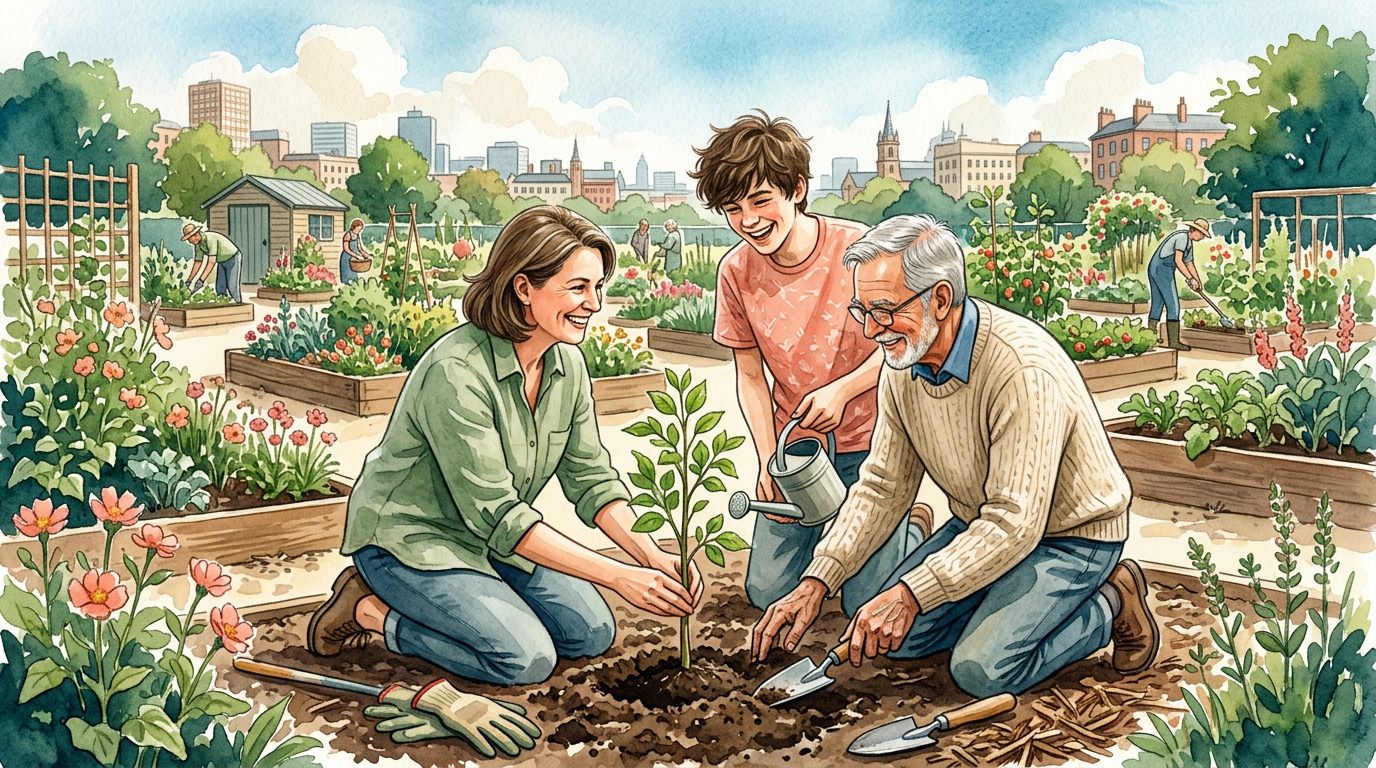
- In Your Community: Joining a local park cleanup, volunteering for a community garden, starting a "buy nothing" group in your neighborhood.
- At Work: Forming a green team to implement recycling or energy-saving initiatives, advocating for sustainable company policies.
Remember, the goal isn't personal purity; it's meaningful participation. Choose actions that resonate with your skills and passions. ✨
5. Find Your Community
Eco-anxiety can be incredibly isolating. It often feels like you're the only one who is truly panicking. The antidote to this isolation is connection. Joining with others who share your concerns breaks the spell of loneliness and amplifies your impact.
- Estimated time: 1-2 hours for research
- Required tools: Internet access
- Key tip: Your power is amplified when you join with others.
Look for groups where you can share your feelings and work together on solutions. This could be:
- Local environmental organizations: Groups like the Sierra Club, Sunrise Movement, or 350.org have local chapters across the country.
- Online communities: Websites and forums like "Work on Climate" or subreddits like r/ClimateActionPlan can connect you with peers globally.
- Climate cafés: These are informal, facilitated spaces designed for people to talk openly and safely about their climate-related feelings.
Acting collectively builds what's known as "collective efficacy"—the shared belief that you can achieve goals together. This is a powerful buffer against despair.
6. Practice Radical Hope and Active Rest
Engaging with the climate crisis is a marathon, not a sprint. To stay in it for the long haul, you must learn to sustain yourself. This means embracing both radical hope and the necessity of rest.
- Estimated time: Ongoing practice
- Required tools: A commitment to self-care and perspective
- Key tip: Burnout serves no one. Rest is a form of resistance.
Radical hope, a term popularized by thinkers like Rebecca Solnit, isn't about blind optimism. It's the practice of hoping in the face of uncertainty. It's acknowledging the severity of the crisis while also recognizing that the future is not yet written. We can't know for sure what will happen, and in that uncertainty lies the space for action.
At the same time, you must give yourself permission to rest. You are not a machine. Celebrate small victories. Take breaks from the work. Spend time on hobbies and with people who bring you joy, even if it feels indulgent. A rested, joyful advocate is a sustainable advocate. 🧘
Navigating Personal Responsibility vs. Systemic Change
A common source of eco-anxiety is the tension between individual lifestyle choices and the reality that a handful of corporations are responsible for the majority of global emissions. It's easy to feel like your metal straw is useless in the face of a multi-trillion dollar fossil fuel industry.
"To be clear, the personal and the political are not at odds. Personal action is a gateway, not a final destination. It's what makes you feel the issue in your bones, it connects you to a community, and it builds the cultural momentum needed for politicians to finally act." - Dr. Ayana Elizabeth Johnson, Marine Biologist and Policy Advisor
Both are important. Systemic change is非negotiable, but individual and community actions are what build the political will for that change. They are not mutually exclusive; they are two sides of the same coin. Your personal choices matter because they align your actions with your values, reduce your own cognitive dissonance, and signal to the market and politicians that there is a demand for change.
The chart below gives a simplified view of where greenhouse gas emissions come from. While your personal carbon footprint is part of the "Energy Use in Buildings," notice how much is tied to massive industrial and energy systems that require policy change, not just consumer choice. Use this not to feel helpless, but to direct your energy wisely—towards supporting the systems and policies that can make the biggest difference.
Global Greenhouse Gas Emissions by Sector (Approximate)
📊
Energy (Electricity, Heat, Transport) : [█████████████████████████] 73%
├─ Industry                 : [████████] 24%
├─ Transport                : [██████] 16%
└─ Buildings (Commercial/Res) : [████] 17% (Direct/Indirect)

Agriculture, Forestry & Land Use   : [███████] 18%

Industrial Processes (e.g. Cement) : [██] 5%

Waste (Landfills, Wastewater)      : [█] 3%
Finding Your Sphere of Influence
Instead of feeling pressured to do everything, focus on where you can be most effective. Consider your unique skills, resources, and passions. Are you a great writer? A convincing speaker? A talented organizer? A spreadsheet wizard? Everyone has a role to play. Here's how you can think about different levels of action.
| Sphere of Action | Description | Examples |
|---|---|---|
| Personal | Actions you take in your own life and household. This builds personal integrity and reduces your direct impact. | Adopting a more plant-rich diet, reducing flights, composting, switching to an ethical bank. |
| Social | Actions that influence your friends, family, and social networks. This normalizes climate-conscious behavior. | Talking openly about climate change, organizing a clothing swap, sharing articles from reputable sources. |
| Community | Actions that improve sustainability in your local area. This builds local resilience and connection. | Joining a community garden, advocating for bike lanes at a city council meeting, starting a school recycling program. |
| Professional | Using your job and professional skills to drive change within your industry or workplace. | Forming a "green team" at work, choosing sustainable suppliers, innovating on green-tech solutions in your field. |
| Political | Actions that influence policy and governance at local, state, and federal levels. This is crucial for systemic change. | Calling your elected officials, voting for climate-forward candidates, joining a protest, supporting advocacy groups. |
Start with one action in one sphere. Once it becomes a habit, add another. The goal is progress, not perfection.
Frequently Asked Questions about Eco-Anxiety
Is eco-anxiety a real mental illness?
No, eco-anxiety is not a clinical diagnosis listed in the DSM-5. Mental health professionals widely recognize it as a healthy and rational response to a real and existential threat. However, if these feelings become so severe that they persistently interfere with your ability to function in daily life, they can exacerbate or trigger underlying conditions like anxiety disorders or depression, which do require professional attention.
I feel so guilty for not doing enough. How do I stop?
Climate guilt is extremely common. The first step is to practice self-compassion. Recognize that you are one person living within a complex, fossil-fuel-dependent system that was built long before you were born. You cannot solve the crisis alone. Reframe "not doing enough" to "what is enough for me to do right now, with my current resources?" Focus on the positive actions you are taking and celebrate them. Your worth as a person is not measured by the perfection of your carbon footprint.
Will my small, individual actions even make a difference?
Yes, but perhaps not in the way you think. Your individual action—like bringing a reusable bag—is not going to single-handedly stop climate change. Its power lies elsewhere. First, it aligns your behavior with your values, which is good for your mental health. Second, individual actions are visible. They normalize new behaviors and create social ripple effects that influence friends, family, and community. Third, millions of individual actions create a collective cultural shift that puts pressure on corporations and politicians to change. Don't discount the power of being one drop in a rising tide. 💡
When to See a Professional
While the strategies in this guide can be very effective, sometimes eco-anxiety can become overwhelming and all-consuming. It’s important to recognize when you might need more support. Please consider speaking with a therapist or counselor if your feelings about the climate:
- Are causing panic attacks.
- Are persistently interfering with your sleep or appetite.
- Are making it difficult to go to work, school, or maintain relationships.
- Lead to constant feelings of hopelessness or thoughts of self-harm.
A mental health professional can help you develop personalized coping strategies and determine if you might be dealing with a clinical anxiety or mood disorder that is being exacerbated by your climate concerns.
At Araam, we believe that caring for your mind is a vital part of caring for the world. Our guided journaling prompts, mindfulness exercises, and meditations can be valuable tools as you navigate your feelings about the climate. Remember, taking care of yourself is not a distraction from the work; it is essential to sustaining it.