
Money Anxiety: 6 Steps to Calm a Cash-Obsessed Mind
It’s 3 a.m. and your heart is pounding, not from a nightmare, but from a familiar, unwelcome guest: money anxiety. It’s the phantom weight of next month's rent, the racing thoughts about a volatile st
It’s 3 a.m. and your heart is pounding, not from a nightmare, but from a familiar, unwelcome guest: money anxiety. It’s the phantom weight of next month's rent, the racing thoughts about a volatile stock market, the quiet dread that you’re one unexpected expense away from disaster. In our hyper-connected world, financial fears are louder than ever, amplified by every news alert and social media post showcasing a life you feel you can’t afford. But what if managing this anxiety wasn't just about spreadsheets and cutting costs? What if the first, most crucial step was to address the emotional toll it takes on your mind? This guide is designed to help you do just that—to create a sense of calm and control over your financial life, not by magically multiplying your dollars, but by fundamentally changing your relationship with them.
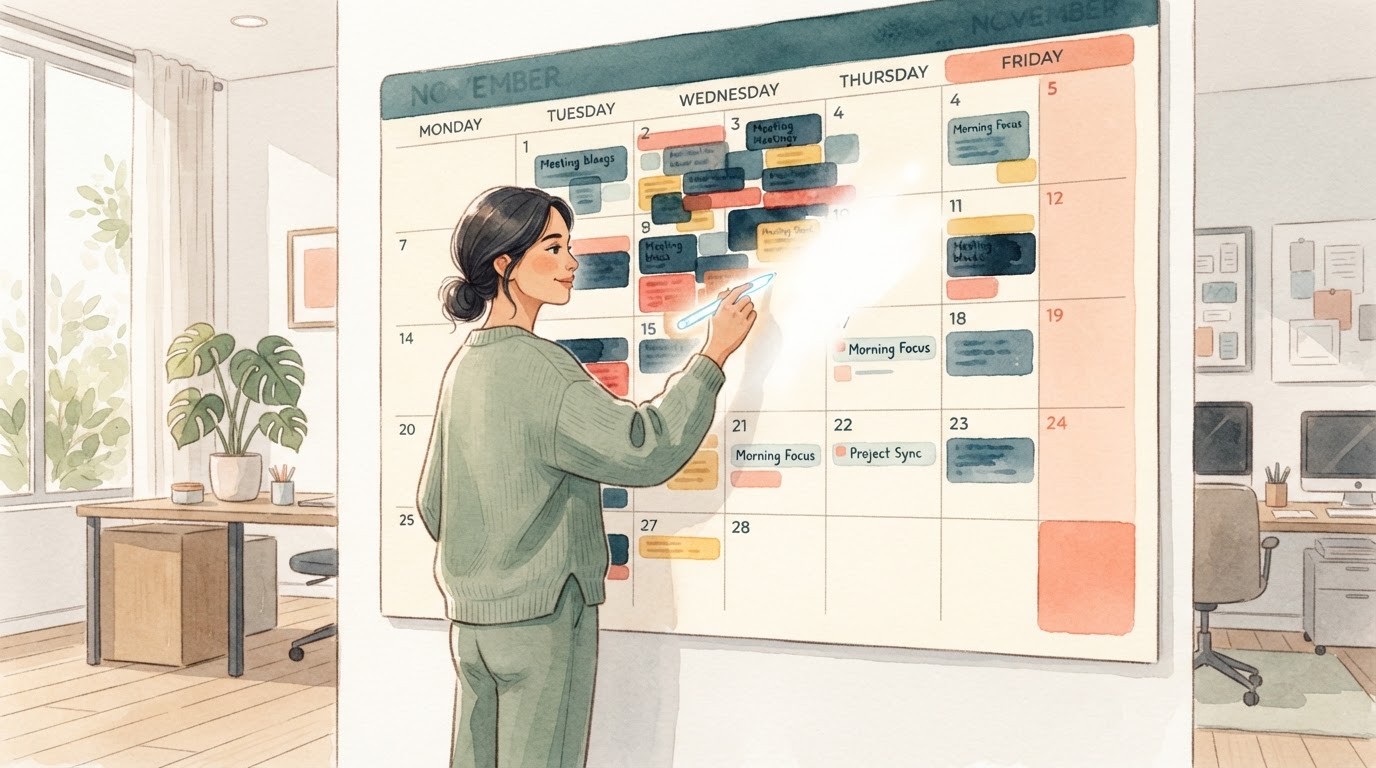
Before we dive in, here’s a quick overview of the steps we’ll take together to help you find your financial peace of mind.
| Step | Action | Estimated Time | Goal |
|---|---|---|---|
| 1 | Acknowledge & Externalize Your Fears | 20-30 minutes | To name your specific anxieties so you can address them. |
| 2 | Create Your "Emotional Budget" | 30-45 minutes | To understand where your mental energy is going. |
| 3 | Set Healthy Information Boundaries | 15 minutes (setup) | To curate your news diet and reduce external triggers. |
| 4 | Shift from Catastrophe to Control | 10 minutes/day | To reframe anxious thoughts into actionable steps. |
| 5 | Initiate the Money Conversation | 30-60 minutes | To open a safe dialogue with a partner or trusted friend. |
| 6 | Schedule Regular "Money Dates" | 1 hour/month | To make financial management a calm routine, not a crisis. |
Understanding the Roots of Money Anxiety
Money anxiety is the stress, worry, or fear related to your financial situation. It’s not just about the numbers in your bank account; it’s a deep-seated emotional response that can affect your sleep, your relationships, and your overall well-being. This feeling is incredibly common and stems from a variety of sources. For some, it’s rooted in past experiences, like growing up in a household where money was a constant source of conflict. For others, it’s fueled by present-day pressures: job instability, rising living costs, or the powerful, often misleading, influence of social media that creates a culture of comparison. Our brains are also wired for survival, and financial insecurity can trigger our primal fight-or-flight response, making us feel as though our very existence is under threat. Recognizing that these feelings are a valid, human response to both internal and external pressures is the first step toward managing them. 🌱
Step 1: Acknowledge & Externalize Your Fears
The first step to calming a cash-obsessed mind is to get the thoughts out of your head and onto paper. When anxieties just swirl around in your mind, they feel infinite and overwhelming. By externalizing them, you give them shape and size, which makes them feel more manageable.
Step 1: The "Fear-Setting" Journal
- Estimated Time: 20-30 minutes
- Required Tools: A journal and a pen, or a digital document.
- Key tip: Be brutally honest with yourself. No one else needs to see this. The goal is raw expression, not polished prose.
Grab your journal and create three columns.
- "What If...?": In this column, list every single financial fear that comes to mind, no matter how big or small. "What if I lose my job?" "What if my car breaks down and I can't afford the repair?" "What if I never retire?" Write them all down.
- "What Can I Do to Prevent This?": For each fear, brainstorm one or two small, preventative actions you could take. For "losing my job," it might be "Update my resume" or "Spend 15 minutes a week on a professional networking site." For the car repair, it could be "Research how to start an emergency fund with just $20."
- "How Would I Recover?": In this final column, imagine the worst-case scenario has happened. What would you do, step by step, to get back on your feet? Who would you call for help? What resources are available? This isn't meant to be scary; it's meant to show you that even the worst outcomes are often survivable. You are more resilient than your anxiety gives you credit for.
The "Emotional Budget": Your New Financial Wellness Tool
A traditional budget tracks where your money goes. An emotional budget tracks where your mental and emotional energy goes when you think about money. The goal is to identify your biggest "emotional expenses" and find ways to reduce them, freeing up mental space for peace and productivity. ✨
Step 2: Draft Your Emotional Budget
- Estimated Time: 30-45 minutes
- Required Tools: The "Fear-Setting" journal from Step 1, a fresh page or document.
- Key tip: Focus on feelings, not figures. This is about your psychological spending, not your financial spending.
Look back at your list of fears. Which ones take up the most headspace? Which ones leave you feeling drained, irritable, or panicked? Assign an "emotional cost" to them—High, Medium, or Low.
- High-Cost Items: These are the obsessive thoughts that wake you up at night. (e.g., Constantly worrying about job security).
- Medium-Cost Items: These are recurring worries that pop up a few times a week. (e.g., Feeling guilty about buying a coffee).
- Low-Cost Items: These are fleeting concerns that are annoying but don't derail your day. (e.g., Wondering if you're using the right credit card).
Your goal isn't to eliminate all financial thoughts, but to consciously reduce the "spending" on High-Cost items. For instance, if "job security" is a high cost, you might "reallocate" that energy by using the preventative steps from your fear-setting exercise (e.g., dedicate that worry time to a 20-minute online course instead).
Here’s how the two types of budgets compare:
| Feature | Traditional Budget | Emotional Budget |
|---|---|---|
| Unit of Measurement | Dollars and Cents ($) | Units of Mental Energy / Anxiety |
| Focus | Tracking income and expenses. | Tracking worries and mental drains. |
| Goal | Financial solvency, saving. | Mental peace, reduced anxiety. |
| Key Question | "Can I afford this?" | "What is the emotional cost of worrying about this?" |
| Outcome | A clear financial picture. | A clear psychological picture of your financial stress. |
Navigating Financial News Without the Nausea
Constant exposure to negative economic headlines is like pouring gasoline on the fire of money anxiety. While staying informed is important, it's crucial to do so in a way that doesn't overwhelm your nervous system. This means shifting from passive consumption to active, intentional information gathering.
Step 3: Set Healthy Information Boundaries
- Estimated Time: 15 minutes to set up, ongoing practice.
- Required Tools: Your smartphone and computer.
- Key tip: You are the curator of your own attention. Treat it as your most valuable resource. 💧
Here are a few practical ways to create a healthier financial news diet:
- Turn Off Notifications: Go into your settings and disable push notifications from news apps and financial platforms. You decide when to check in, not the other way around.
- Schedule Your "Worry Time": Instead of letting financial news interrupt your day, schedule a specific, limited time to catch up—say, 15 minutes after work. This contains the anxiety to a specific window.
- Go for Depth, Not Breadth: Unfollow accounts that thrive on fear-mongering and clickbait. Instead, follow a few reputable, long-form financial journalists or educators who provide context and perspective rather than just shocking headlines.
- Implement a "Good News" Ratio: For every negative financial story you read, actively seek out a positive or educational one. This could be a success story about someone paying off debt or an article explaining a financial concept you've been curious about.
From "What If" to "What Is": Grounding Yourself in Reality
Anxiety thrives in the hypothetical future. It loves the land of "what ifs." A powerful antidote is to ground yourself firmly in the present moment and focus on what you can actually control. It's about shifting your mental energy from unproductive worry to productive action, no matter how small. 🧘
Step 4: Shift from Catastrophe to Control
- Estimated Time: 10 minutes per day, or as needed.
- Required Tools: Your mind, a pen and paper (optional).
- Key tip: Action is the enemy of anxiety. Even a tiny step forward can break the cycle of rumination.
When you feel a wave of financial panic, pause. Take a deep breath and visualize the "Spheres of Control." This cognitive tool helps you separate your worries into distinct categories, clarifying where your energy is best spent.
                  SPHERES OF CONTROL

      ******************************************
      *                                        *
      *   Things I CAN'T Control               *
      *   (The global economy, inflation,       *
      *    stock market fluctuations)          *
      *                                        *
      *    ********************************    *
      *    *                                *    *
      *    *    Things I CAN Influence      *    *
      *    *    (My skills, my network,     *    *
      *    *     my earning potential)      *    *
      *    *                                *    *
      *    *      ******************      *    *
      *    *      *                *      *    *
      *    *      *  Things I CAN  *      *    *
      *    *      *    CONTROL     *      *    *
      *    *      *  (My spending, *      *    *
      *    *      *   my budget,   *      *    *
      *    *      * my mindset now)*      *    *
      *    *      *                *      *    *
      *    *      ******************      *    *
      *    *                                *    *
      *    ********************************    *
      *                                        *
      ******************************************
Ask yourself: "Is the thing I'm worrying about in the outer circle, or the inner one?" If it's the global economy, consciously acknowledge that you cannot control it and let the thought go. Then, immediately pivot to the inner circle. Ask: "What is one thing I can control right now that relates to my financial well-being?"
This could be:
- Making a healthy lunch instead of buying it.
- Unsubscribing from three marketing emails.
- Spending 10 minutes looking for a better deal on your cell phone plan.
- Transferring $5 to your savings account.
These small acts reaffirm your agency and provide immediate relief from the feeling of powerlessness.
Difficult Conversations Made Easier: A Script for Talking Money
For many, money is a taboo topic, especially with a romantic partner. This avoidance is a major source of anxiety, as unspoken assumptions and fears fester. Opening a line of communication is essential for both your relationship and your mental health. The key is to approach it as a team, not as adversaries. 🕊️
Step 5: Initiate the Money Conversation
- Estimated Time: 30-60 minutes for the conversation itself.
- Required Tools: A calm time and place, a collaborative mindset.
- Key tip: The goal of the first conversation is not to solve every problem, but simply to open the door for safe, ongoing dialogue.
Before the talk:
- Schedule It: Don't ambush your partner. Say, "I've been thinking a lot about our future and our financial goals. Could we set aside some time this weekend to talk about it dreamily, without any pressure? It would really help ease my mind."
- Set the Tone: Frame it as a "team huddle" or a "dreaming session," not a "confrontation."
During the talk (A sample script): Start with a soft, vulnerable opening that uses "I" statements.
"Hey, thanks for making time for this. I want to be honest—lately, I've been feeling pretty anxious about money, and it has nothing to do with you or anything you've done. It's just my own stuff. I realized it would make me feel so much more connected to you and more secure if we could just talk about our finances as a team. I'm not looking to criticize or make big decisions right now. I just want to understand where we both are and what we're both hoping for in the future."
- Focus on Feelings and Goals, Not Blame:
- "How does money make you feel?"
- "What's a big dream you have that money could help make possible?"
- "What's one of your biggest financial fears?"
- Listen More Than You Talk: Hear your partner's perspective fully before responding. Validate their feelings: "That makes sense that you'd feel that way."
After the talk:
- Express Gratitude: Thank them for being open. "I feel so much better just having talked about this with you. Thank you."
- Plan the Next Step: Agree on a low-stakes follow-up. "How about next month we look at our subscriptions together and see if there's anything we can trim?"
The Power of Routine: Your Monthly "Money Date"
Finally, to keep money anxiety from creeping back into your daily life, you need to give it a designated, contained space. A "Money Date" is a pre-scheduled, recurring appointment—with yourself or your partner—to calmly review your finances. This transforms a source of spontaneous panic into a predictable, manageable routine. 🌿
Step 6: Schedule Regular "Money Dates"
- Estimated Time: 1 hour per month.
- Required Tools: Your calendar, bank/budgeting apps, a nice beverage.
- Key tip: Make it pleasant! Pair the task with something you enjoy, like a favorite playlist, a cup of tea, or a glass of wine.
Your Money Date is not a time for judgment or shame. It is a neutral, fact-finding mission. The agenda can be simple:
- Review: Look over your spending for the past month. Where did your money go? No judgment, just observation.
- Celebrate: Find at least one win. Did you stick to your grocery budget? Did you make a small contribution to savings? Acknowledge it!
- Adjust: Look at the month ahead. Are there any big expenses coming up? Is there one small adjustment you can make to align your spending with your goals?
- Connect: If you're doing this with a partner, end by talking about a non-financial goal you share. This reinforces that you are a team, and money is just one tool to build your life together.
By consistently holding these dates, you train your brain that financial management is a normal, non-threatening part of life. The monster in the closet loses its power when you turn on the light once a month to see it's just a pile of clothes.
Frequently Asked Questions
Q: Is money anxiety a "real" thing, or am I just bad with money?
A: Money anxiety is absolutely a real and valid emotional experience, recognized by mental health professionals. It affects people across all income levels. It’s not a character flaw or a sign of being "bad with money," but rather a complex psychological response to internal beliefs and external pressures.
Q: I'm financially stable, so why do I still have so much anxiety about money?
A: This is very common. Money anxiety isn't always tied to your actual financial situation. It can be driven by a "scarcity mindset" developed in childhood, a fear of losing what you've built, comparison to others, or a feeling that you "should" be doing even better. The steps in this guide, particularly the emotional budget and mindset shifts, are designed for exactly this situation. 💡
Q: My partner completely shuts down when I try to talk about money. What can I do?
A: This is a sensitive issue, often rooted in shame or fear. Try starting with the soft approach in Step 5. If they still shut down, try focusing on shared, positive goals instead of budgets and numbers. Frame it as, "I was daydreaming about us taking that trip to the coast. What do you think would be a fun way to start saving for it together?" If the topic remains a major source of conflict, it might be beneficial to address it with the help of a couples' therapist who can provide a neutral space for communication.
When to See a Professional
While these steps can significantly reduce everyday money anxiety, some situations may benefit from professional support. If your financial anxiety is leading to panic attacks, severe depression, insomnia, or is seriously impacting your ability to function at work or in your relationships, it's a good idea to speak with a therapist or counselor. A financial therapist, specifically, is trained to help you navigate both the emotional and practical sides of your money situation.
You are not alone in this feeling, and there is a path to a calmer state of mind. Remember that small, consistent steps are more powerful than grand, overwhelming gestures.
At Araam, we're here to support you on your journey to mental wellness. Our AI-powered companion can help you practice mindfulness, work through anxious thoughts with guided journaling, and build the emotional resilience you need to face life's challenges—financial and otherwise—with greater peace. 🕊️