
7 Warning Signs Your Workplace Culture Is Wrecking Your Mental Health
We spend roughly 90,000 hours at work over our lifetime—a staggering figure that underscores a simple truth: our jobs profoundly shape our lives. And while a challenging project or a tight deadline ca
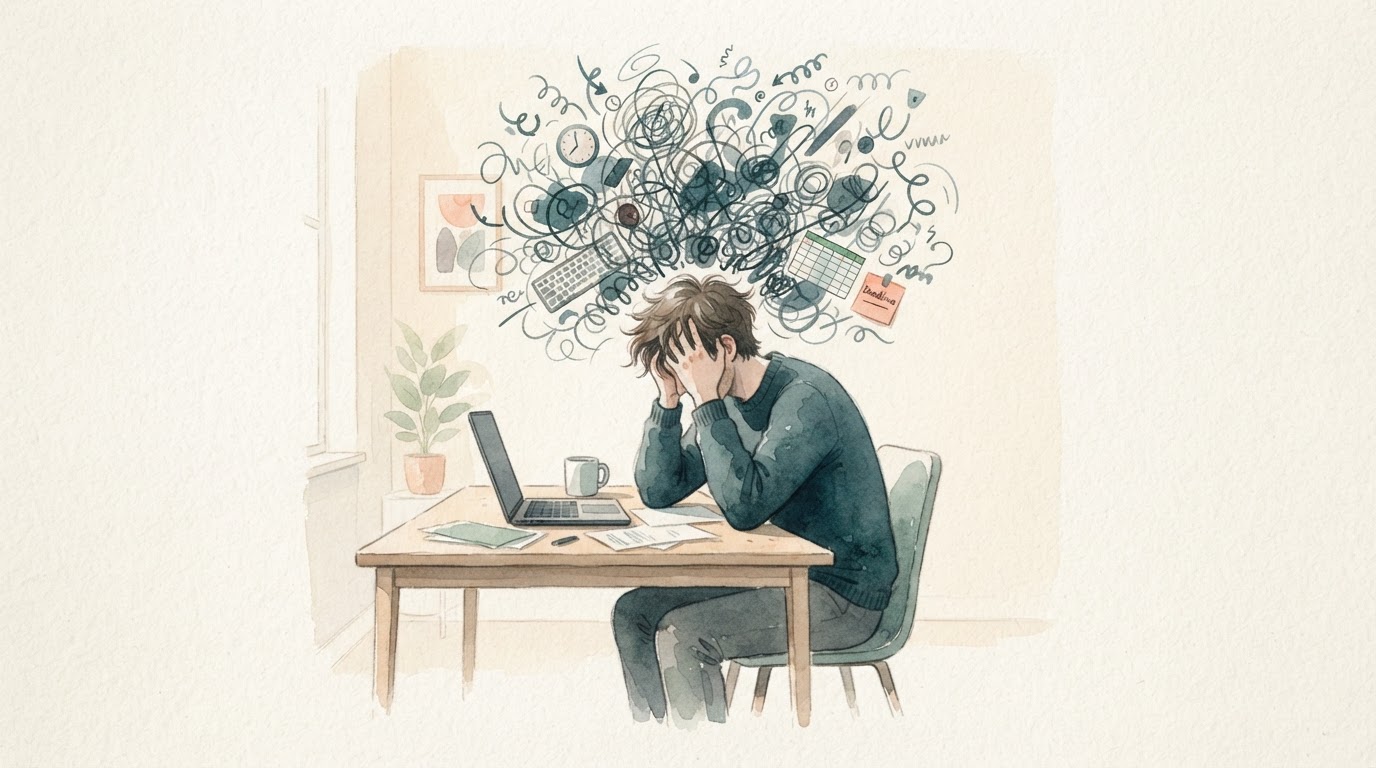
We spend roughly 90,000 hours at work over our lifetime—a staggering figure that underscores a simple truth: our jobs profoundly shape our lives. And while a challenging project or a tight deadline can cause temporary stress, a much deeper, more pervasive issue can sometimes take root. It’s the invisible architecture of your workplace—its culture. This is the collection of shared values, beliefs, and behaviors that define how your team interacts, communicates, and functions. When that culture turns sour, it doesn't just make for a bad day; it can slowly and systematically erode your mental health, seeping into your evenings, weekends, and overall sense of self. Recognizing the subtle (and not-so-subtle) warning signs is the first, most crucial step toward protecting your peace and reclaiming your well-being.
Why Workplace Culture Is a Pillar of Your Mental Health
Your workplace culture is the environment in which you grow or wilt. A healthy culture—one built on trust, respect, and psychological safety—acts as a buffer against stress and a catalyst for innovation and engagement. The American Psychological Association’s 2023 Work in America survey found that a staggering 92% of workers say it’s important to work for an organization that values their emotional and psychological well-being. When this need is met, employees are more likely to be productive, motivated, and mentally resilient.
Conversely, a toxic culture can be a direct threat to your mental health. Environments characterized by fear, disrespect, or constant pressure can trigger or exacerbate conditions like anxiety, depression, and burnout. The World Health Organization recognizes burnout as an "occupational phenomenon" resulting from chronic workplace stress that has not been successfully managed. It's not a personal failing; it's often a response to a systemic problem. Understanding this connection is vital. The persistent feelings of dread, exhaustion, or anxiety you might be experiencing aren't just "part of the job"—they are often direct signals from a culture that is fundamentally misaligned with human flourishing. 🌱
7 Signs Your Job Is Harming Your Mental Health
If your work environment feels off, it probably is. Your intuition is a powerful diagnostic tool. Below are seven common warning signs that your workplace culture might be the source of your distress. Pay attention to which of these resonate with you, not as a source of judgment, but as a gentle call to awareness.
1. The "Sunday Scaries" Have Become a Weekly Ritual
That familiar feeling of dread that starts creeping in on Sunday afternoon? It’s more than just a case of the Mondays. When it becomes a consistent, anxiety-inducing event, it's a major red flag. This anticipatory anxiety is your nervous system reacting to a perceived threat—the upcoming work week. It’s a sign that work doesn’t just feel like a chore; it feels unsafe or deeply unpleasant on an emotional level.
This dread can manifest as irritability, sadness, trouble sleeping on Sunday nights, or a desperate attempt to cram as much activity as possible into the last few hours of your weekend to distract yourself. It effectively shortens your personal time, robbing you of the rest and rejuvenation necessary to function well. A healthy job might leave you feeling tired on a Friday, but it shouldn't fill you with fear on a Sunday. 💧
- Best for: Identifying patterns of anticipatory anxiety related to your job.
- Pro tip: On Sunday evening, try a "brain dump." Write down everything you're worried about for the week ahead. Getting it out of your head and onto paper can reduce its power and help you see what's a legitimate concern versus an anxious thought pattern.
2. A Pervasive Culture of "Psychological Un-safety"
Psychological safety is the shared belief that you won't be punished or humiliated for speaking up with ideas, questions, concerns, or mistakes. In a psychologically un-safe environment, the opposite is true. You might feel afraid to ask for clarification for fear of looking incompetent, hesitant to admit a mistake because you anticipate blame instead of a solution-oriented discussion, or unwilling to pitch a creative idea because new thinking is often met with cynicism or ridicule.
This kind of culture is built on fear and control. It forces employees to wear a "work mask" and expend enormous energy on self-protection rather than collaboration and innovation. You might find yourself second-guessing every email, avoiding certain colleagues or managers, or staying silent in meetings even when you have valuable input. This constant state of high alert is mentally exhausting and is a direct path to anxiety and burnout.
- Best for: Assessing the health of team communication and trust.
- Pro tip: Pay close attention to how leaders and team members react when someone delivers bad news or admits to an error. Is the focus on blame ("Who did this?") or on solutions ("How can we fix this and prevent it from happening again?")? The answer is incredibly revealing.
3. Your Work-Life Boundaries Are Constantly Disregarded
In a toxic "always on" culture, the lines between your professional and personal life are not just blurred—they're erased. This can look like late-night emails that demand an immediate response, weekend Slack messages about non-urgent matters, or an unspoken expectation that you'll be available whenever the company needs you, regardless of the time or day. While occasional emergencies happen, a constant disregard for your personal time is a systemic problem.
This pattern prevents your brain and body from ever truly disengaging and recovering from the stresses of work. It interrupts family dinners, disrupts sleep, and turns your home—once a sanctuary—into a remote outpost of the office. Leaders in such cultures often glorify overwork, praising those who "go the extra mile" by sacrificing their nights and weekends, creating a competitive cycle of unhealthiness. 🧘
- Best for: Evaluating whether your job respects your need for personal time and recovery.
- Pro tip: Start small by setting one clear digital boundary. For example, remove work email or Slack from your personal phone, or commit to not checking messages after 7 PM. Reclaiming even a small pocket of time can make a significant difference.
4. Gossip and Cliques Overshadow Collaboration
Pay attention to how information flows in your workplace. In a healthy culture, information is shared transparently and decisions are made through collaborative processes. In a toxic one, gossip, rumors, and exclusive social circles are the primary currency. You might notice that important decisions seem to be made in "pre-meetings" among a select few, or that you only hear about significant changes through the office grapevine.
This environment breeds distrust and a sense of isolation. It can feel like navigating a high school cafeteria, where your social standing and inclusion in the right clique matter more than the quality of your work. This forces you to expend mental energy on office politics, trying to figure out who is aligned with whom and what the latest rumor is, instead of focusing on your actual job. It's emotionally draining and creates a deeply unsettling feeling of instability.
- Best for: Understanding the social-emotional landscape of your team.
- Pro tip: Instead of getting drawn into the drama, focus on building one or two genuine, positive connections with colleagues you trust. Having even one work ally can be a powerful antidote to a cliquey environment.
5. A Stark Disconnect Between Stated Values and Daily Reality
Many companies have beautifully crafted mission statements and values listed on their website: "We value our people," "We support work-life balance," "We foster innovation." A major sign of a toxic culture is when the lived, daily experience of employees directly contradicts these stated values. This is organizational hypocrisy, and it is profoundly demoralizing. ✨
For example, a company might publicly celebrate Mental Health Awareness Month while simultaneously maintaining policies that drive burnout. A manager might talk about the importance of an "open door policy" but react with defensiveness or dismissal when an employee brings up a concern. This disconnect creates cognitive dissonance—the mental stress of holding two conflicting beliefs at once. It erodes trust in leadership and breeds a deep sense of cynicism and disengagement among employees.
- Best for: Spotting organizational hypocrisy and value misalignment.
- Pro tip: Do a simple audit. Write down one of the company's core values. Then, list three concrete examples from the past month of how that value was either upheld or violated in your daily work. The results can be clarifying.
6. You Feel Stagnant and Unappreciated
Human beings have an innate need to learn, grow, and feel that their contributions matter. A workplace that thwarts these needs can be deeply damaging to your self-esteem and motivation. This sign manifests as a lack of opportunities for professional development, a complete absence of positive feedback or recognition, and a sense that you are a cog in a machine rather than a valued individual.
You might feel stuck in your role with no clear path forward. Your wins go unnoticed, while any misstep is immediately scrutinized. Feedback, if it comes at all, is vague, unhelpful, or exclusively negative. Over time, this can lead to "boreout"—a state of chronic under-stimulation and disengagement that is just as harmful as burnout. It can make you question your own competence and worth, feelings that can easily spill over into your personal life.
- Best for: Gauging your company's investment in your career and personal growth.
- Pro tip: Keep a private "brag file" or "accomplishment log." Each week, write down one thing you did well, a problem you solved, or positive feedback you received (even if it was from a peer). This serves as a powerful reminder of your value, independent of your manager's recognition.
7. You're Noticing Physical Symptoms of Chronic Stress
Our minds and bodies are inextricably linked. When your mental health is suffering due to a toxic work environment, your body often starts sending out distress signals. These aren't just "in your head"; they are real physiological responses to chronic stress.
Common physical manifestations include:
- Tension headaches or migraines, especially at the end of the workday or on Sunday nights.
- Stomach problems like indigestion, acid reflux, or irritable bowel syndrome (IBS).
- Chronic fatigue that even a full night's sleep can't fix.
- Difficulty falling or staying asleep (insomnia).
- A weakened immune system, leading to more frequent colds and illnesses.
- Jaw clenching, teeth grinding, or unexplained muscle aches.
These symptoms are your body's way of telling you that your nervous system is in a constant state of "fight-or-flight." Ignoring these signs can lead to more serious long-term health issues. It's crucial to listen to what your body is telling you. 🌿
- Best for: Connecting your mental and physical health to your work environment.
- Pro tip: Try a 3-minute body scan. Sit quietly and bring your attention to your feet, then slowly move your focus up through your legs, torso, arms, neck, and head. Notice any areas of tension, tightness, or discomfort without judgment. This practice builds awareness of how stress lives in your body.
Self-Assessment: Tracking the Impact 📊
To move from a vague feeling of unhappiness to a clear understanding of the problem, it can be helpful to track these signs over time. Use the simple chart below for two weeks. Each day, rate the severity of each sign on a scale of 0 (not present) to 3 (severely present).
----------------------------------------------------------------------
Workplace Stress Tracker: Week Of [Date]
----------------------------------------------------------------------
| Warning Sign                  | Mon | Tue | Wed | Thu | Fri | Sun |
|-------------------------------|-----|-----|-----|-----|-----|-----|
| 1. Sunday Scaries (Anticipated) |     |     |     |     |     |  _  |
| 2. Psychological Un-safety    |     |     |     |     |     |     |
| 3. Boundary Issues            |     |     |     |     |     |     |
| 4. Gossip / Cliques           |     |     |     |     |     |     |
| 5. Value Disconnect           |     |     |     |     |     |     |
| 6. Feeling Unappreciated      |     |     |     |     |     |     |
| 7. Physical Symptoms          |     |     |     |     |     |     |
----------------------------------------------------------------------
(Scale: 0 = Not Present, 1 = Mild, 2 = Moderate, 3 = Severe)
After two weeks, look for patterns. Is one sign consistently rated high? Do your physical symptoms spike after a specific type of meeting? This data is not for anyone else—it's for you. It provides concrete evidence that can validate your feelings and help you decide what to do next.
Healthy vs. Toxic Cultures: A Quick Comparison
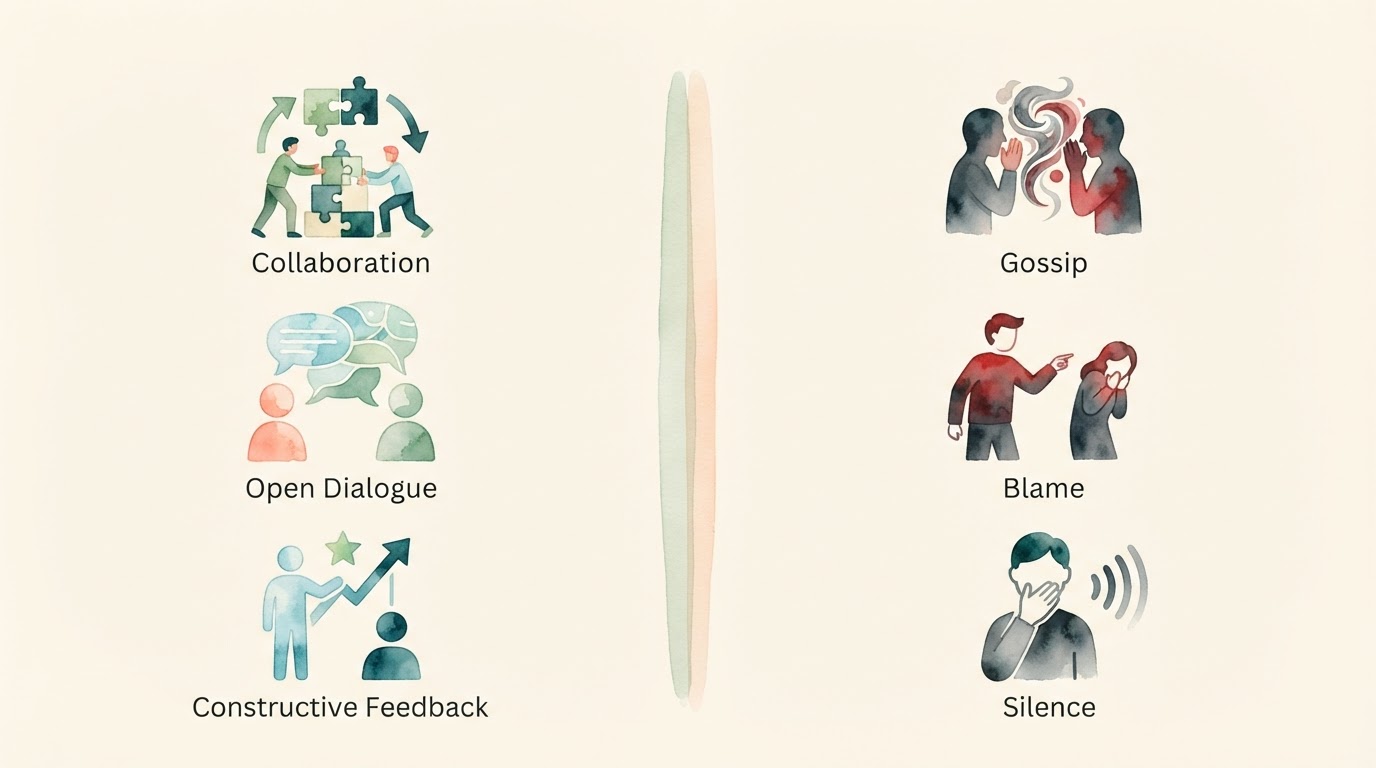
Sometimes, seeing the two extremes side-by-side can bring the most clarity. Here’s how healthy and toxic cultures differ in key areas.
| Characteristic | Healthy Culture 🌱 | Toxic Culture ⚠️ |
|---|---|---|
| Psychological Safety | People feel safe to ask questions, admit mistakes, and propose new ideas. Failure is treated as a learning opportunity. | Fear dominates. People are afraid to be vulnerable or speak up for fear of blame, shame, or retribution. |
| Communication | Information is shared openly and transparently. Communication is direct, honest, and respectful. | Communication is filtered through gossip and politics. Passive-aggression, ambiguity, and secrecy are common. |
| Feedback | Feedback is regular, specific, and intended to help people grow. Both positive and constructive feedback are given. | Feedback is rare, vague, or purely negative. "No news is good news" is the unspoken rule. Recognition is scarce. |
| Boundaries | Personal time is respected. There are clear expectations about working hours and availability. Rest is encouraged. | An "always on" mentality prevails. Emails and messages are sent at all hours, with an expectation of a quick reply. |
| Conflict Resolution | Disagreements are seen as normal and are addressed openly and constructively to find a solution. | Conflict is either avoided (leading to resentment) or becomes personal and destructive. Blame is common. |
What Can You Do? Strategies for Change 💡
Recognizing the problem is the first step. Taking action is the next. Your path forward will depend on your specific situation, but the strategies below can empower you to regain a sense of control.
First, Fortify Your Foundations
Before you try to change your external environment, it's essential to strengthen your internal one. This involves creating "buffers" that protect your mental health from the daily onslaught of stress.
- Set Micro-Boundaries: You may not be able to stop your boss from sending a 9 PM email, but you can control whether you read it. Make a conscious choice to turn off notifications or put your phone in another room after a certain hour.
- Find Your People: Cultivate your support system outside of work. Spend time with friends and family who uplift you. Having a space where you feel seen and valued for who you are, not just what you do, is a vital counterbalance.
- Invest in a "Third Place": A "third place" is a location that is not your home or your office. It could be a gym, a coffee shop, a park, or a library. Having a regular spot where you can decompress and connect with a different part of yourself is incredibly restorative.
- Practice Mindful Detachment: This doesn't mean becoming apathetic or ceasing to care about your work. It means learning to observe workplace chaos without letting it consume you. Mindfulness practices can help you create a small space between a stressful event and your reaction to it.
Talking to Your Manager: A Practical Approach
If you believe there's potential for change and you have a generally reasonable manager, initiating a conversation can be a powerful step. The key is to prepare thoroughly and approach it as a collaborative problem-solving session, not a complaint session.
- Request a Meeting: Ask for a dedicated time to talk. Don't try to have this conversation in passing.
- Gather Your Data: Use your tracker or specific, objective examples. Instead of "This place is so stressful," try "I've noticed that on days with back-to-back meetings, I get tension headaches and my productivity drops in the afternoon."
- Use "I" Statements: Frame the issue around your experience and its impact on your work. This is less likely to make the other person defensive.
- Propose a Solution: Come prepared with a suggestion. This shows you are proactive and committed to finding a resolution.
"Hi [Manager's Name], thanks for meeting with me. I'm really committed to my role here and I want to talk about how I can continue to perform at my best. I've found that the expectation to be responsive on Slack after 7 PM has been making it difficult for me to fully disconnect and recharge in the evenings, which I've noticed affects my focus the next morning. I was hoping we could discuss the possibility of setting team-wide 'quiet hours'—for example, from 7 PM to 8 AM—for non-urgent matters. I believe this could help all of us be more present and productive during the workday."
Frequently Asked Questions
What if my manager is the source of the toxicity?
This is an incredibly difficult situation. If the problem is your direct manager, speaking with them may not be productive or safe. Your options include seeking out a mentor or a more senior leader you trust for advice, consulting with HR (be aware that HR's primary role is to protect the company), or documenting incidents factually and privately. In this scenario, focusing on an exit strategy may be the most effective way to protect your well-being.
I can't tell if the culture is truly toxic or if I'm just being too sensitive. How do I know?
First, validate your feelings. If something is consistently causing you distress, it's a real problem, regardless of how others might react. "Too sensitive" is often a phrase used to dismiss legitimate emotional responses. Refer back to your self-assessment tracker. Are the negative impacts consistent? Do they affect your life outside of work? Talking to a trusted colleague can also provide a reality check. If you find they share your feelings, it's a strong indicator of a systemic issue.
I can't afford to quit my job right now. What can I do to survive?
This is a very common and practical concern. If leaving isn't an immediate option, your focus should shift to "protective shielding." Double down on the strategies in the "Fortify Your Foundations" section. Practice emotional detachment at work—do your job well, but consciously stop investing your entire emotional self in the outcomes. Use your time outside of work to build your skills, update your resume, and slowly and discreetly begin networking and exploring other opportunities. Viewing your current job as a temporary means to an end, rather than a permanent reality, can restore a sense of agency.
When to See a Professional
If you're experiencing persistent symptoms of anxiety or depression, if your work stress is negatively impacting your health and relationships, or if you find yourself relying on unhealthy coping mechanisms, it may be time to speak with a mental health professional. A therapist or counselor can provide a confidential space to process your experiences, develop coping strategies, and help you navigate difficult decisions about your career. You don't have to carry this weight alone.
At Araam, we believe your well-being comes first. Our AI companion is here 24/7 to help you process difficult feelings, practice mindfulness, and build resilience. You're not alone. 🕊️