Slow Living: A Practical Guide for People Who Feel Rushed by Everything
The phone on the nightstand vibrated, its harsh blue light slicing through the pre-dawn quiet. Before my eyes were fully open, my thumb was already swiping, unlocking a digital torrent: a work email m
The phone on the nightstand vibrated, its harsh blue light slicing through the pre-dawn quiet. Before my eyes were fully open, my thumb was already swiping, unlocking a digital torrent: a work email marked URGENT, a news alert about a global crisis, three group chats buzzing with weekend plans I already felt too tired for, and a calendar reminder that my day was scheduled down to the minute. I stumbled into the kitchen, downed a cup of lukewarm coffee while scrolling through a feed of curated perfection, and felt a familiar tightness in my chest. The day hadn't even truly begun, and I was already behind, already late, already rushed. It was in that moment, staring at my own harried reflection in the dark screen of my phone, that a quiet question surfaced: What if there was another way to live?
[[IMAGE:fig1|A quiet, sun-drenched kitchen with a steaming mug of tea on a wooden table, a half-read book, and a small vase of wildflowers. The window looks out onto a green, misty morning.|A serene, minimalist photograph of a slow morning ritual. A sunbeam illuminates a cozy kitchen scene. A ceramic mug releases steam next to an open book and a small pot of wildflowers. The mood is peaceful, calm, and inviting.]]
What is Slow Living, Really?
Slow living is a lifestyle philosophy centered on intentionality, mindfulness, and a conscious reduction in the pace of life. It’s not about being lazy, unproductive, or abandoning all modern convenience. Rather, it’s a deliberate shift in mindset away from the glorification of "busy" and toward a more meaningful, connected, and sustainable way of existing. It means choosing depth over breadth, quality over quantity, and purpose over pressure.
At its core, the slow living movement is a response to the pervasive feeling that modern life is accelerating beyond our human capacity to keep up. We are constantly bombarded with information, demands on our time, and the pressure to do more, be more, and have more. Slow living offers an antidote. It encourages us to reclaim our time and attention, to savor moments instead of simply collecting them, and to align our daily actions with our deeper values. 🕊️
This can manifest in countless ways: preferring a home-cooked meal with fresh ingredients over fast food, taking a long walk without headphones, choosing to read a physical book instead of scrolling through social media, or mastering a single craft instead of dabbling in a dozen hobbies. It’s about finding your own personal rhythm, one that feels nourishing and sustainable, rather than constantly trying to match the frantic beat of the world around you.
The Evidence-Based Benefits of Slowing Your Roll
Slowing down isn’t just a pleasant idea; it has measurable positive effects on our mental and physical health. The benefits are rooted in how we regulate our nervous system. Most of us spend our days in a state of low-grade "fight-or-flight," governed by the sympathetic nervous system. This is the part of us that responds to stress, releasing hormones like cortisol and adrenaline to keep us alert and ready for perceived threats—like a demanding boss, a traffic jam, or an overflowing inbox.
When we intentionally slow down, we activate the parasympathetic nervous system, often called the "rest-and-digest" system. This system does the opposite: it calms the body, lowers heart rate and blood pressure, improves digestion, and promotes cellular repair.
Here are some of the key benefits backed by research:
- Reduced Stress and Anxiety: By lowering cortisol levels, slow practices like mindful breathing, walking in nature, and single-tasking can significantly decrease feelings of stress and anxiety. A 2018 study in the International Journal of Environmental Research and Public Health found that even short periods spent in natural environments (a key tenet of slow living) can reduce stress. 🌱
- Improved Cognitive Function: When our brains aren't constantly switching between tasks, our ability to focus, solve problems, and think creatively improves. Multitasking is largely a myth; what we're actually doing is "task-switching," which is mentally exhausting and inefficient. Slowing down to focus on one thing at a time allows for deeper, more effective thinking.
- Enhanced Emotional Regulation: Mindfulness, a cornerstone of slow living, is proven to help us become more aware of our emotions without being controlled by them. We learn to observe feelings of frustration, impatience, or sadness without immediate reaction, giving us the space to choose a more considered response.
- Better Physical Health: Chronic stress is linked to a host of health problems, from heart disease to weakened immunity. By engaging the "rest-and-digest" response, slow living can help mitigate these risks and promote overall physical well-being. 💧
[[IMAGE:fig2|A close-up, top-down shot of a person's feet in comfortable walking shoes, standing on a forest path covered in fallen leaves and dappled sunlight.|An evocative, detailed shot focusing on the feet of a person on a mindful walk. The texture of the fallen leaves, the dirt path, and the play of light and shadow suggest a sensory, grounded experience in nature.]]
The Morning Ritual: Reclaiming Your Breakfast
For many, the morning is the most rushed part of the day. It sets a frantic tone that can linger for hours. One of the most powerful and accessible ways to begin practicing slow living is to reclaim your morning, specifically your breakfast. This isn't about adding another complicated task to your to-do list; it’s about transforming an existing one into a moment of peace.
From Grab-and-Go to Sit-and-Savor
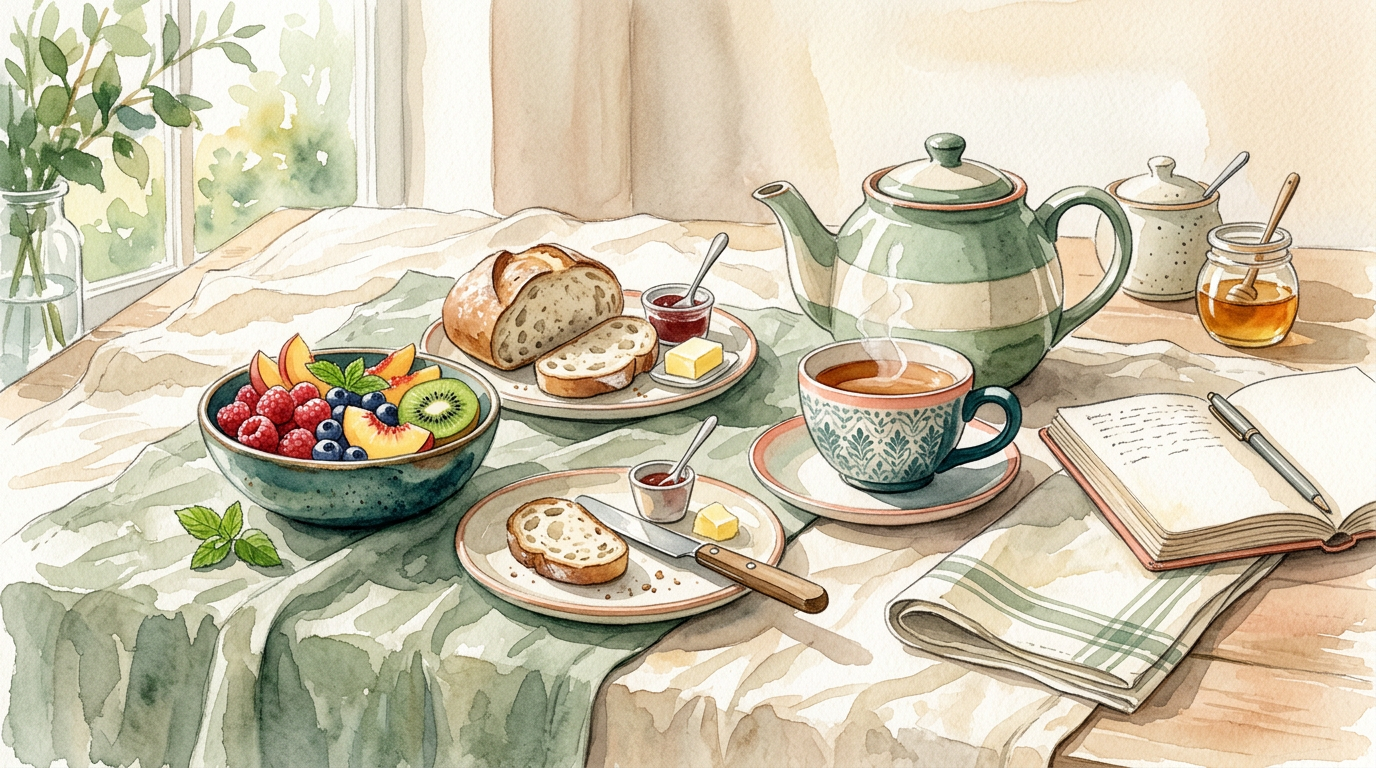
The goal is to shift breakfast from a chore to a ritual. This means moving away from a protein bar eaten in the car or a piece of toast scarfed down over the sink while scrolling on your phone. It means creating a small window of time—even just 15-20 minutes—to sit down and be present with your food.
Think about the sensory experience. Notice the color of the berries in your oatmeal, the smell of your coffee brewing, the warmth of the mug in your hands. This simple act of paying attention anchors you in the present moment and gently pushes away the anxieties about the day ahead.
Tips for a Mindful Morning
- Prepare the Night Before: The secret to a slow morning is often a little prep the evening prior. Lay out your clothes, pack your bag, or even prep ingredients for breakfast (like overnight oats) to reduce morning decision-fatigue and create more space for calm.
- No Screens at the Table: Make the breakfast table a screen-free zone. This one change can be transformative. Instead of starting your day with a flood of external information, you start it by checking in with yourself.
- Engage Your Senses: As you eat, consciously notice the taste, texture, and aroma of your food. Chew slowly. This not only makes the meal more enjoyable but also aids digestion.
- Find Your Anchor: While you eat, you can look out a window, listen to the sounds of your home waking up, or simply focus on the sensation of your breathing. This provides a gentle focal point for your attention.
- Start Small: If a 20-minute seated breakfast feels impossible, start with 5 minutes. The goal is progress, not perfection. The consistency of the ritual is more important than its duration. 🧘
Purposeful Movement: The Art of the Slow Walk
In a world obsessed with hitting 10,000 steps and closing our fitness rings, we've often lost the simple joy of walking for its own sake. A "slow walk" is different from a power walk for exercise. Its purpose isn't to burn calories, but to connect with your surroundings and your own body. It's a moving meditation.
To practice a slow walk, leave your headphones and your phone behind (or keep it in your pocket on silent). The goal is to open up your awareness.
- Notice your feet: Feel the sensation of your feet making contact with the ground—the solid pavement, the soft grass, the uneven dirt path.
- Look around: Don't just look ahead. Look up at the sky, at the tops of buildings, at the leaves on the trees. Notice details you've never seen before on a familiar route.
- Listen: What can you hear? The distant hum of traffic, birdsong, the rustle of leaves, the sound of your own footsteps.
- Breathe: Sync your breath with your steps. For example, inhale for four steps, and exhale for four steps. This simple rhythm can be incredibly grounding.
A 15-minute slow walk around your block can be more restorative for your mind than a 45-minute slog on the treadmill while watching the news. It’s an act of tuning in rather than tuning out. 🌿
Conscious Consumption: More Than Just What You Buy
Slow living extends beyond our personal habits and into our relationship with the world, particularly in how we consume. This isn't just about minimalism or buying less stuff (though that's part of it). It’s about being more conscious and intentional about everything we take in—from material goods to media and food.
Fast vs. Slow Consumption: A Comparison
| Category | Fast Consumption (The Rush) | Slow Consumption (The Rhythm) |
|---|---|---|
| Shopping | Impulse buys, chasing trends, fast fashion, accumulating items for a brief dopamine hit. | Thoughtful purchases, choosing durable, meaningful, or ethically made items. "Buy less, choose well." |
| Food | Fast food, highly processed meals, eating while distracted (at a desk, in the car). | Home-cooked meals, farmers' markets, knowing where food comes from, savoring each bite. |
| Media | Endless scrolling, "doomscrolling," binge-watching, consuming content passively and reactively. | Curating your feed, setting time limits, reading long-form articles/books, watching a single film with full attention. |
| Information | Reacting to breaking news headlines, skimming multiple sources superficially. | Reading deeply from trusted sources, allowing time to process information before forming an opinion. ✨ |
This shift reduces not only physical clutter but also mental clutter. By curating what we let into our lives, we protect our peace and energy.
Integrating Slow Principles into a Busy Life
The biggest misconception about slow living is that it’s a privilege reserved for those with abundant free time and resources. In reality, you can practice slow living even with a demanding job and a busy family life. It’s about finding pockets of stillness and intention within the life you already have.
Slow living is not about doing less; it’s about doing what you do with more presence, purpose, and peace. It's the difference between seeing your life as a checklist to be completed and seeing it as a journey to be experienced.
Small changes, practiced consistently, have a cumulative effect on our well-being. It is not about a radical life overhaul overnight. It's about planting small seeds of slowness and tending to them. 💡
The Power of Small, Slow Moments
Consider the cumulative impact of integrating just 15-20 minutes of intentional slowness into your day.
How 20 Minutes of Daily 'Slowness' Adds Up

Timeframe     | Cumulative 'Slow' Time
--------------|---------------------------
Per Day       | 20 minutes
Per Week      | 2 hours, 20 minutes
Per Month     | ~10 hours
Per Year      | 121 hours (or 5 full days!)

The Impact on Your Well-being:
[■■■■■■■■■■■■■■■■■■■■] Feeling of Control
[■■■■■■■■■■■■■■■■■■■■] Stress Reduction
[■■■■■■■■■■■■■■■■----] Mental Clarity
📊 This chart illustrates that even a tiny daily investment yields a significant return in terms of reclaimed time and improved mental state over the long run. Start by identifying one "fast" habit you'd like to change. Maybe it's checking your phone first thing in the morning. Try replacing it with five minutes of stretching or simply looking out the window. That's a powerful first step.
Frequently Asked Questions
Is slow living just for people with a lot of money and time?
Not at all. While images of slow living sometimes feature idyllic countryside estates, its principles are universal and adaptable. A slow moment can be as simple and free as taking ten deep breaths before starting your car, savoring your one cup of coffee without distractions, or choosing to borrow a book from the library instead of buying one. It's a mindset shift, not a budget line-item.
I feel completely overwhelmed. Where do I even begin?
Start with a "subtraction" rather than an "addition." What is one small thing you can remove to create space? Perhaps it’s turning off notifications for one app. Or choosing not to listen to a podcast on your commute and just having silence. The easiest entry point is often finding a moment you already have (like eating lunch) and simply deciding to be more present within it. Don't try to overhaul your whole life at once.
Can I practice slow living in a big, noisy city?
Absolutely. In fact, it can be even more impactful in an urban environment. A slow walk in a city park is a powerful antidote to the urban rush. You can practice conscious consumption by supporting local artisans or farmers' markets. You can create a peaceful sanctuary within your own apartment. Slow living is an internal state of being that you can cultivate anywhere, regardless of your external environment.
Key Takeaways for Starting Your Slow Living Journey
- Start Small: Choose one micro-habit, like a five-minute screen-free breakfast or a short, mindful walk.
- Focus on Intention: The goal isn't to move at a snail's pace, but to do things with purpose and awareness.
- Practice Single-Tasking: When you eat, just eat. When you walk, just walk. Give your full attention to the task at hand.
- Curate Your Consumption: Be mindful of what you consume, from media and information to food and material goods.
- Embrace Imperfection: Some days will be slower and more intentional than others. That's okay. This is a practice, not a performance.
When to See a Professional
Feeling constantly rushed, overwhelmed, and anxious can sometimes be more than just a byproduct of a fast-paced lifestyle. If these feelings are persistent, disruptive to your daily life, and accompanied by symptoms like chronic fatigue, loss of interest in things you once enjoyed, changes in sleep or appetite, or a sense of hopelessness, it might be a sign of burnout, anxiety, or depression. While slow living practices can be a wonderful support, they are not a substitute for professional mental healthcare. A therapist or counselor can provide you with targeted strategies and support to address underlying issues.
Feeling rushed is a modern epidemic, but it doesn’t have to be your permanent state. Araam is here to help you find moments of calm and build a more intentional life, one breath at a time. Explore our library of guided meditations and mindfulness exercises to support your slow living journey.