
Araam vs Calm vs Headspace: An Honest Feature-by-Feature Comparison for 2026
In the ever-expanding universe of digital wellness, choosing a companion for your mental health journey can feel as overwhelming as the stress you’re trying to manage. Three celestial bodies shine bri
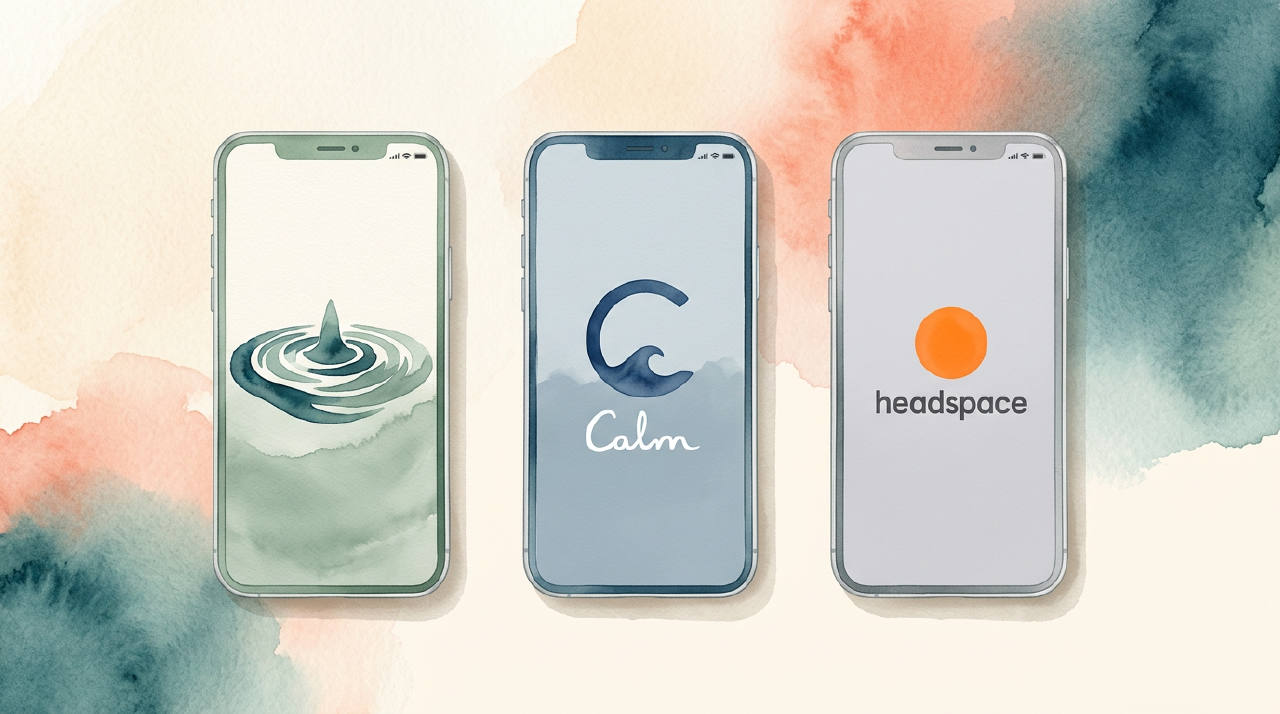
In the ever-expanding universe of digital wellness, choosing a companion for your mental health journey can feel as overwhelming as the stress you’re trying to manage. Three celestial bodies shine brightest: Calm, the tranquil giant; Headspace, the mindful teacher; and Araam, the new, intelligent star on the horizon. While the first two are household names, the landscape of wellness is shifting. We no longer just want a library of content; we crave a personalized, private, and culturally attuned experience. This isn't just about which app has more meditations, but which one truly sees you, understands you, and grows with you. Let’s take an honest, feature-by-feature journey to discover which of these platforms is the best fit for your unique mind in 2026.
The Wellness App Boom: Finding Your Digital Sanctuary
The best mental wellness app is the one you actually use. It’s a simple truth that underscores the importance of finding the right fit. For years, Calm and Headspace have dominated the conversation, and for good reason. Calm has positioned itself as a virtual retreat, a soft-focus world of Sleep Stories and soothing soundscapes designed to lull you into a state of blissful relaxation. Headspace, conversely, acts as a friendly but firm teacher, using its signature animated style and structured courses to demystify mindfulness and build a sustainable meditation practice, one skill at a time.
Enter Araam. Born from the understanding that wellness is not one-size-fits-all, Araam’s philosophy is rooted in radical personalization and inclusivity. It leverages a sophisticated, compassionate AI to act as your personal wellness guide, creating a dynamic, responsive experience that traditional libraries can't match. It asks: what if your app didn't just offer you a path, but helped you draw your own map? As we dive into this comparison, we'll explore how these three distinct philosophies translate into tangible features, helping you decide which digital sanctuary is truly built for you.
At a Glance: Araam vs. Calm vs. Headspace in 2026
To understand the core differences, let's start with a high-level overview. Each app has evolved, but by 2026, their unique strengths and weaknesses have become even more pronounced. Here’s how they stack up on the most critical features.
| Feature | Araam | Calm | Headspace |
|---|---|---|---|
| Annual Price | $59.99 USD | $69.99 USD | $69.99 USD |
| Free Tier | Generous: foundational courses, daily mood check-in & AI chat, 50+ core meditations & soundscapes. | Limited: a few select meditations, timed unguided sessions, one Sleep Story. | Limited: "Basics" course, a few select single meditations and sleep exercises. |
| AI Companion | Core feature: Conversational AI that learns, personalizes content, and provides insights based on journal entries. | Basic: Algorithmic recommendations for content based on listening history. | Basic: Algorithmic recommendations and some structured "pathways." |
| Encrypted Journaling | Yes, end-to-end encrypted. Your private thoughts are unreadable by anyone, including Araam. ✨ | No. A simple notes feature is available, but it is not end-to-end encrypted. | No. A simple notes feature is available, but it is not end-to-end encrypted. |
| Cultural Fit | High: Diverse teachers, culturally specific meditation libraries (e.g., Sufi wisdom, Dharmic practices), and multi-lingual support. | Moderate: Growing library of diverse voices but primarily rooted in a Western wellness model. | Moderate: Focus on science-backed mindfulness, with some diversity in teachers but less in cultural traditions. |
| Offline Mode | Extensive: Download entire courses, personalized playlists, and journal access. | Good: Download most audio content for offline listening. | Good: Download most audio content for offline listening. |
| Escalation Path | Integrated: AI can detect patterns of distress and suggest vetted, localized professional resources (therapists, crisis lines). | Directory: Offers links and resources in a separate section of the app. | Directory: Provides a "Clinical Resources" section with external links. |
Which is best for whom?
Based on this initial comparison, a clear picture emerges. Calm is ideal for users whose primary goal is relaxation and better sleep, and who enjoy a vast, celebrity-filled content library. Headspace excels for those who want a structured, educational approach to building a foundational mindfulness habit. Araam, however, is built for the user who craves a deeper, more personalized, private, and culturally relevant wellness partner. 🕊️
Diving Deeper: Price and Value Proposition
The annual subscription fee is often the first hurdle for a new user. While all three apps are in a similar price bracket for their premium offerings, the true value lies in what you get for your money—and what you can access for free.
What's in the Free Tier?
A good free tier is a gateway, offering a genuine taste of the experience without pressure.
- Calm & Headspace: Their free offerings feel more like a trial. You get access to a handful of foundational exercises and meditations. While useful for a few days, you will hit the paywall quickly if you want to explore different topics, lengths, or teachers. They give you a look through the window but keep the door mostly locked.
- Araam: Araam's approach is different. The free tier is designed to be genuinely useful for the long term. It includes not only a robust library of essential meditations and sleep aids but also access to the core AI check-in and mood-tracking features. The philosophy is simple: everyone deserves a space to check in with themselves. The premium subscription unlocks the full power of the AI, advanced journaling insights, and the entire content library, but the free version remains a powerful tool in its own right. 🌱
Unpacking the Premium Price Tag
At around $60-$70 per year, a premium subscription is an investment in your mental well-being. Calm and Headspace justify this with sheer volume (Calm) or structured quality (Headspace). You're paying for access to thousands of hours of audio content.
Araam's value proposition is different. For a slightly lower annual fee, you're not just buying a library; you're investing in a personalized service. The AI companion's ability to learn from your moods, journal entries (which it can't read, but can analyze for sentiment and themes using on-device processing), and feedback creates a bespoke wellness plan that evolves with you. It's the difference between a public library and a personal librarian who knows your tastes and always has the perfect recommendation.
The Core Experience: Content, Personalization, and Philosophy
Beyond the price, the daily user experience is what truly defines these apps. What do you do when you open the app? How does it make you feel?
Calm: The Sleep & Relaxation Empire
Open Calm, and the first thing you'll hear is a gentle nature sound. The interface is designed to be, well, calming. Its biggest claim to fame is the Sleep Story, bedtime stories for adults often read by famous voices like Matthew McConaughey or Harry Styles. The library is massive, encompassing guided meditations, music for focus or sleep, and masterclasses on various wellness topics. However, this vastness can sometimes lead to a "paradox of choice," leaving users unsure where to start. Personalization is limited to recommendations based on what you've previously played.
Headspace: The Mindfulness Skill-Builder
Headspace is the friendly professor of the app world. Its core curriculum, including the foundational "Basics" courses, is designed to teach the "how" and "why" of meditation. Led by co-founder Andy Puddicombe's reassuring voice, the app uses charming animations to explain complex concepts. The experience is linear and skill-focused. If you want to learn the fundamentals of mindfulness from the ground up in a structured, non-intimidating way, Headspace is unparalleled. The "Move Mode" for mindful exercise and "Focus" music also add significant value.

Araam: The AI-Powered Personal Guide 💡
Araam offers a fundamentally different interaction. When you open the app, your first touchpoint is a gentle check-in with your AI companion. "How are you feeling today, Sarah?" or "I noticed you've been journaling about work stress. Would a 5-minute breathing exercise for focus be helpful right now?" This isn't a simple recommendation engine; it's a conversational, relational approach.
The AI helps you navigate the extensive library of content, which is just as high-quality as its competitors. But instead of you searching for a meditation on anxiety, Araam might proactively suggest one after you log a "stressed" mood. It can create a custom practice for your week based on your stated goals and recent feelings. This removes the guesswork and decision fatigue, making your practice feel less like a chore and more like a conversation with a wise and caring friend.
Security and Privacy: Is Your Digital Journal Safe?
As we pour more of our inner lives into these apps, the question of data privacy becomes paramount. Who holds the key to your most private thoughts?
The Gold Standard: End-to-End Encrypted Journaling
This is where Araam establishes itself as a leader. Journaling is a cornerstone of cognitive behavioral therapy and self-awareness, but the idea of a company having access to these thoughts is unsettling. Araam's journaling feature is end-to-end encrypted (E2EE). This means your entries are scrambled before they leave your device and can only be unscrambled on your device. No one at Araam, no hacker, no government agency can read them. This commitment to privacy is non-negotiable for a truly safe psychological space.
True wellness isn't about finding a single, perfect path. It's about having a guide that understands your unique map—your culture, your experiences, your voice—and helps you navigate your own terrain.
Data Policies of Calm and Headspace
Calm and Headspace have robust security policies and protect your data, but they do not currently offer E2EE for their note-taking or journaling features. Your data is used to improve the service and personalize recommendations. While this is standard practice and generally safe, it does not offer the same level of absolute privacy as E2EE. For users who want to journal about deep-seated fears, traumas, or insecurities, this distinction is critical.
Cultural Fit and Representation
Mental wellness is not a monolith. The practices that resonate, the voices that comfort, and the wisdom that guides are deeply tied to culture and identity.
A significant and valid criticism of the mainstream wellness industry has been its largely Western, secular Buddhist lens. Araam is built from the ground up to challenge this. Beyond just having teachers of color, it actively curates content from a spectrum of global wisdom traditions.
What this looks like in practice:
- Diverse Content Libraries: You can find meditations based on Sufi poetry, mindfulness exercises rooted in Dharmic principles, Stoic reflections, and breathing techniques from Indigenous traditions, all sitting alongside evidence-based secular practices.
- Authentic Voices: The teachers are not just diverse in appearance but are authentic practitioners and experts from within these traditions.
- Language and Nuance: The app offers content in multiple languages, understanding that the language we think and feel in matters.
While Calm and Headspace have made positive strides in diversifying their teacher rosters, their core content library remains largely anchored in a singular view of mindfulness. Araam's approach is a mosaic, celebrating the idea that there are many paths up the same mountain. 🌿
Features for the Modern User: Usability and Support
Let's look at the practical features that affect your day-to-day use.
Offline Access and Support Escalation
All three apps offer robust offline modes, allowing you to download your favorite sessions for flights, commutes, or digital detoxes. Araam's advantage here is the ability to download AI-curated playlists and access your encrypted journal offline, ensuring your companion is always with you.
A more critical differentiator is the escalation pathway. What happens when an app isn't enough? Calm and Headspace provide static directories of resources—helpful, but requiring the user to do the heavy lifting of vetting and contacting help.
Araam's AI is trained to recognize patterns of language that might indicate severe distress (based on on-device analysis of your private journal, without reading the content itself). If such a pattern is detected, the app can initiate a gentle, user-controlled workflow to connect you with vetted, localized professional resources, such as a therapist directory or a 24/7 crisis line. It bridges the gap between self-care and professional care in a way that feels supportive, not alarming. 📊
User Engagement Trajectory
A simple ASCII chart can help visualize the intended user journey. For many, Calm/Headspace engagement can peak and then wane as content becomes repetitive. Araam aims for steady, sustained growth in well-being by constantly adapting.
App Engagement & Well-being Over Time

            |
Araam (AI)  | --------------- steadily increasing engagement ------->
            |            /
Calm/H-space| ---- peak /-- plateau/decline --
            |    /
            +-------------------------------------------------->
             Initial Use      3 Months      6 Months
Frequently Asked Questions (FAQs)
Which app is best for absolute beginners?
For someone who has never meditated before and wants a structured, hand-held introduction, Headspace is arguably the best starting point. Its "Basics" course is a masterclass in teaching the fundamentals simply and effectively.
Can these apps replace therapy?
Absolutely not. This is a critical distinction. Araam, Calm, and Headspace are wellness tools, not clinical treatments. They are a fantastic supplement to therapy or a great resource for managing everyday stress, improving sleep, and building self-awareness. They are like a gym for your mind, whereas a therapist is like a physical therapist who helps you heal an injury.
Is the AI in Araam actually useful or just a gimmick?
It's a valid question in a world full of AI hype. In Araam, the AI is not a novelty; it is the core of the product's philosophy. By handling the tasks of personalization, curation, and gentle accountability, it frees you up to focus on your practice. It's the difference between a static book and a responsive teacher. The privacy-first design ensures this utility doesn't come at the cost of your data security, making it a genuinely powerful and trustworthy tool.
The Verdict: Which App is Right for You in 2026?
After a deep dive, the choice becomes less about which app is "best" and more about which app aligns with your personal needs and values.
-
Go with Calm if: Your primary goals are sleep and relaxation. You love variety, enjoy celebrity content, and want a vast library of soothing sounds and stories to get lost in.
-
Go with Headspace if: You are a beginner who wants to learn the science and skills of mindfulness in a structured, educational format. You appreciate a clear path and a consistent teaching style.
-
Go with Araam if: You are looking for a next-generation wellness tool. You value privacy (E2EE journaling), deep personalization (the AI companion), and cultural representation. You want an app that does more than just offer content—you want a partner that grows and adapts with you on your journey.
For the modern user in 2026, who understands the importance of privacy, demands a personalized experience, and sees wellness through a global lens, Araam presents the most compelling and future-proof vision for what a mental wellness companion can be.
When to See a Professional
While apps like Araam can be powerful tools for well-being, they are not a substitute for professional medical advice, diagnosis, or treatment. If you are experiencing significant emotional distress, persistent low mood, overwhelming anxiety, or thoughts of harming yourself or others, please reach out to a qualified mental health professional, a primary care doctor, or a local crisis line. Your well-being is the top priority, and seeking professional help is a sign of strength.
Your Journey with Araam
Ready to see what a truly personalized wellness journey feels like? The first step is often the most important. Download Araam today and try our generous free tier to experience your first AI-guided check-in. Begin your journey not just towards a calmer mind, but a more understood self. 💧