Sleep Trackers Compared: Araam, Sleep Cycle and AutoSleep Head to Head
That groggy, heavy-headed feeling after a restless night is a universal language. We’ve all been there, staring at the ceiling, counting sheep, and then stumbling through the next day in a fog. In our
That groggy, heavy-headed feeling after a restless night is a universal language. We’ve all been there, staring at the ceiling, counting sheep, and then stumbling through the next day in a fog. In our modern quest for self-improvement, sleep has rightfully taken center stage as a pillar of well-being, right alongside diet and exercise. And where there's a quest, there's technology promising a map. Sleep tracking apps have flooded the market, offering to decode the mysteries of our slumber. But with so many options, which one is right for you? Today, we’re putting three of the most popular contenders under the microscope: Araam, the holistic wellness companion; Sleep Cycle, the long-standing audio expert; and AutoSleep, the data-dense Apple Watch powerhouse. We'll dive deep into their accuracy, privacy practices, and—most importantly—their ability to turn raw data into a better night's rest. 🧘
What Are We Really Measuring? A Primer on Sleep Tracking Tech
Before we compare our contenders, it's essential to understand what's happening when you "track" your sleep with an app. Most consumer-grade sleep trackers don't measure brainwaves the way a clinical sleep study (polysomnography) does. Instead, they use the sophisticated sensors already built into your smartphone or smartwatch to make highly educated guesses.
These apps primarily rely on two types of data:
- Motion Data: Your phone or watch's accelerometer detects your movements throughout the night. The logic is simple: less movement generally correlates with deeper sleep, while more tossing and turning indicates lighter sleep or wakefulness.
- Audio Data: Some apps use your phone's microphone to listen for ambient sounds. This can include snoring, sleep talking, coughing, or other environmental noises that might be disrupting your rest.
When you add a smartwatch like the Apple Watch into the mix, you unlock a richer dataset, including heart rate and heart rate variability (HRV). Your heart rate naturally lowers during sleep, and specific patterns in its fluctuation can be strong indicators of different sleep stages (Light, Deep, and REM). Apps that can leverage this data often provide a more nuanced and accurate picture of your sleep architecture.
It's crucial to remember that these are estimations. While they have become remarkably sophisticated, they are tools for identifying trends and building self-awareness, not for medical diagnosis. 🌱
The Contenders: A Quick Introduction
Each of our three apps comes to the table with a different philosophy. Understanding their core focus is the first step in finding your perfect match.
Araam: The Holistic Companion
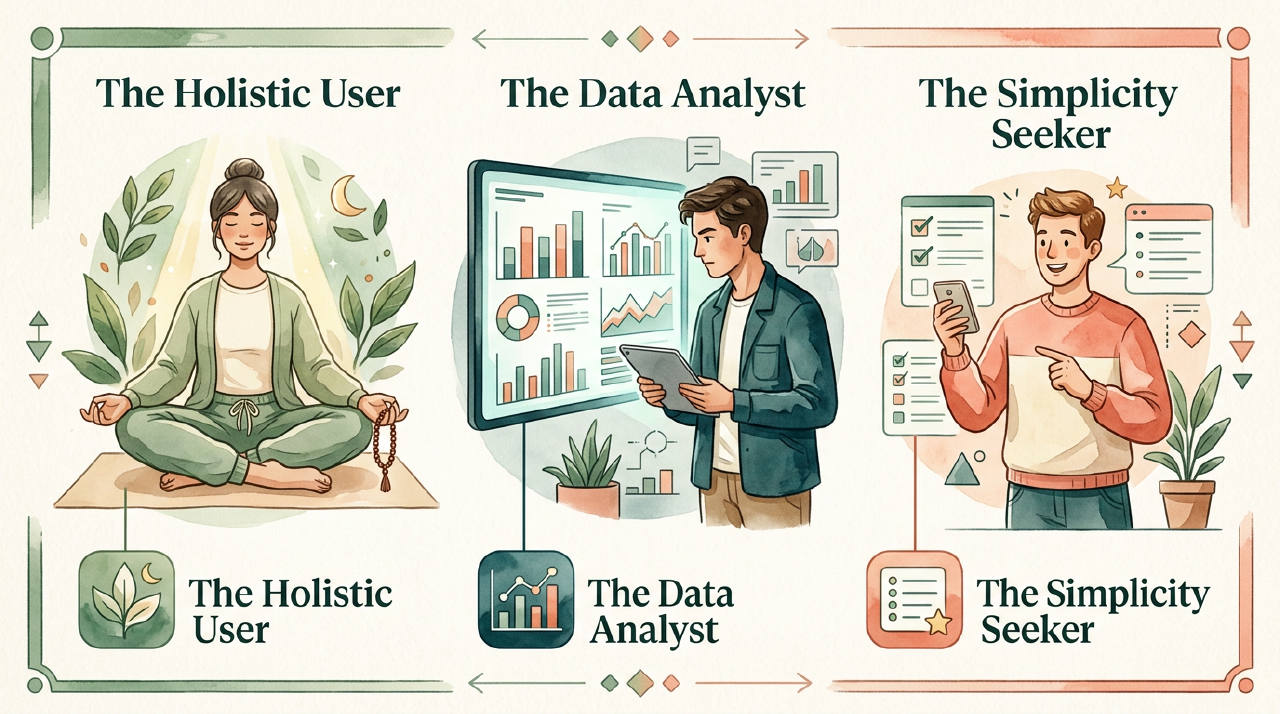
Araam isn't just a sleep tracker; it's designed as an integrated mental wellness companion. Its sleep tracking feature is a cornerstone of a much larger ecosystem that includes guided journaling, mood tracking, and mindfulness exercises. Araam’s core premise is that sleep doesn't happen in a vacuum—it's deeply intertwined with your mental and emotional state throughout the day. It aims to connect the dots between your daily habits, your feelings, and the quality of your rest.
Sleep Cycle: The Audio Pioneer
Sleep Cycle is one of the original players in the digital sleep-tracking space. Its claim to fame is its patented sound analysis technology. By placing your phone on your nightstand, the app listens to your sounds to analyze your sleep patterns. While it also uses the accelerometer, its strength lies in identifying sound-related disturbances. It's famous for its smart alarm, which aims to wake you during your lightest sleep phase to help you feel more refreshed.
AutoSleep: The Data-Lover's Dream
AutoSleep is built exclusively for Apple Watch users and is designed to be the most comprehensive, data-rich tracker available on the platform. If you love digging into graphs, charts, and metrics, AutoSleep is your playground. It automatically tracks your sleep without you needing to press a "start" or "stop" button, then presents the data through a unique system of concentric rings that measure sleep quality, sleep duration, deep sleep, and heart rate. It’s for the user who wants to quantify everything.
Head-to-Head: The Ultimate Sleep Tracker Comparison
So, how do these three apps stack up when compared on the metrics that matter most? We've broken it down across seven key axes to give you a clear, side-by-side view. 📊
| Feature | Araam | Sleep Cycle | AutoSleep |
|---|---|---|---|
| Primary Method | Smartphone accelerometer & mic; enhanced with Apple Watch sensors (HR, HRV). | Smartphone microphone & accelerometer. | Apple Watch sensors only (HR, HRV, motion). Processes data from Apple Health. |
| Platform & Cost | iOS & Android. Free version with limited features; Premium subscription for full access. | iOS & Android. Free version with basic tracking; Premium subscription for advanced features. | iOS / watchOS only. One-time purchase. |
| Accuracy & Data | High, especially with Apple Watch. Tracks Light, Deep, REM, Time in Bed, Time Asleep, and a holistic "Sleep Score." | Moderate to High. Tracks sleep phases and quality. Excels at detecting and recording audio events (e.g., snoring). | Very High. Considered one of the most accurate consumer-grade trackers. Provides deep data on readiness, sleep debt, HRV, and more. |
| Data Interpretation | Excellent. Connects sleep data with journal entries and mood scores to provide personalized, actionable insights. Focuses on the "why." | Good. Provides a sleep quality score and graphs. Trends analysis shows how factors like weather or day of the week affect your sleep. | Good, but complex. Uses a "rings" system that can have a steep learning curve. Rich in data but can be overwhelming for new users. |
| Journaling & Lifestyle | Excellent. Fully integrated, guided journaling is a core feature. Prompts you to connect daily activities (caffeine, stress) to sleep outcomes. | Basic. Offers simple "Sleep Notes" where you can tag factors like "Drank Coffee" or "Stressful Day" to see correlations. | Basic. Allows you to add tags and notes, but it's not a primary feature. Relies more on automatic data correlation. |
| Privacy Policy | Privacy-first. Data is encrypted and anonymized. Part of a secure mental health platform. Clear user-centric policies. | Good, with a caveat. Data is generally secure, but the audio recording feature can be a concern for some users. | Excellent. All processing is done on your device. The developer has a strong, public stance on not collecting user data. |
| Smart Alarm | Yes. Wakes you within a customized window during your lightest sleep phase. | Yes. This is one of its most famous and well-regarded features. | Yes. Integrates with the Apple Watch's native alarm system to provide smart wake-up functionality. |
Deep Dive: Accuracy and Data Interpretation
A tracker is only as good as its data—and how well it helps you understand that data. Here, the differences between the apps become even clearer.
How Accurate Are They, Really?
Accuracy is the holy grail of sleep tracking. While none of these apps can replace a clinical study, they can get remarkably close for trend analysis.
- AutoSleep is often lauded by data enthusiasts for its accuracy, primarily because it relies exclusively on the Apple Watch's rich sensor data. By constantly monitoring heart rate, HRV, and motion, it can make very strong inferences about your sleep stages. If you are an Apple Watch user, this is as close to "raw data" accuracy as you can get.
- Araam, when paired with an Apple Watch, utilizes the same powerful sensor data as AutoSleep, giving it a similar high level of accuracy for sleep staging. However, it also functions well for users with just a smartphone (on iOS or Android), using a combination of motion and optional microphone data. This flexibility is a major plus.
- Sleep Cycle's audio-first approach is unique. It can be surprisingly effective at determining sleep phases just from sound and movement. Its real strength, however, is in capturing environmental context. Are you snoring? Is there a dog barking outside? This qualitative data can be invaluable, even if its sleep staging is sometimes less precise than a watch-based tracker.
From Raw Data to Actionable Insights ✨
Collecting data is easy; making sense of it is hard. This is where an app's philosophy truly shines through.
AutoSleep presents you with an ocean of data. Its "readiness" score and detailed graphs of your sleep cycles are powerful for those who want to do their own analysis. However, for many, it can feel like being handed a complex medical chart with little explanation, leading to what some call "data fatigue."
Sleep Cycle provides a clean daily graph and a percentage-based "Sleep Quality" score. Its long-term trends are helpful for spotting patterns, like how your sleep quality dips on weeknights versus weekends. It’s simple and effective.
This is Araam's standout area. It doesn't just show you that you slept poorly; it helps you understand why. By integrating with your daily journal, Araam can draw direct lines between your reported stress levels, a late-afternoon espresso, or a pre-bed meditation session and your sleep metrics. It turns numbers into a narrative. 💡 For example, it might offer an insight like, "We noticed your deep sleep was 20% lower on days you logged 'High Stress' in your journal. Have you considered a brief wind-down meditation from our library?" This guided approach transforms data from a passive score into an active tool for change.
Factor Correlation with Sleep Quality

+------------------+-----------------------+
| Factor           | Impact on Sleep Score |
+------------------+-----------------------+
| Late Caffeine    |    [---              ] |
| Evening Exercise |    [+++++            ] |
| Meditation       |    [++++++++         ] |
| Late-Night Meal  |    [--               ] |
| Screen Time      |    [-                ] |
+------------------+-----------------------+
 (+) Positive Correlation  (-) Negative Correlation
Privacy and Your Personal Data: A Crucial Consideration 🕊️
When you track your sleep, you're creating a log of your most vulnerable hours. The data includes when you go to bed, when you wake up, how restlessly you sleep, and in some cases, audio recordings from your bedroom. Understanding how this data is handled is non-negotiable.
In our quest for better sleep, we're sharing some of our most intimate data. Understanding who holds that data—and how they protect it—is as important as the insights we gain.
- AutoSleep is the clear winner for the privacy-absolutist. Its privacy policy is simple: all data is processed on your iPhone and stored in Apple Health. The developers never see, collect, or store your personal information.
- Sleep Cycle has a robust privacy policy, but the nature of its core feature—audio recording—requires a higher level of trust. While the app states that data is anonymized and used to improve its algorithms, the idea of your bedroom sounds being uploaded to a server is a deal-breaker for some.
- Araam operates with a privacy-first model befitting a mental health application. All personal data, from sleep metrics to journal entries, is encrypted both in transit and at rest. The platform uses anonymized, aggregated data to improve its insights engine, but your individual, identifiable data remains private and secure. It strikes a strong balance between providing personalized, cloud-synced features and ensuring user confidentiality.
Which Sleep Tracker Is Best for You?
There's no single "best" app—only the one that's best for your needs, your tech, and your personality.
You might prefer AutoSleep if…
You are a dedicated Apple Watch user and a data geek. You love digging into numbers, charts, and trends. You want the most granular data possible and enjoy doing your own analysis to find correlations. You value on-device processing above all else.
You might prefer Sleep Cycle if…
You don't have or don't want to wear a smartwatch to bed. You're looking for a simple, affordable, and reliable tracker with an excellent smart alarm. You are particularly curious about how sounds—like snoring or your environment—are affecting your sleep.
You might prefer Araam if…
You see sleep as one piece of your overall mental and emotional well-being. You want to understand the connections between your day and your night. You value guided insights and actionable advice over raw data. You enjoy journaling and want an integrated tool that helps you build healthier habits in a holistic way. 🌿
Final Recommendation:
- Araam: For its unmatched ability to bridge the gap between data and real-life action. It offers the best of both worlds: accurate tracking (especially with a watch) combined with the holistic context that is essential for creating lasting change. It's more than a tracker; it's a guide.
- AutoSleep: For its sheer power and data depth for Apple Watch users. It is an incredible tool for a specific type of user, but its complexity and lack of guided interpretation keep it from the top spot for a general audience.
- Sleep Cycle: A respectable and pioneering app that remains a fantastic entry point. It's an excellent choice for those without a smartwatch, but its insights feel less personalized and actionable compared to the more modern, integrated approach of Araam.
Frequently Asked Questions (FAQ)
Do I need a smartwatch to use these apps?
- Araam: No. It works with just your smartphone (iOS or Android), but its accuracy is enhanced when connected to an Apple Watch.
- Sleep Cycle: No. It is designed to work perfectly with just your smartphone placed on your nightstand.
- AutoSleep: Yes. It is exclusively for Apple Watch users and will not function without one.
Can these apps diagnose sleep apnea or other sleep disorders? No. This is incredibly important. While apps like Sleep Cycle can record snoring, and others can track breathing rate, none of them can diagnose a medical condition like sleep apnea. They can, however, provide valuable data and trend reports that you can share with your doctor to start a conversation if you have concerns.
How much do these sleep trackers cost?
- Araam: Offers a free version with core tracking features. A premium subscription unlocks all features, including advanced insights, full journaling capabilities, and the entire content library.
- Sleep Cycle: Also has a free version with basic tracking and alarm. A premium subscription is required for features like snoring detection, long-term trends, and audio recording history.
- AutoSleep: Requires a one-time purchase from the App Store. There are no ongoing subscriptions.
When to See a Professional
Self-tracking is a powerful tool for self-awareness, but it has its limits. If you consistently feel exhausted despite getting a full night's sleep, if you suspect you might have a condition like sleep apnea (e.g., loud snoring, gasping for air), or if you are struggling with chronic insomnia, it's time to speak with a healthcare professional or a sleep specialist. They can provide a clinical diagnosis and a structured treatment plan.
Your journey to better sleep is a personal one. Tracking the data is just the first step. Understanding it, contextualizing it, and using it to build healthier, more mindful habits is where the real magic happens. 💧
Ready to understand the story your sleep is telling? Download Araam today and discover the connection between your mind, your day, and your night's rest.