Climate Anxiety: Three Scenes of Warning and Hope
The first time it felt truly personal, the sky was the color of a dying ember. I was standing on my small balcony in Northern California, a mug of coffee growing cold in my hands. It wasn't fog obscur
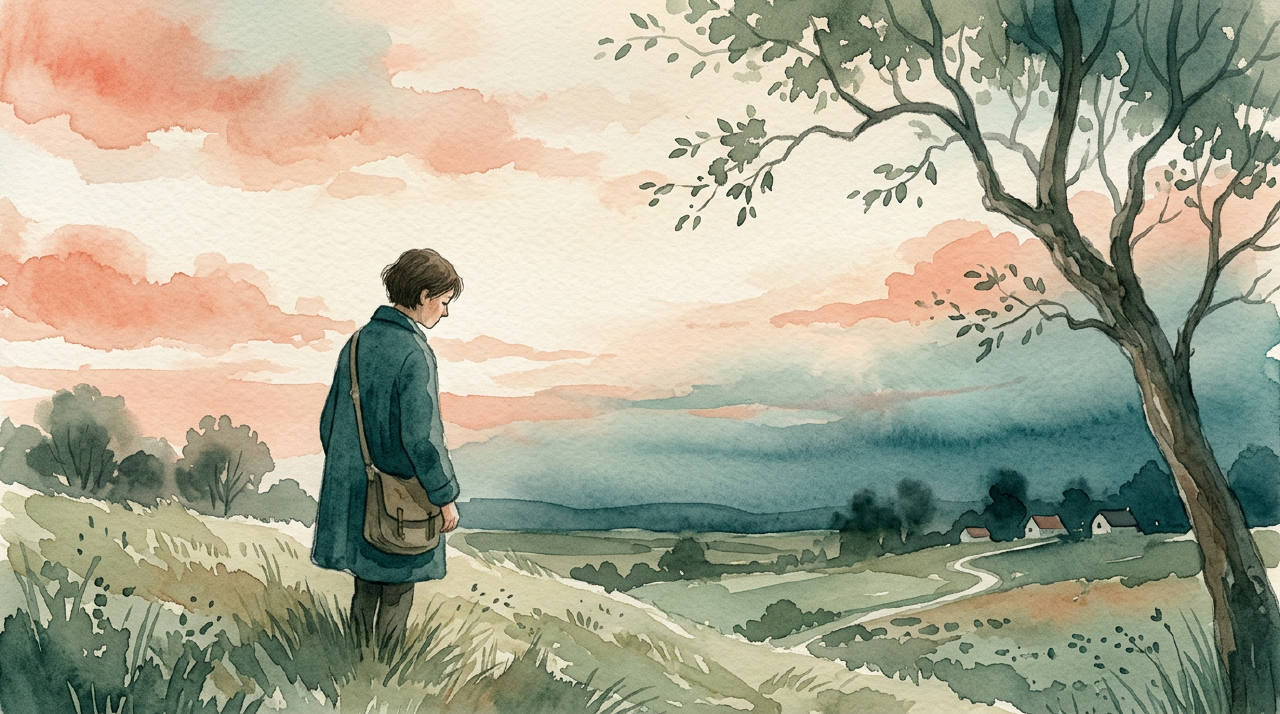
The first time it felt truly personal, the sky was the color of a dying ember. I was standing on my small balcony in Northern California, a mug of coffee growing cold in my hands. It wasn't fog obscuring the morning sun; it was smoke, thick and acrid, from a wildfire burning a hundred miles away. The air tasted like a campfire that had gone terribly wrong. Ash, like a sinister gray snow, dusted the railing and my potted basil plant. It wasn't just a news headline anymore, a distant disaster on a screen. It was in my lungs, in my eyes, and lodging itself deep in a part of my mind I hadn’t known was so vulnerable. A profound sense of dread washed over me, a feeling of being a tiny, soft-shelled creature watching a tidal wave build on the horizon. This, I would later learn, was the welcome party for my own climate anxiety.
What is Climate Anxiety, Really?
Climate anxiety is the distress, fear, grief, and sense of dread related to the climate crisis and its impacts. More than just a passing worry, it's a chronic psychological and emotional response to the existential threat of a changing planet. The American Psychological Association recognizes "eco-anxiety" as a legitimate source of stress, stemming from "watching the slow and seemingly irrevocable impacts of climate change unfold, and worrying about the future for oneself, children, and later generations." It’s the background hum of concern that can spike into sharp panic when you see another headline about record heat, melting glaciers, or unprecedented storms. It’s the grief for a natural world that is disappearing and the fear for a human world that feels increasingly precarious. 🌱
For me, that smoky morning was just the beginning. The anxiety started to manifest in ways big and small. It was a tightness in my chest when I forgot my reusable bags at the grocery store. It was a wave of despair reading about coral bleaching. It was a simmering, low-grade anger at the seeming indifference of the world. It felt both overwhelmingly large and deeply personal, a paradox that left me feeling utterly stuck.
The Spectrum of Eco-Emotions
It’s important to understand that "climate anxiety" is an umbrella term for a whole host of valid emotional responses. You might recognize some of these in your own experience:
- Eco-Grief and Solastalgia: Grief for ecological losses that have already happened. Solastalgia is a specific term for the distress caused by the degradation of one's home environment. It’s a form of homesickness you feel when you’re still at home.
- Eco-Anger: Frustration and rage directed at the perceived inaction of governments, corporations, or other people.
- Eco-Guilt: A sense of personal responsibility and shame over one's own carbon footprint and contribution to the problem.
- Existential Dread: A deeper, more philosophical fear about the future of humanity and the meaning of life in the face of such a colossal challenge.
Recognizing these feelings for what they are—a rational response to a real threat—is the first step. They are not a sign of weakness, but a sign that you are paying attention and that you care. 🕊️
Scene Two: The Paralysis of the Supermarket Aisle
The second scene is less dramatic but, in some ways, more insidious. I’m in the brightly lit aisle of a grocery store, a place that used to be a simple chore. Now, it feels like a minefield of moral compromise. I’m trying to buy strawberries. One container is plastic, but the berries are local. Another is in a cardboard pint, but they’ve been flown in from Mexico. A third option is organic, but wrapped in an ungodly amount of shrink-wrap.
I stood there for what felt like an eternity, the cart handle slick in my sweaty palm. A quiet panic set in. Every choice felt wrong. The sheer scale of the problem—global supply chains, industrial agriculture, plastic pollution—crashed down on me right there between the berries and the bagged lettuce. What difference could my one little choice possibly make? The feeling wasn't the sharp fear of the fire; it was a thick, heavy blanket of futility. I felt paralyzed, defeated by a carton of strawberries. I ended up leaving the aisle empty-handed, driving home with a familiar lump of guilt and helplessness in my throat. This was the trough of my anxiety: the belief that nothing I did mattered, so why bother trying at all?
[[IMAGE:fig2|Close-up on a person's hands hesitating between two different packages of strawberries in a brightly lit supermarket. One package is plastic, the other is cardboard.|A realistic, slightly desaturated photo style. The focus is tight on the hands and the products, capturing the moment of indecision and overwhelm.]]
The Anatomy of Eco-Grief: Why It Feels So Heavy
What I was feeling in that grocery store is a common manifestation of climate anxiety: analysis paralysis and profound despair. This eco-grief is heavy because it’s not like other forms of grief. When a person dies, there are rituals, a community to share the loss with, and an eventual sense of acceptance. But how do you mourn a planet that is still here, but changing in painful and frightening ways?
"Hope, I’ve learned, isn’t a feeling you wait for. It’s not a lottery ticket. It’s a tool you build with your own two hands, preferably alongside others."
This grief is ambiguous and ongoing. There’s no funeral for a melted glacier, no public ceremony for an extinct species. We are forced to carry this sorrow largely alone, in a society that is often still in denial about the cause of our pain. This isolation is a major reason why climate anxiety can feel so crushing. It’s a lonely vigil for a world in peril.
Your Emotional Carbon Footprint: A Different Kind of Metric 📊
We often focus on our material carbon footprint, but it can be helpful to consider our emotional footprint as well. How much of our energy is being consumed by unproductive anxiety versus constructive action? Shifting this balance is key to our well-being.
      YOUR MENTAL ENERGY ALLOCATION

      Before Active Hope:
      [■■■■■■■■■■■■■■■■■■] Despair & Helplessness (70%)
      [■■■■■■] Individual Guilt (20%)
      [■■] Action (10%)

      After Finding Active Hope:
      [■■■■■] Healthy Concern (20%)
      [■■■■■■■■■■■■■] Connection & Community Action (50%)
      [■■■■■■■■] Personal Well-being & Resilience (30%)
This chart isn't scientific, of course, but it illustrates a powerful shift. By channeling emotional energy away from solitary despair and into shared action and self-care, we not only feel better but become more effective agents of change.
From Paralysis to Participation: Finding Your Footing
The way out of paralysis begins with shifting your focus. Instead of staring at the entire, overwhelming tidal wave, you look down at your own two feet. You find a small patch of solid ground and decide to stand there. For me, that shift came from a simple flyer I saw tacked to a telephone pole. It was advertising a volunteer day at a local community garden. I had zero gardening experience, but the image of people with their hands in the dirt, smiling, felt like a lifeline. I was tired of feeling helpless and alone.
Scene Three: The Hope of a Community Garden 🌱
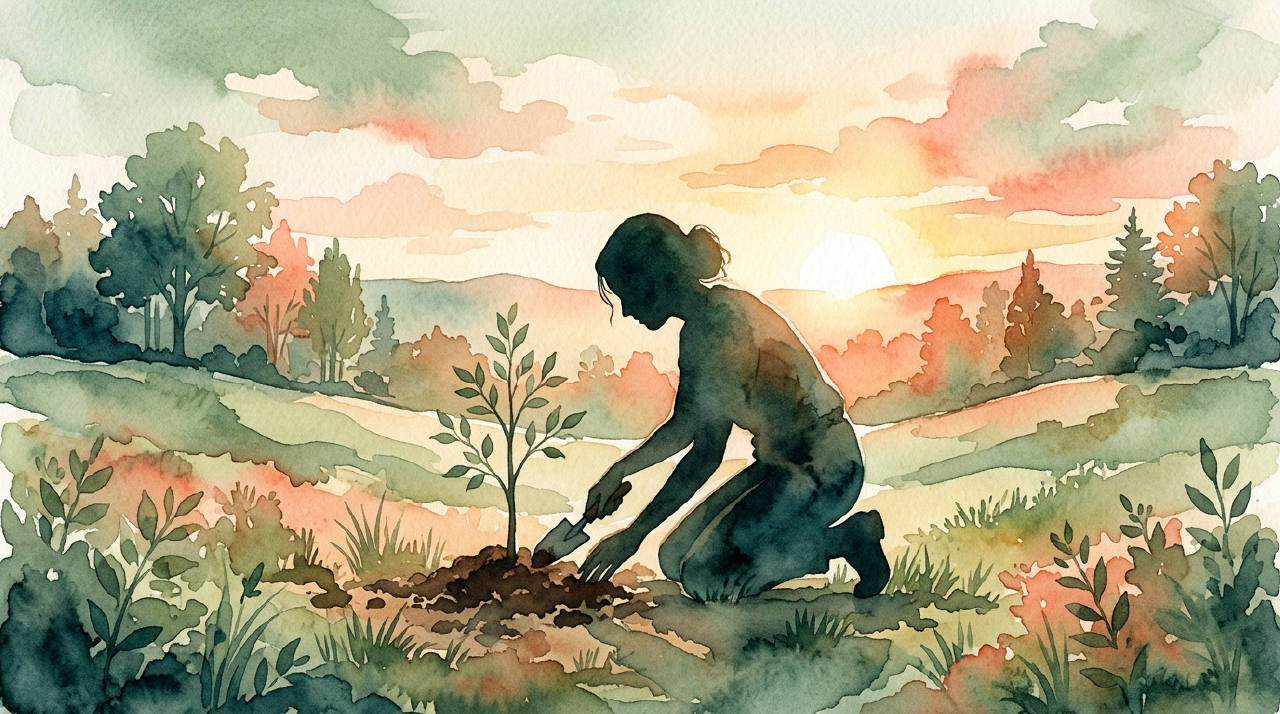
And so, the third scene. It's a Saturday morning, and I’m kneeling on a foam pad, my hands covered in rich, dark soil. The air smells of damp earth and mint. Around me, a dozen other people—retirees, college students, a young family—are weeding, watering, and turning compost. We’re not talking about melting ice caps or carbon policy. We're talking about the best way to support a tomato plant, the surprise of finding a fat earthworm, the joy of a shared harvest.
I spent the morning pulling up stubborn weeds, my muscles aching in a good way. At one point, a woman named Maria, who ran the garden, showed me how to plant a tiny bean sprout. "Tuck it in gently," she said, her voice warm. "Give it some space, but make sure it feels secure." As my fingers pressed the soil around the delicate stem, something inside me clicked into place. This was real. Tangible. I wasn't solving the entire climate crisis. I was helping one tiny bean plant grow. And in that small, grounded act, surrounded by community, the heavy blanket of futility began to lift. It was replaced by a different feeling: not the naive optimism that everything would be fine, but an active, calloused-hands kind of hope. It was the hope that comes from doing something, however small, with other people.
Comparing Coping Styles: Passive vs. Active Hope
That day in the garden taught me the difference between two kinds of hope. Passive hope is waiting for a hero, for a technological fix, for "them" to solve it. Active hope, a concept beautifully articulated by Joanna Macy and Chris Johnstone, is about becoming an active participant in bringing about what you hope for. It’s a practice, not a feeling.
| Characteristic | Passive Hope (Waiting) | Active Hope (Building) 💡 |
|---|---|---|
| Focus | On outcomes you can't control (global policy, future tech). | On actions you can control (local efforts, personal skills). |
| Feeling | Often leads to anxiety, despair, and burnout. | Fosters a sense of agency, connection, and resilience. |
| Source | External: "Someone else will fix this." | Internal & Communal: "I can be part of the solution." |
| Behavior | Doomscrolling, intellectualizing, waiting to feel motivated. | Learning new skills, joining groups, taking small, consistent steps. |
Seeing it laid out like this, I realized I had been stuck in a passive hope loop—waiting for the world to change so I could feel better. The community garden invited me into active hope.
The Power of 'Eco-Action': Small Steps, Big Mental Shifts
The lesson I learned is that the antidote to despair is not information, but action. And crucially, it's action that connects us to the living world and to each other. If you're struggling, consider channeling your anxiety into manageable, life-affirming activities.
Finding Your "Community Garden"
Your "garden" might not involve soil at all. The goal is to find an activity that moves you from solitary rumination to communal participation. Here are a few ideas:
- Connect with Nature: Don’t just read about the environment; go be in it. Join a local bird-watching group, volunteer for a park cleanup, or simply commit to a daily walk where you pay close attention to the trees and plants. 💧
- Find Your People: You are not alone in this. Look for a local chapter of a climate action group (like 350.org or Citizens' Climate Lobby), a sustainability book club, or even just a few friends who are willing to have honest conversations.
- Learn a Skill: Take a class on composting, mending clothes, or repairing electronics. Gaining practical, hands-on skills is a powerful way to build a sense of agency and self-reliance.
- Limit Your Doomscrolling: Stay informed, but set boundaries. Dedicate specific, limited times to read the news. Replace the rest of that scrolling time with one of the actions above. 🧘
The goal isn't to single-handedly save the world. The goal is to build resilience, find your community, and transform your anxiety into a source of purpose. My work in the garden didn't stop the wildfires, but it gave me a place to put my hands, a community to stand with, and a reason to believe in the power of a single, planted seed. And that, I’ve found, is more than enough to keep going.
What small patch of ground, real or metaphorical, can you begin to tend today? ✨
Frequently Asked Questions
Is my climate anxiety "normal"?
Yes, absolutely. Feeling anxious, sad, or angry about the climate crisis is a completely rational and healthy response to a real and documented threat. It shows that you are empathetic and aware. The challenge isn't to eliminate the feeling, but to learn how to manage it so it doesn't become debilitating, and instead transforms into a catalyst for meaningful action.
How do I talk to my friends or family about this without being a downer?
This is a common struggle. Try focusing on shared values rather than scary statistics. Instead of leading with "We're all doomed," try starting with something you both care about: "I was thinking about how much we love hiking in the state park, and it got me interested in the local group that helps maintain the trails. Would you ever want to check it out?" Framing the conversation around positive, communal action and connection can be much more inviting than focusing only on the problem.
Can my individual actions really make a difference?
This is the question that paralyzed me in the grocery store. The answer is both no and yes. No, your individual choice to use a reusable bag will not, in isolation, stop climate change. But yes, your actions matter immensely for several reasons. First, they change you, moving you from a state of helplessness to agency, which is critical for your mental health. Second, individual actions are culturally contagious; they normalize new behaviors and can inspire others. Third, and most importantly, individual actions often lead to collective action, which is where true, systemic change begins. It all starts somewhere.
When to see a professional
While climate anxiety is a normal response, it can sometimes grow into a more serious mental health condition, like an anxiety disorder or depression. If your feelings of dread, hopelessness, or worry are persistent, overwhelming your ability to function in daily life—affecting your sleep, work, or relationships—it may be time to speak with a mental health professional. A therapist can provide you with tools to manage the anxiety and grief in a healthy way.
Here at Araam, we believe that tending to your mental health is a vital part of building a more sustainable world. Our AI companions are here 24/7 to offer a non-judgmental space to talk through these heavy feelings and find your own path toward active hope. You don't have to carry this weight alone. 🌿