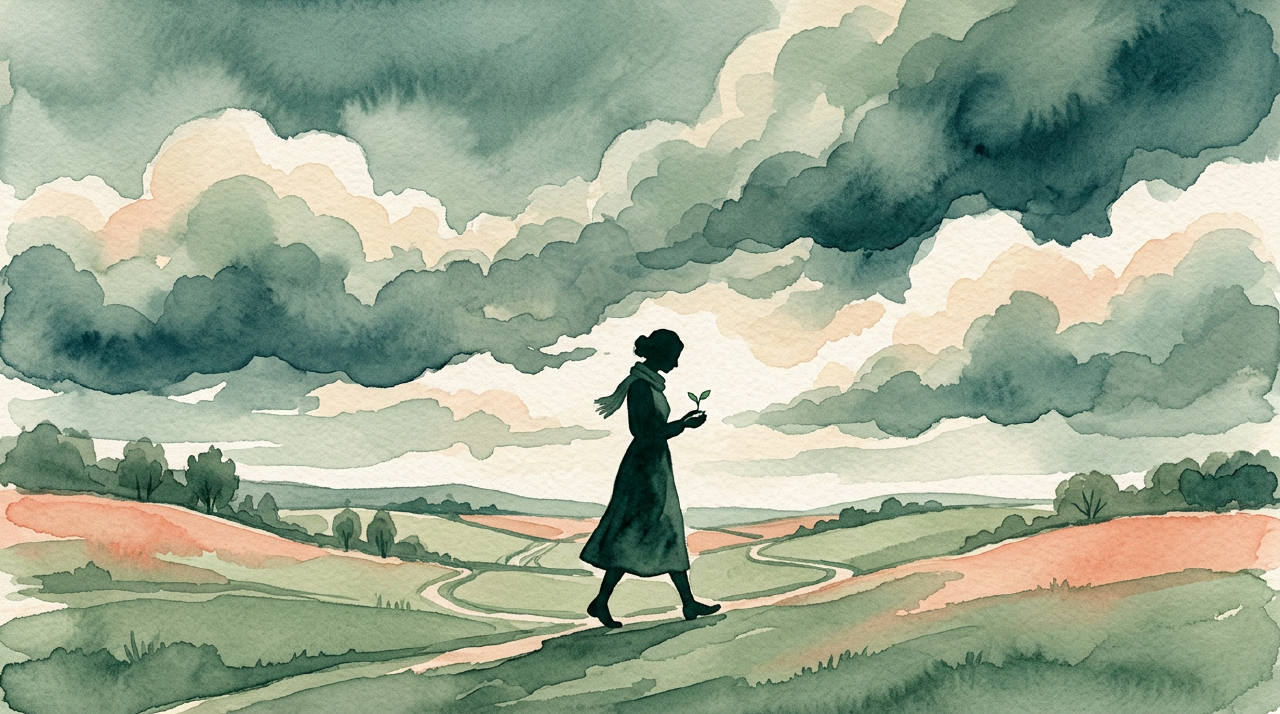
Eco-Anxiety: How to Cope With Climate Grief Without Burning Out
It starts with a flicker on your screen. A headline about melting glaciers, a video of a wildfire, a chart showing rising sea levels. Your chest tightens. A wave of heat, or maybe a cold dread, washes
It starts with a flicker on your screen. A headline about melting glaciers, a video of a wildfire, a chart showing rising sea levels. Your chest tightens. A wave of heat, or maybe a cold dread, washes over you. You might feel a profound sadness for a world you love, a surge of anger at the inaction, or a paralyzing fear for the future. This feeling—this persistent, rational worry about the state of our planet—has a name: eco-anxiety. It’s not a disorder; it’s a deeply human response to a real and unfolding crisis. But living with this constant emotional weight can be exhausting, leading to burnout, hopelessness, and disconnection. The good news is that you don't have to choose between ignoring the truth and succumbing to despair. There is a middle path—one of engaged hope, sustainable action, and emotional resilience. This guide will walk you through, step by step, how to navigate the complex emotions of climate grief and find your power without losing your peace.
| Step | Action | Estimated Time | Key Focus |
|---|---|---|---|
| 1 | Acknowledge & Validate Your Feelings | 20-30 minutes | Emotional Acceptance |
| 2 | Curate Your Information Diet | 15 minutes setup, ongoing | Boundary Setting |
| 3 | Focus on Your Sphere of Influence | 30-45 minutes | Local Empowerment |
| 4 | Craft a Personal Action Plan | 1 hour | Tangible Change |
| 5 | Connect with Community | Ongoing | Collective Strength |
| 6 | Cultivate Embodied Resilience | 10-20 minutes daily | Burnout Prevention |
Step 1: Name It to Tame It: Acknowledging Your Eco-Anxiety
The first step in managing eco-anxiety is to stop fighting it. Acknowledging your feelings of grief, fear, anger, or guilt as valid and rational responses to the climate crisis is a crucial act of self-compassion. Pushing these emotions away often only makes them stronger. Instead, create a safe space to simply sit with them and understand what they are telling you.
### Step 1: Acknowledge & Validate Your Feelings
- Estimated Time: 20-30 minutes
- Tools: A journal or notebook, a pen, a quiet space where you won't be interrupted.
- Key Tip: Don't judge your feelings. If you feel anger, let it be anger. If you feel deep sadness, allow yourself to feel that grief. Labeling the emotion without judgment is the goal.
Start by finding a comfortable seat. Close your eyes and take a few deep breaths. Turn your attention inward and ask yourself, "What am I feeling right now about the state of the planet?" As feelings arise, simply name them. You can say them aloud or write them down. "I feel anxious about the future." "I feel grief for the species we are losing." "I feel angry that more isn't being done."
This practice, drawn from principles of Acceptance and Commitment Therapy (ACT), helps to create distance between you and your emotions. You are not your anxiety; you are a person experiencing anxiety. This subtle shift can be incredibly empowering. By giving your feelings a name and a space to exist, you reduce their power to overwhelm you. You are signaling to your nervous system that while the situation is serious, you are safe enough in this moment to process the emotional impact. 🌱
Step 2: Curate Your Information Diet: Setting News Boundaries
To cope with eco-anxiety, you must manage your exposure to climate news. The goal isn't to become ignorant, but to shift from being a passive, overwhelmed consumer of information to an active, intentional one. Constantly flooding your brain with catastrophic news—a practice often called "doomscrolling"—keeps your nervous system in a perpetual state of high alert, making burnout almost inevitable.
### Step 2: Curate Your Information Diet
- Estimated Time: 15 minutes to set up, ongoing practice.
- Tools: Your smartphone, computer, news apps.
- Key Tip: Choose a specific time and duration for checking climate news (e.g., 15 minutes after breakfast) and stick to it. Avoid it first thing in the morning or right before bed.
Think of it as building a healthier media diet. Unfollow accounts that only post alarming, context-free content. Mute keywords on social media if you need a break. Most importantly, consciously seek out sources that focus on solutions, progress, and climate action. This balances the narrative and reminds you that dedicated people are working on these problems every single day.
Here are a few examples of solution-focused resources to add to your media diet:
- Reasons to be Cheerful: An online magazine founded by David Byrne that reports on positive change and innovative solutions.
- Grist: A non-profit news organization that covers climate solutions and environmental justice.
- The Guardian's "The Upside": A section dedicated to rigorous, solutions-oriented journalism.
By setting these boundaries, you reclaim your attention and energy. You stay informed enough to act, but not so inundated that you become paralyzed. 💧
"Hope is not a lottery ticket you can sit on the sofa and clutch, feeling lucky. It is an axe you break down doors with in an emergency. Hope should shove you out the door, because it will take everything you have to steer the future away from endless war, from the annihilation of the earth's treasures and the grinding down of the poor and marginal... To hope is to give yourself to the future—and that commitment to the future is what makes the present inhabitable." - Rebecca Solnit
Step 3: From Overwhelm to Action: Focusing on Your Sphere of Influence
The sheer scale of the global climate crisis can be paralyzing. When we feel our individual actions are just a drop in a melting ocean, it's easy to fall into despair. The antidote to this feeling of powerlessness is to narrow your focus. Instead of worrying about the entire planet, concentrate on your "sphere of influence"—the areas of your life where you have direct control and can make a tangible impact.
### Step 3: Focus on Your Sphere of Influence
- Estimated Time: 30-45 minutes
- Tools: A notebook, a pen, perhaps a local map.
- Key Tip: Start with what you love. Do you love your local park? Your neighborhood? A particular animal? Let that love guide where you direct your energy.
Draw a series of concentric circles. In the center, write "Me." This is your core sphere: your thoughts, your consumption habits, your skills. In the next circle, write "Home & Family." This includes your household energy use, waste, and conversations with loved ones. The next circle is "Community": your workplace, neighborhood, local government, and social groups. The outermost circle is "The World."
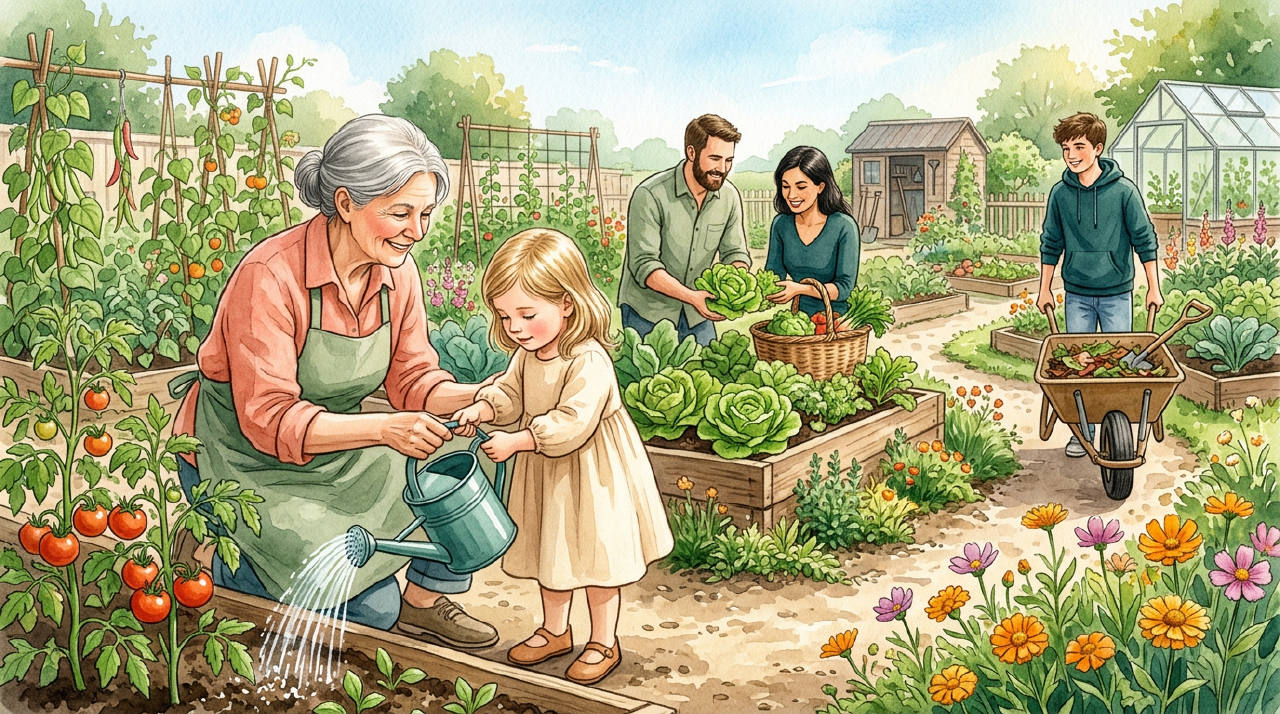
Eco-anxiety often spikes when we fixate on the outermost circle, where our individual control is minimal. By intentionally redirecting your focus and energy to the inner circles, you can start to see real, tangible results from your efforts. This could mean starting a compost bin at home, organizing a recycling program at your office, or joining a cleanup at your local river. These actions create positive feedback loops, building your sense of agency and proving that your efforts do matter. 💡
Step 4: Craft Your Personal Action Plan for Sustainable Living
Creating a personal action plan translates your concern into concrete, manageable steps. This isn't about achieving environmental perfection, which is an impossible and guilt-inducing standard. It's about identifying a few high-impact or personally meaningful changes you can commit to consistently. This process transforms abstract anxiety into purposeful action.
### Step 4: Craft a Personal Action Plan
- Estimated Time: 1 hour
- Tools: A notebook or digital document, internet for research.
- Key Tip: Pick 1-3 actions to start with. It's better to succeed at a few things and build from there than to get overwhelmed by trying to change everything at once.
Brainstorm a list of potential actions across different areas of your life: consumption, waste, energy, food, and advocacy. Research shows that certain actions have a much larger impact than others. However, the best plan for you is one you can actually stick with. Consider both the environmental impact and your own capacity. A change that feels joyful and easy is more sustainable for you than one that feels like a constant, draining sacrifice.
Here’s a comparison to help you choose actions that fit your life:
| High-Impact Actions (Often require more significant change) | High-Agency Actions (Often easier to start today) |
|---|---|
| ✈️ Flying less, especially long-haul | ♻️ Reducing single-use plastics |
| 🚗 Living car-free or switching to an EV | 💡 Switching to LED lightbulbs |
| 🍽️ Shifting to a more plant-based diet | 🛍️ Bringing reusable bags for shopping |
| 🗳️ Advocating for systemic policy change | ☕ Using a reusable coffee cup |
| ☀️ Switching to renewable energy provider | 💧 Conserving water at home |
Choose a mix that feels right. Maybe you start by committing to "Meatless Mondays" (high-agency) and also write a letter to your local representative about expanding bike lanes (high-impact). Track your progress and celebrate your wins.
Your Journey from Anxiety to Action
------------------------------------

 High Anxiety |                                         |
              | *Paralysis & Overwhelm*                 |
              |                                         |
              | \                                       |
              |  \                                      |
              |   \                                     |
              |    *Taking small, consistent action* -->|
              |      \                                  |
              |       \                                 |
              |        \                                |
              |         \                               |
 Low Anxiety  |          *Empowerment & Agency*         |
              ------------------------------------
           Low Action                            High Action
This simple chart illustrates a powerful truth: as your engagement in meaningful action increases, your feeling of helpless anxiety often decreases. ✨
Step 5: Connect and Collaborate: Finding Strength in Community
One of the most corrosive aspects of eco-anxiety is the feeling that you are alone in your grief and fear. The truth is, millions of people feel the same way you do. Connecting with them is one of the most powerful and sustainable ways to cope. Collective action not only amplifies your impact but also provides essential emotional support, reminding you that you are part of a vast, interconnected movement.
### Step 5: Connect with Community
- Estimated Time: Ongoing
- Tools: Social media, local community boards, online search.
- Key Tip: Look for a group that aligns with your interests and skills. If you're an artist, find a climate art collective. If you love the outdoors, join a local conservation group.
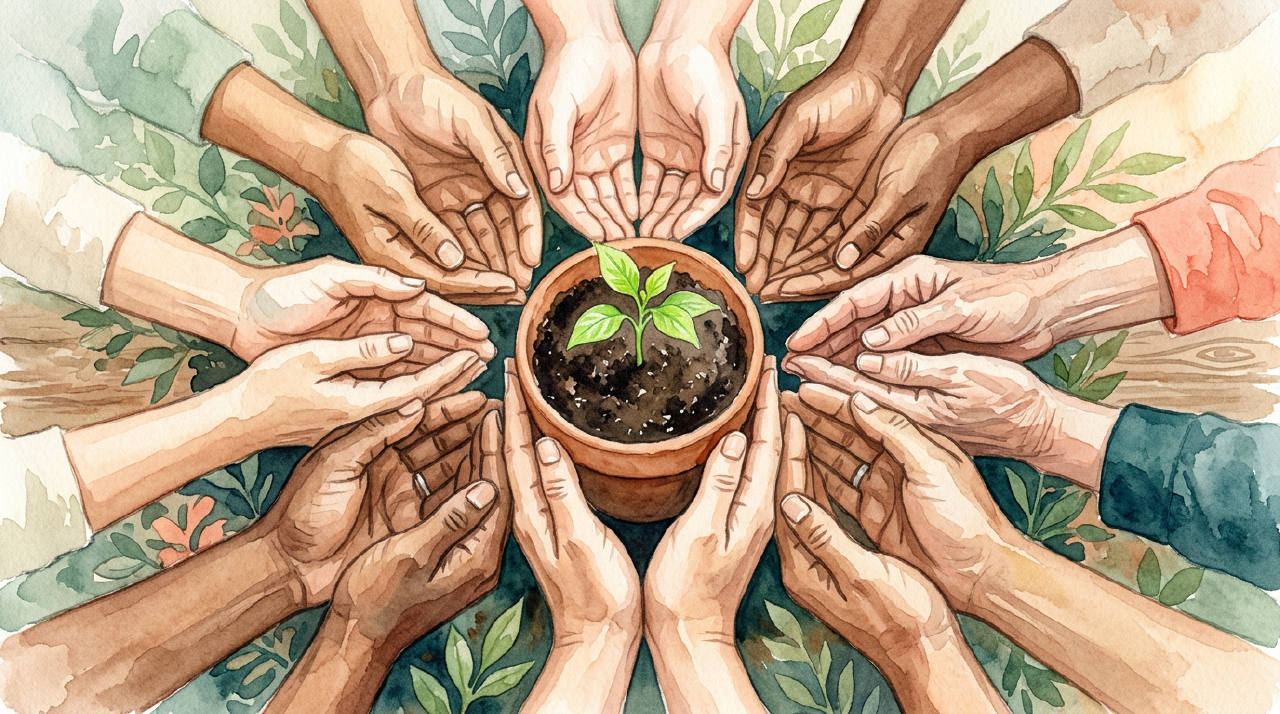
Fighting for a better future shouldn't be a lonely struggle. Sharing your feelings with like-minded people can be incredibly validating. Working together on a project—whether it's a community garden, a divestment campaign, or an educational workshop—builds solidarity and a shared sense of purpose. This "collective effervescence," a term coined by sociologist Émile Durkheim, creates a powerful energy that can fuel you through difficult times.
You can find community in many places:
- Local chapters of national environmental organizations (e.g., Sierra Club, 350.org, Sunrise Movement).
- Neighborhood groups focused on sustainability, gardening, or mutual aid.
- Online communities and forums dedicated to climate action and support.
- Workplace "green teams" or sustainability committees.
Sharing the emotional and practical labor of climate action makes the work more joyful, more effective, and far more sustainable in the long run. 🕊️
Step 6: Refill Your Well: Cultivating Joy and Resilience
You cannot pour from an empty cup. Engaging with a crisis as large as climate change requires immense emotional stamina. To avoid burnout, you must intentionally and regularly practice activities that replenish your spirit and ground you in the present moment. This isn't an escape from the problem; it's the necessary maintenance that allows you to stay in the fight for the long haul.
### Step 6: Refill Your Well
- Estimated Time: 10-20 minutes daily
- Tools: Your body, your breath, access to nature (even a window view).
- Key Tip: Schedule this time into your day just as you would any other important appointment. Protect it fiercely.
Resilience is built in small, consistent moments of care. It's about remembering what you're fighting for: the beauty, joy, and connection that make life on this planet so precious. Spending time appreciating the very world you're working to protect is a radical act of hope.
Some practices for embodied resilience include:
- Spending Time in Nature (Biophilia): Go for a walk without your phone. Sit in a park. Notice the details: the texture of bark, the sound of birds, the feeling of the sun on your skin. This soothes the nervous system and reconnects you to the living world. 🌿
- Mindfulness and Meditation: Even five minutes of focusing on your breath can calm a racing mind and bring you back to the present moment, away from future-focused anxieties. 🧘
- Gratitude Practice: At the end of each day, write down three things you are grateful for. They can be simple: a good conversation, a delicious meal, the color of the sky. This practice trains your brain to notice goodness, even amidst difficulty.
- Engaging in Play and Creativity: Do things just for the joy of them. Dance, paint, play music, cook, laugh with friends. Joy is not a betrayal of the seriousness of the situation; it is the fuel that sustains you.
By consciously cultivating these moments, you build an inner reservoir of strength that can hold the weight of climate grief without breaking.
Frequently Asked Questions About Eco-Anxiety
Isn't eco-anxiety just an overreaction? I feel like I should just be tougher.
Not at all. The American Psychological Association recognizes eco-anxiety as a "chronic fear of environmental doom." It is a completely rational and logical response to the real, scientifically-validated threats our planet faces. Feeling anxious or grieving about this is a sign of your empathy and connection to the world, not a sign of weakness.
How can my small actions possibly make a difference when huge corporations are the main problem?
This is a common and valid concern. It's helpful to think of it in two ways. First, individual actions create a cultural shift. When millions of people change their habits and demand different products, it sends a powerful signal to the market and to policymakers. Second, and perhaps more importantly for your mental health, taking personal action restores your sense of agency. It is a way of aligning your daily life with your deepest values, which is a powerful antidote to feelings of helplessness. Systemic change and individual action are not mutually exclusive; they fuel each other.
I feel so guilty for enjoying small pleasures when the world is in crisis. How do I deal with that?
This guilt is a heavy burden and a fast track to burnout. It’s essential to reframe joy not as an indulgence, but as a necessity. Joy, connection, and rest are what give you the energy to continue caring and acting. You are part of the nature you are trying to protect, and you also need care, rest, and sunlight to thrive. Allowing yourself moments of happiness is a sustainable practice that enables you to show up for the hard work.
When to Seek Professional Support
While the steps outlined here can provide significant relief, sometimes eco-anxiety can become debilitating, severely impacting your ability to function in daily life. If you are experiencing persistent insomnia, panic attacks, an inability to concentrate at work or school, or feelings of profound hopelessness that don't lift, it may be time to seek support from a mental health professional. A therapist, especially one who is "climate-aware," can provide you with dedicated tools and a safe space to process these complex emotions without judgment.
Remember, you are not alone in this. Taking care of your own well-being is a critical part of creating a more sustainable and caring world. Here at Araam, we believe that emotional health is the foundation for everything else. Our tools and resources are designed to help you build resilience, find your center, and navigate life's challenges—big and small—with greater peace and clarity.