
10 Science-Backed Ways to Get Nature's Mental Health Benefits Without Leaving the City
The constant hum of traffic, the endless sea of concrete, the glow of screens that never seems to dim—city life is a symphony of stimulation. It’s vibrant and full of opportunity, but it can also leav
The constant hum of traffic, the endless sea of concrete, the glow of screens that never seems to dim—city life is a symphony of stimulation. It’s vibrant and full of opportunity, but it can also leave our nervous systems frayed, yearning for a quiet moment of peace. For many of us, escaping to a remote forest or a sprawling national park feels like a distant dream. But what if the profound mental health benefits of nature weren’t miles away, but right outside your window, waiting to be discovered in small, potent doses? The truth is, you don’t need a wilderness expedition to reconnect. Science shows that even brief, intentional encounters with the natural world can lower stress, boost your mood, and sharpen your focus, all without ever leaving the city limits.

Your Urban Guide to Nature's Mental Health Benefits
Finding nature in an urban environment is an exercise in mindfulness. It’s about shifting your perspective to notice the small pockets of green, the slivers of sky, and the resilient life that pushes through the cracks in the pavement. Below are ten science-backed, practical ways to integrate these restorative moments into your daily city life.
1. Take a 20-Minute "Nature Pill"
The most direct way to get a dose of nature is to visit a local park or any patch of green space. Research published in Frontiers in Psychology found that spending just 20 to 30 minutes sitting or walking in a place that provides a sense of nature is enough to significantly reduce levels of the stress hormone cortisol. Think of it as a prescription for calm, with the park as your pharmacy. 🌿
The key is to make this time intentional. Instead of scrolling through your phone on a park bench, try to engage your senses. Notice the texture of the tree bark, the specific shade of green on a new leaf, the sound of birds or the wind rustling through the branches. This practice, a simplified form of the Japanese concept of shinrin-yoku (forest bathing), grounds you in the present moment and allows your mind’s "default mode network"—the part that's responsible for rumination and anxiety—to quiet down.
- Best for: Quickly de-stressing during a lunch break or after a long day.
- Pro tip: Create a "park-hopping" list. Identify 3-5 small parks, community gardens, or even tree-lined streets near your home or office. Having a ready list removes the friction of deciding where to go.
2. Cultivate a Balcony or Windowsill Garden
You don't need a sprawling backyard to experience the therapeutic benefits of gardening. A few pots on a balcony, a fire escape, or even a sunny windowsill can become a personal sanctuary. The act of nurturing a plant from seed to maturity fosters a sense of purpose, responsibility, and connection to life's cycles. 🌱
Studies have shown that gardening is a powerful mood booster and can reduce symptoms of anxiety and depression. The gentle, repetitive tasks of watering, pruning, and tending to your plants are meditative, providing a welcome break from cognitive overload. Plus, you get the added benefit of beautifying your space and, if you plant herbs or vegetables, a fresh, delicious reward.
- Best for: Cultivating a long-term, restorative hobby and creating a green space at home.
- Pro tip: Start with low-maintenance plants. Snake plants, pothos, and ZZ plants are famously resilient indoors, while herbs like mint and basil are forgiving for beginner balcony gardeners.
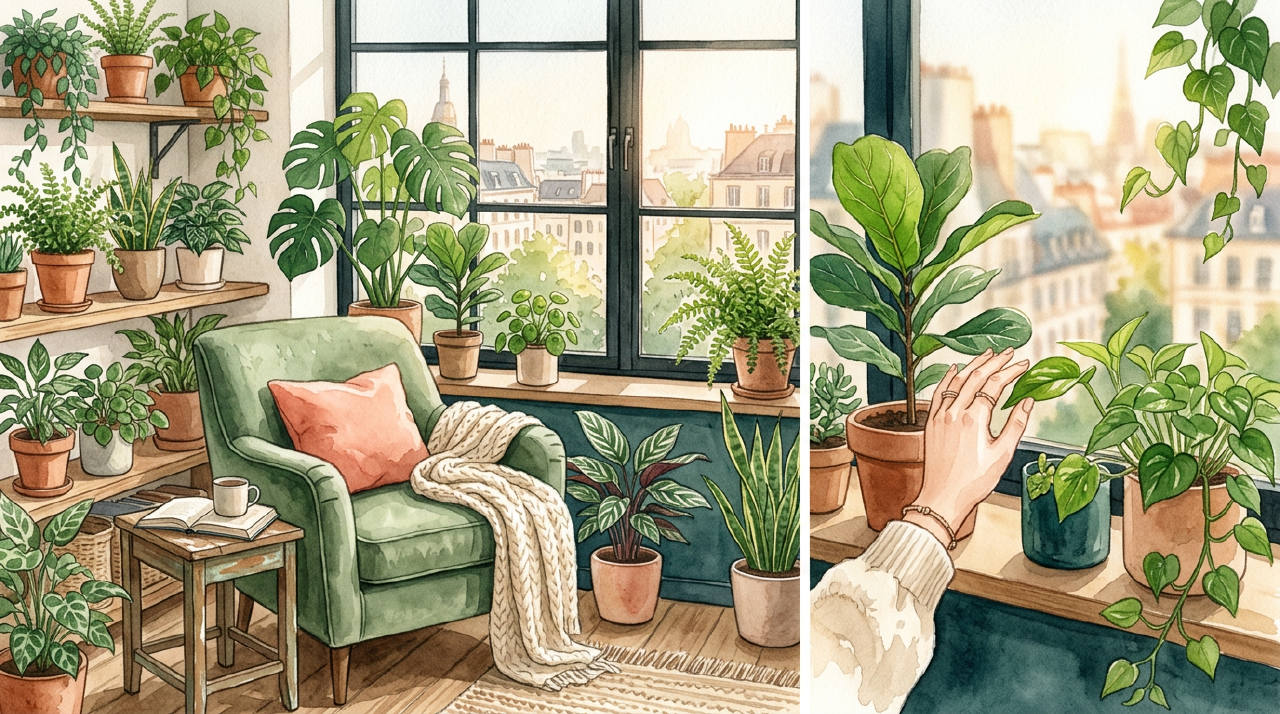
3. Create an Indoor Jungle
Bringing plants inside your home is one of the easiest ways to improve your environment and your mood. Houseplants are not just decorative; they are living, breathing companions that can literally improve the air you breathe. A famous 1989 NASA study found that common houseplants are effective at filtering volatile organic compounds (VOCs) from the air.
Beyond air quality, the visual presence of greenery has a calming effect. A study from the Journal of Physiological Anthropology found that interacting with houseplants can reduce psychological and physiological stress. Simply having a leafy plant in your line of sight while you work can help lower blood pressure and promote feelings of well-being.
- Best for: Improving your home environment and having a constant, passive connection to nature.
- Pro tip: Think in layers and levels. Place a large floor plant in a corner, hang a vining plant from the ceiling, and arrange smaller succulents on a bookshelf to create a lush, immersive feeling.
4. Embrace and Maximize Natural Light
Our bodies are beautifully attuned to the rhythms of the sun. Exposure to natural light, especially in the morning, helps regulate our circadian rhythm, which governs our sleep-wake cycle. This, in turn, has a massive impact on our energy levels, mood, and overall mental health. A lack of natural light, common in many office and apartment buildings, has been linked to seasonal affective disorder (SAD) and general feelings of lethargy.
Make a conscious effort to soak up the sun. Position your desk or your favorite chair near a window. When you wake up, open the blinds immediately to let the morning light flood in. Take your phone calls or coffee breaks outside or on a balcony. Even on a cloudy day, the ambient outdoor light is far more powerful and beneficial than artificial indoor lighting. ✨
- Best for: Boosting energy, regulating sleep, and improving mood throughout the day.
- Pro tip: Keep your windows clean! It’s a simple chore that can increase the amount of light entering your space by as much as 20%.
5. Tune Into Nature's Soundtrack
The urban soundscape is often jarring—sirens, horns, construction. You can actively curate your auditory environment by replacing that noise with the restorative sounds of nature. Research has shown that listening to natural soundscapes, like birdsong, flowing water, or gentle rain, can decrease stress and improve cognitive performance. 🕊️
These sounds work by activating the parasympathetic nervous system, which helps your body rest and digest. Unlike artificial noise, which can trigger a fight-or-flight response, natural sounds are processed by the brain as non-threatening, signaling that it’s safe to relax. You can use apps, websites, or smart speakers to play these sounds while you work, read, or fall asleep.
- Best for: Masking stressful city noise, improving focus, and promoting relaxation or sleep.
- Pro tip: Create different nature playlists for different needs. Try a "babbling brook" for focus, "gentle rain" for sleep, and "forest birds" for a morning mood boost.
The "Nature Dose": How Much Is Enough? 📊
While any amount of nature is good, research is beginning to suggest a "minimum dose" for maximum benefit. Think of it less as a rigid rule and more as a gentle guideline to help you prioritize your well-being.
| Activity | Recommended "Dose" | Primary Mental Health Benefit |
|---|---|---|
| Park Visit | 20-30 minutes, 2-3 times/week | Significant cortisol (stress) reduction |
| Indoor Plants | 1-2 plants in your line of sight | Passive, continuous stress reduction |
| Natural Light | 15-20 minutes of morning light | Circadian rhythm regulation, mood boost |
| Nature Sounds | 15 minutes during a task | Improved concentration & reduced annoyance |
| Window Views | 5-10 minute "micro-breaks" | Restored attention, mental fatigue recovery |
| Gardening | 30 minutes, 1-2 times/week | Reduced anxiety, increased sense of purpose |
6. Bring Natural Materials Home
Your sense of touch is a powerful pathway to calm. Incorporating natural materials and textures into your living space can create a subtle, grounding connection to the natural world. Think about the difference between a synthetic polyester blanket and one made of wool or cotton, or a plastic tabletop versus a wooden one.
Materials like wood, stone, bamboo, jute, wool, and linen have textures, temperatures, and even scents that our brains associate with nature. This concept is a core tenet of biophilic design—the practice of designing built environments that honor our innate connection to nature. Even small changes, like a wooden cutting board, a stone coaster, or a set of linen sheets, can make your home feel more organic and serene.
- Best for: Creating a calming and grounding home environment through sensory input.
- Pro tip: Engage your feet. A small jute or wool rug where you first step out of bed can be a wonderful, tactile way to start your day.
7. Watch High-Definition Nature Scenes
If you can't get outside, bringing high-quality images and videos of nature to your screens is the next best thing. A study from the University of California, Berkeley, found that even watching nature documentaries can elicit feelings of awe, joy, and curiosity—emotions that are strongly linked to improved mental well-being.
"Awe is the feeling of being in the presence of something vast that transcends your current understanding of the world." - Dacher Keltner, Ph.D.
When you're feeling stuck, stressed, or uninspired, try putting on a high-definition nature program (think Planet Earth or Our Planet) on the largest screen you have. Pay attention to the vast landscapes, the intricate details of an animal's fur or a plant's structure, and the sheer scale of it all. This can help shift your perspective from your immediate worries to the larger, awe-inspiring world we are a part of.
- Best for: Finding inspiration, cultivating awe, and getting a dose of nature on a rainy day.
- Pro tip: Use nature scenes as your screensaver on your computer, TV, and phone. This transforms your devices from sources of stress into windows of calm.
8. Get Your Hands Dirty with Soil
There's a fascinating reason why gardening feels so good, and it lies in the soil itself. Soil is teeming with microorganisms, one of which, Mycobacterium vaccae, has been studied for its antidepressant-like effects. When we inhale or have physical contact with this harmless bacterium, it’s believed to trigger the release of serotonin in the brain, much like some antidepressant medications.
You don’t need to be a full-time farmer to reap these benefits. The simple act of repotting a houseplant, filling a window box with new soil, or helping out at a community garden can put you in contact with these beneficial microbes. It’s a primal, grounding experience that reconnects us to the earth in a very literal way. 💧
- Best for: A powerful, hands-on mood boost and a direct connection to the "living" aspect of nature.
- Pro tip: If you're repotting plants indoors, lay down some newspaper, but don't wear gloves (unless dealing with sharp or irritating plants). Allowing your skin to come into contact with the soil is part of the experience.
9. Engage Your Sense of Smell
Our olfactory system is directly linked to the limbic system, the brain's center for memory and emotion. This is why a certain scent—like freshly cut grass or pine needles—can instantly transport you to another time and place. You can harness this power in your city home by using natural scents.
Essential oil diffusers are a popular way to do this. Scents like lavender are well-known for their calming properties, while pine, fir, or cedar can evoke the feeling of being in a forest. You can also use candles made with natural waxes and essential oils, or simply boil a pot of water with some cinnamon sticks, cloves, and orange peels for a warm, natural aroma.
- Best for: Shaping the emotional atmosphere of your home and leveraging scent for immediate calm.
- Pro tip: Create a "scent-scape." Use an energizing scent like citrus or peppermint in your workspace in the morning, and a calming scent like lavender or chamomile in your bedroom in the evening.
10. Practice Mindful Sky-Gazing
In a city, it's easy to walk with your head down, navigating the crowded pavement. But one of the largest, most dynamic natural elements is always available: the sky. The sky is a constant source of wonder, from the soft colors of dawn and dusk to the dramatic movement of storm clouds to the simple beauty of a clear blue expanse.
Find a spot—a window, a balcony, a rooftop, or a quiet street—where you can see a decent patch of sky. Take five minutes to simply watch it. Notice the colors, the shapes of the clouds, and how they drift and change. This practice of "sky-gazing" or "cloud-gazing" cultivates mindfulness and can induce a sense of awe, helping to put your own problems into a broader, less overwhelming perspective.
- Best for: A zero-cost, always-available micro-break that cultivates awe and perspective.
- Pro tip: Try to identify different types of clouds—cumulus, cirrus, stratus. Giving them names and learning a little about them can deepen your appreciation and make the experience more engaging.
The Awe Effect: How Nature Shrinks Our Worries
One of the most profound psychological benefits of nature is its ability to inspire awe. As social psychologist Dr. Dacher Keltner's research has shown, awe has a "small self" effect; it makes us feel like a small part of a much larger system, which can shrink the perceived size and importance of our personal problems. 💡
+-------------------+      +-----------+      +-----------------+      +--------------------+
|  Nature Exposure  | ---> |   Awe &   | ---> | Diminished Self | ---> | Increased Feelings |
| (Vast Sky, Grand  |      |  Wonder   |      | (Ego Quiets)    |      | of Connection &    |
|   Tree, Complex   |      |           |      |                 |      |    Well-being      |
|      Flower)      |      +-----------+      +-----------------+      +--------------------+
+-------------------+
This chart illustrates how even a small dose of urban nature can kickstart a powerful virtuous cycle for your mental health.
Frequently Asked Questions
Q: I live in a tiny apartment with no balcony and terrible light. What are my best options? A: Focus on what you can control. Options 3, 5, 7, and 9 are perfect for you. Bring in a few very low-light tolerant plants like the ZZ plant or cast-iron plant. Use a high-quality nature sound app with headphones to create your own auditory oasis. Make watching a stunning nature documentary a weekly ritual. And explore natural scents with an essential oil diffuser. Your senses are your gateway to nature, even without a view.
Q: Do artificial plants or nature posters provide any benefits? A: It's a great question! While real, living nature is always superior, studies do show that even images of nature can have a positive effect. They can lower stress and improve focus, though to a lesser degree than the real thing. So yes, a beautiful high-resolution photo of a forest or even high-quality artificial plants can be beneficial, especially if live plants aren't an option. Think of it as a good first step.
Q: I feel too busy and overwhelmed to add another thing to my to-do list. How can I make this feel effortless? A: The key is "habit stacking." Link a new nature habit to something you already do. For example: while your coffee brews in the morning (existing habit), spend those three minutes looking out the window at the sky (new habit). When you sit down at your desk to start work (existing habit), turn on a 15-minute nature soundscape (new habit). Start small—so small you can't say no. A one-minute "nature pill" is better than zero.
When to See a Professional
These tips are wonderful tools for managing everyday stress and boosting your overall sense of well-being. They are meant to supplement, not replace, professional mental health care. If you are experiencing persistent feelings of anxiety, depression, or overwhelm that interfere with your daily life, it is a sign of strength to seek support. A licensed therapist or counselor can provide you with personalized strategies and a safe space to navigate your feelings.
Remember, taking care of your mind is just as important as taking care of your body. If you need a little extra support on your journey, your companion Araam is here to help with guided meditations, mood tracking, and gentle check-ins, right in your pocket. 🧘