HRV Explained: Why It's the Single Best Nervous-System Resilience Metric
If you have ever felt your chest tighten during a high-stakes presentation or noticed your pulse soften into a slow, oceanic lull while laughing with a close friend, you have experienced the hidden in
If you have ever felt your chest tighten during a high-stakes presentation or noticed your pulse soften into a slow, oceanic lull while laughing with a close friend, you have experienced the hidden intelligence of your autonomic nervous system. For decades, wellness metrics fixated on a singular, static number: resting heart rate. But modern neurobiology and somatic psychology have revealed a much more nuanced, dynamic truth—your heart is not a metronome, and its healthiest state is actually one of constant, microscopic fluctuation. This fluctuation is known as Heart Rate Variability (HRV), and it has quietly become the gold standard metric for measuring human resilience, stress tolerance, and nervous-system flexibility. 🌱
What Is Heart Rate Variability (HRV)? A Crisp Definition
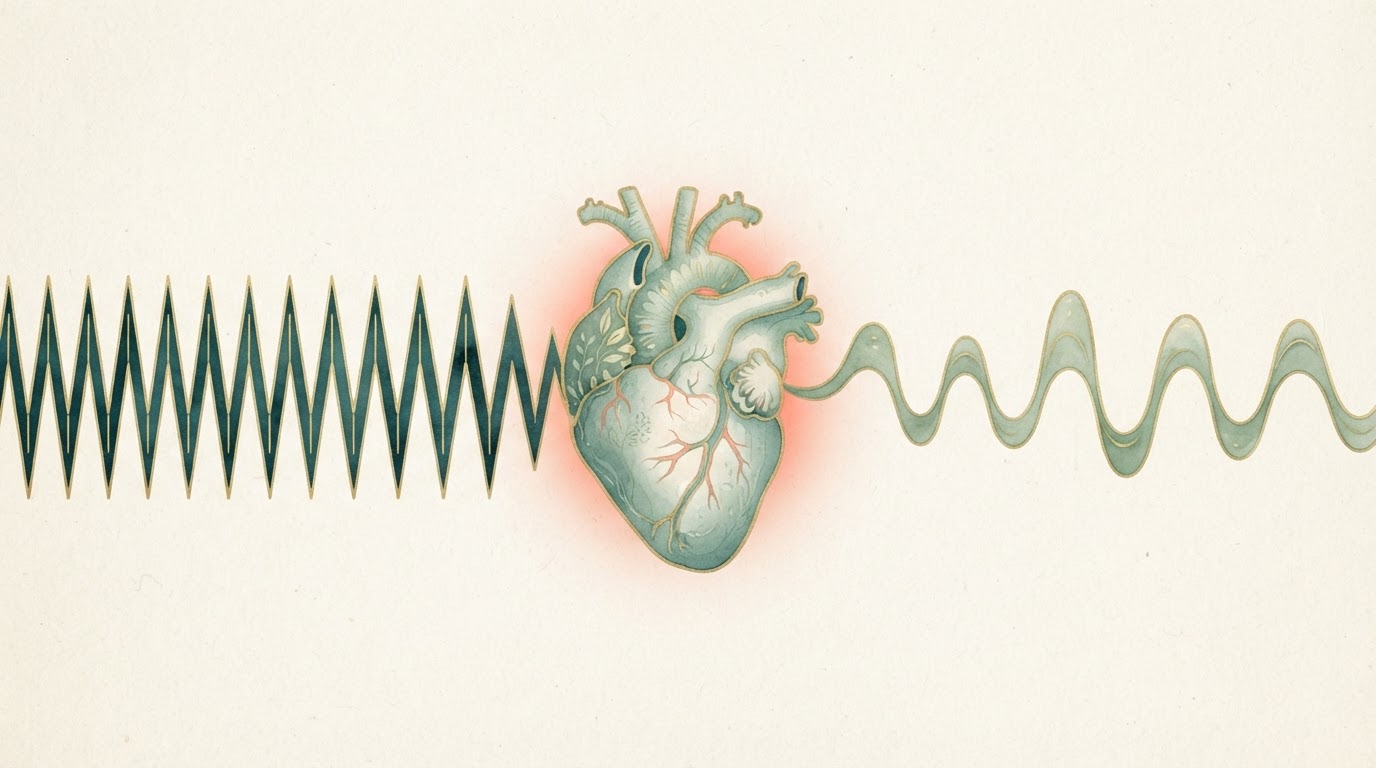
Heart Rate Variability (HRV) is the measure of the naturally occurring variations in time intervals between consecutive heartbeats, measured in milliseconds. Rather than beating at a perfectly uniform cadence, a resilient, adaptable heart constantly speeds up and slows down in response to internal and external demands.
When your heart beats 60 times in a single minute, those beats do not occur precisely once every 1.00 second. Instead, the interval between beat one and beat two might be 0.85 seconds, while the interval between beat two and beat three stretches to 1.12 seconds. These subtle shifts, known to cardiologists and physiologists as "R-R intervals," are not signs of an irregular heartbeat or cardiac arrhythmia. On the contrary, they represent a finely calibrated dance orchestrated by your autonomic nervous system (ANS).
In short: a higher variability between beats generally signals an agile, responsive nervous system that can pivot between effort and ease with grace, whereas a rigid, highly predictable interbeat interval suggests a nervous system under physiological or emotional strain.
The Role of the Vagus Nerve
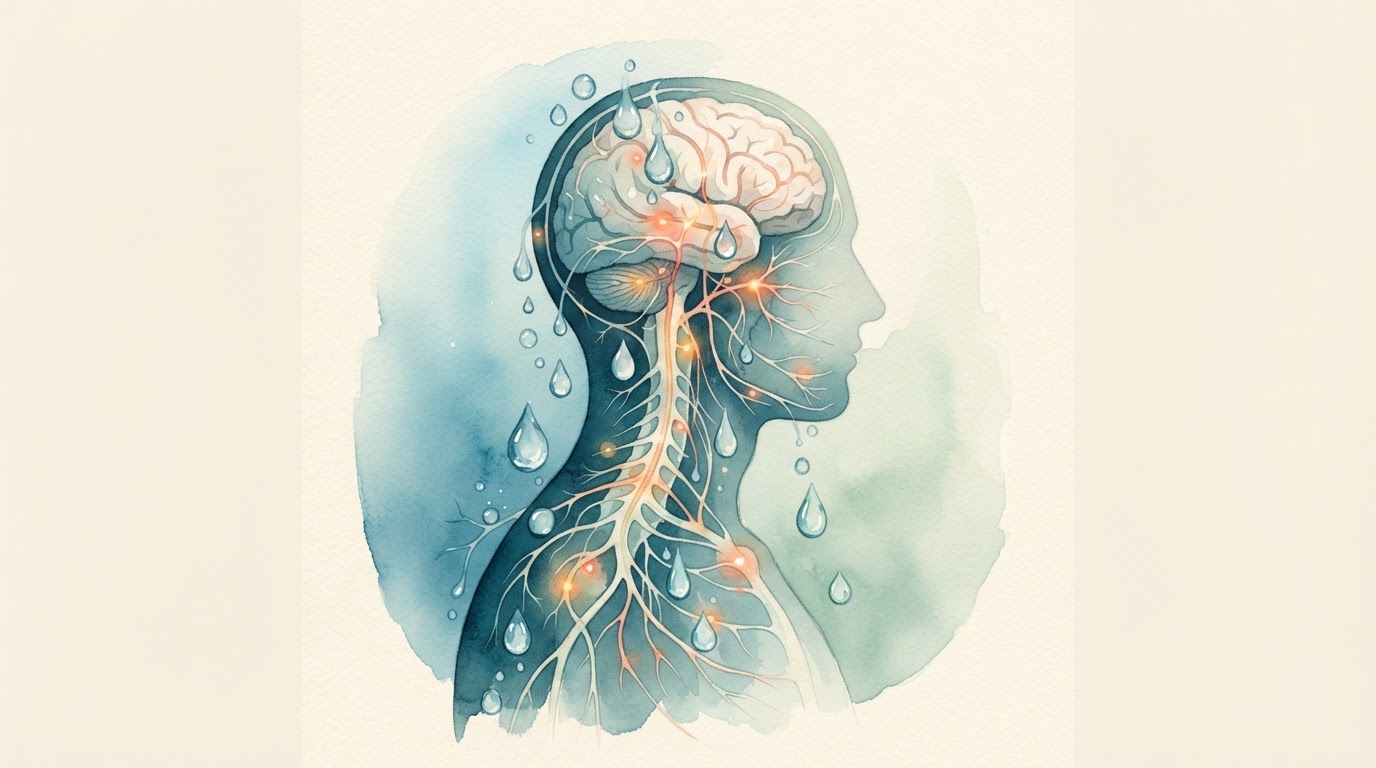
At the center of HRV is the vagus nerve—the crown jewel of the parasympathetic nervous system. Stretching from the brainstem down through the neck, vocal cords, lungs, heart, and digestive tract, the vagus nerve functions as a physiological brake system (often called the "vagal brake"). When you exhale, the vagus nerve releases the neurotransmitter acetylcholine onto the sinoatrial node of the heart, immediately slowing the heart rate down. When you inhale, that vagal influence temporarily lifts, allowing the heart rate to gently quicken. This continuous ebb and flow, known as respiratory sinus arrhythmia (RSA), creates the rhythmic variability that wearable trackers detect. A strong vagal tone correlates directly with higher baseline HRV and greater psychological resilience. 🕊️
Heart Rate vs. Heart Rate Variability: A Direct Comparison
People often confuse resting heart rate with heart rate variability. While both offer valuable diagnostic clues about your cardiovascular health, they measure entirely different dimensions of your physiology.
The table below clarifies how these two metrics differ in focus, physiology, and real-world meaning:
| Dimension | Resting Heart Rate (RHR) | Heart Rate Variability (HRV) |
|---|---|---|
| Primary Definition | The total number of heart contractions per minute while at rest. | The variation in time (milliseconds) between consecutive heartbeats. |
| Unit of Measurement | Beats per minute (bpm). | Milliseconds (ms), often expressed as rMSSD or SDNN. |
| Ideal Direction | Generally, lower is associated with better aerobic fitness (typically 40–70 bpm). | Higher relative to your personal baseline reflects greater autonomic resilience. |
| Underlying Mechanism | Overall cardiovascular conditioning and basic metabolic demand. | Real-time balance between sympathetic and parasympathetic nervous systems. |
| Response Time to Stress | Moderately reactive; rises during acute physical or psychological stress. | Highly sensitive; shifts rapidly in response to micro-stressors, poor sleep, or emotional friction. |
| What It Signals | Cardiorespiratory efficiency and physical output capacity. | Nervous-system recovery, emotional regulation capacity, and somatic safety. |
| Analogy | The speed of your car while idling at a red light. | The responsiveness of your steering wheel, gas pedal, and brake system. |
The Architecture of the Autonomic Nervous System: How HRV Works
To understand why HRV is such an indispensable wellness metric, we have to look behind the curtain at the autonomic nervous system. The ANS is divided into two primary branches that operate in a continuous, dynamic push-pull:
- The Sympathetic Nervous System (SNS): Frequently termed the "fight, flight, or freeze" branch. When your brain perceives a deadline, physical threat, or relational tension, the SNS deploys norepinephrine and epinephrine. This accelerates the heart rate, restricts peripheral blood flow, and locks the heart into a predictable, rhythmic march designed for survival.
- The Parasympathetic Nervous System (PNS): Commonly known as the "rest, digest, and connect" branch. Governed primarily by the vagus nerve, the PNS restores equilibrium, facilitates cellular repair, supports digestion, and introduces elasticity and variability into your heartbeat.
When both branches communicate harmoniously, your heart responds to life’s micro-moments with extraordinary sensitivity. It accelerates when you need to focus or sprint, and it instantaneously decelerates when you exhale, laugh, or rest.
Visualizing the Interbeat Interval (R-R Interval)
Here is a simplified illustration showing what heart rate variability looks like when measured at the millisecond level compared to a rigid rhythm:
HIGH HRV (Flexible, Resilient Nervous System):
Beat 1          Beat 2               Beat 3        Beat 4            Beat 5
  |---------------|--------------------|-------------|-----------------|
       820 ms            960 ms             780 ms          910 ms
  [ <--- Variable intervals indicate active vagal modulation ---> ]

LOW HRV (Sympathetic Dominance / Exhaustion):
Beat 1          Beat 2          Beat 3          Beat 4          Beat 5
  |---------------|---------------|---------------|---------------|
       800 ms          805 ms          798 ms          802 ms
  [ <--- Rigid, uniform intervals indicate high stress / fatigue ---> ]
"A healthy heart is not a ticking clock. It is an improvisational jazz drummer, fluidly shifting its cadence with every breath, thought, and sensory impression."
How Heart Rate Variability Shows Up in Real Life
Because HRV reflects the real-time operational capacity of your nervous system, changes in this metric reverberate through everyday psychological and somatic experiences. 📊
- The Workday Surge: You open your inbox to find an urgent message from leadership. Even before you consciously register anxiety, your sympathetic system tightens its grip. If you have high baseline HRV, your vagal brake steps in shortly after the initial shock, slowing your pulse and restoring cognitive clarity so you can draft a thoughtful response.
- The "Tired but Wired" State: You crawl into bed after a week of back-to-back deadlines, alcohol-heavy dinners, and fragmented sleep. Your heart rate might feel elevated, but more importantly, your HRV drops precipitously. The intervals between your beats become starkly uniform. You toss and turn because your nervous system lacks the vagal tone required to drop smoothly into deep, restorative slow-wave sleep.
- The Post-Workout Recovery Phase: After an intense kettlebell session or long trail run, your HRV will predictably plummet for several hours. This is natural: exercise is deliberate physical stress. If your sleep, nutrition, and rest are adequate, your HRV bounces back above baseline 24 to 48 hours later, signaling physiological supercompensation.
- Emotional Empathy and Social Connection: When you sit in a safe space with someone you love, your parasympathetic nervous system engages the "social engagement system." Your HRV rises, your vocal tone softens, and your facial muscles relax. A higher HRV is consistently associated with greater emotional granularity, empathy, and patience with children, partners, and colleagues.
How to Measure Your HRV Accurately at Home
Until recently, gathering reliable HRV data required a 12-lead electrocardiogram (ECG) in a specialized hospital setting. Today, consumer-grade technology enables us to track this metric from our bedside tables. However, because HRV measures fractions of a second, precision is paramount.
Wearables, Chest Straps, and PPG
There are two primary methods for capturing HRV outside of a medical clinic:
- Photoplethysmography (PPG): Used by smart rings, wrist wearables, and smartwatches. PPG shines green or infrared light through your skin to detect micro-volume changes in blood vessels with every pulse wave. While wrist-based PPG has improved dramatically, it is vulnerable to movement artifacts. For this reason, wrist-based devices are most accurate when measuring your HRV passively throughout the night while you are still.
- Electrocardiography (ECG) Chest Straps: Devices like chest-strap heart monitors capture the true electrical signal (the R-peak of the QRS complex) generated by the cardiac muscle. If you want to measure your HRV actively during waking breathwork, somatic meditation, or exercise recovery, an ECG chest strap remains the consumer gold standard.
The Importance of Morning Baseline Readings (rMSSD)
When you look at your health app, you will likely encounter an acronym: rMSSD (Root Mean Square of Successive Differences). Without getting bogged down in statistical mathematics, rMSSD reflects short-term beat-to-beat variations and directly captures parasympathetic (vagal) activity.
To obtain usable data, keep these three golden rules in mind:
- Track the Trend, Not the Snapshot: A single day’s score is meaningless in isolation. A reading of 42 ms might be an alarming drop for an elite athlete whose baseline is 90 ms, but a triumphant high for an individual recovering from burnout whose average is 28 ms.
- Standardize Your Conditions: If you use an on-demand app that uses your phone camera or a chest strap, take your measurement at the exact same time every morning: immediately after waking, after using the restroom, sitting upright, before drinking coffee or checking email.
- Watch for Negative Outliers: An occasional low HRV morning is normal—it simply tells you that your body is managing a burden (perhaps fighting off a subclinical virus, processing a rich late-night meal, or recovering from emotional turmoil).
Practical Training Practices to Improve Nervous-System Resilience
The most empowering aspect of HRV is that it is not fixed. While genetics influence your baseline ceiling, your daily habits can profoundly expand your nervous system’s capacity for recovery. Here are four evidence-backed somatic and lifestyle interventions that support sustained HRV elevation: 🌿
1. Resonance Frequency Breathing (The 6-Breaths-Per-Minute Rule)
The fastest, most potent way to intentionally stimulate your vagus nerve and elevate HRV is through slow, diaphragmatic breathing at your individual resonance frequency—typically around 5.5 to 6 breaths per minute.
- Inhale gently through your nose for 4 seconds, feeling your belly expand.
- Exhale smoothly and effortlessly through soft lips for 6 seconds.
- Repeat this cycle for just five to ten minutes.
This specific cadence synchronizes your respiratory rhythms with your heart's natural baroreflex feedback loop, sending instantaneous signals of physiological safety to the brainstem.
2. Prioritizing Consistent Sleep Architecture
HRV is primarily regenerated during deep, slow-wave sleep. To safeguard this window:
- Cease heavy caloric meals at least three hours before bedtime to avoid nocturnal digestive strain, which forces your heart to beat at a rigid rate all night.
- Eliminate or drastically curtail alcohol consumption. Alcohol is a potent central nervous system stressor; even one or two drinks can slash nocturnal HRV by 20% to 50% by suppressing parasympathetic tone.
- Maintain a consistent sleep-wake schedule to reinforce your circadian clock.
3. Cultivating Zone 2 Aerobic Conditioning
While high-intensity interval training (HIIT) provides valuable conditioning, excessive high-intensity work without adequate recovery depresses HRV. In contrast, steady-state, low-intensity cardiovascular exercise (Zone 2, where you can easily sustain a conversational pace) builds mitochondrial density, strengthens the left ventricle of the heart, and elevates baseline parasympathetic tone over weeks and months.
4. Somatic Practices and Psychological Safety
Your nervous system cannot distinguish between a physical threat and a persistent loop of catastrophic self-talk. Integrating brief moments of somatic grounding—such as placing a warm hand over your heart, engaging in progressive muscle relaxation, or naming three things you feel grateful for—dampens amygdala reactivity. As psychological safety takes root, your vagus nerve steps back onto the scene, reflected in an upward shift in your HRV. 🧘
Interpreting Your Numbers: What High and Low HRV Actually Mean
One of the most common mistakes newcomers make is treating HRV like a fitness leaderboard. Let us dispel a pervasive myth: there is no universally "good" HRV score.
A 22-year-old collegiate swimmer might average an rMSSD of 110 ms, while an equally healthy, vibrant 60-year-old corporate director might average 35 ms. HRV naturally declines with age as arterial walls stiffen and autonomic nerve fibers mature. What matters is your personal baseline and how your daily scores fluctuate around it.
The Trap of Comparing Your Score to Others
Consider the nuanced ways your HRV communicates with you:
- Your HRV Is Notably Lower Than Your Personal Baseline (-1.5 standard deviations): Your system is allocating substantial energy toward defense, repair, or processing. This is a gentle somatic invitation to dial back workout intensity, decline unnecessary commitments, focus on hydration and nutrient-dense meals, and spend 15 minutes with restorative breathwork.
- Your HRV Is Right at Your Personal Baseline: Your nervous system is in dynamic equilibrium. You have sufficient reserves to navigate normal daily demands, engage in productive work, and complete moderate physical training.
- Your HRV Is Higher Than Your Normal Baseline: Often, this indicates prime physiological readiness, deep restorative recovery, and high adaptive capacity.
- The Paradoxical Spike (An Artificially Sky-High HRV): Occasionally, an unusually high HRV—accompanied by profound lethargy or heavy limbs—can indicate a parasympathetic "freeze" or complete autonomic exhaustion. The body, overwhelmed by accumulated stress, essentially slams on the emergency brake to force you into stillness. Always cross-reference your data with your subjective, felt sense of energy.
Frequently Asked Questions About HRV and Mental Health
Can anxiety or depression cause a low HRV?
Yes. Numerous peer-reviewed psychiatric studies demonstrate a clear link between chronic anxiety, clinical depression, and reduced heart rate variability. When a person is trapped in chronic hypervigilance (anxiety) or systemic shutdown (depression), the autonomic nervous system loses its fluid adaptability. The good news is that as emotional wellbeing improves through therapy, mindfulness, somatic integration, or medication, HRV reliably trends upward.
How quickly can I expect my baseline HRV to improve?
While an intentional breathwork session can elevate your HRV during the exercise within two to three minutes, shifting your rolling 30-day baseline takes patience. Most people notice measurable baseline improvements after four to eight weeks of sustained lifestyle shifts—particularly consistent sleep, reduced alcohol intake, regular zone-2 movement, and daily stress-regulation practices.
Does drinking coffee ruin my HRV reading?
Caffeine is a central nervous system stimulant that temporarily increases sympathetic nervous activity, which can lower HRV for several hours after consumption. This is why experts strongly advise taking baseline morning HRV readings before your first cup of coffee or tea to ensure consistency.
Is it possible for my HRV to be too high?
In general, higher baseline HRV signals robust health. However, sudden, anomalous spikes that occur when you feel deeply fatigued can point to autonomic overreaching or parasympathetic overcompensation. Additionally, certain cardiac arrhythmias, such as premature ventricular contractions (PVCs) or atrial fibrillation, can confuse commercial sensors into registering artificially astronomical HRV scores. If your numbers look bizarrely high and erratic, consult a physician.
Honoring Your Body's Wisdom: When to See a Professional
Heart rate variability tracking is an astonishingly perceptive window into your inner world, but it is ultimately a reflective mirror, not a clinical arbiter. Wearables provide biological feedback, yet they can never replace the subjective reality of your felt experience. If your tracker indicates you are "fully recovered," but your body feels depleted, tender, or emotionally raw, always honor your internal wisdom above an algorithm.
If you notice sudden, dramatic drops in your metrics accompanied by chronic shortness of breath, unexplained chest discomfort, heart palpitations, unyielding insomnia, or persistent feelings of despair and anxiety, please reach out to a licensed medical or mental health professional. HRV is a compass for gentle lifestyle optimization, not a diagnostic tool for heart disease, autonomic neuropathy, or clinical psychiatric conditions.
Cultivating a calm, flexible nervous system is a gentle, lifelong practice. If you are navigating stress, emotional overwhelm, or burnout, the Araam companion app offers guided somatic exercises, resonance breathwork journeys, and grounded check-ins designed to meet your nervous system exactly where it is today. Step into stillness, listen to your body, and rediscover your natural baseline of calm. 🕊️✨