
The Comprehensive Guide to Home Vagus-Nerve Stimulation: 9 Safe Methods
What is the Vagus Nerve and Why Does it Matter?
Table of Contents
- What is the Vagus Nerve and Why Does it Matter?
- The Science of Vagus Nerve Stimulation (VNS)
- 9 Safe and Accessible Home Vagus Nerve Stimulation Methods
- Creating Your Vagus Nerve Stimulation Routine
- Tracking Your Progress: Signs of Improved Vagal Tone
- Frequently Asked Questions (FAQ)
- When to See a Professional
Imagine you're driving a car with the gas pedal stuck to the floor. You're hurtling forward, heart pounding, muscles tense, unable to slow down and appreciate the scenery. For many of us, this is what modern life feels like—a constant state of high alert, with our internal "fight or flight" system in overdrive. But what if you had a built-in braking system, a way to gently tap the brakes, downshift, and cruise comfortably? You do. It's called the vagus nerve, and learning to work with it can be a profound act of self-care, transforming your relationship with stress and unlocking a deeper sense of calm and well-being. This guide will show you how.
What is the Vagus Nerve and Why Does it Matter?
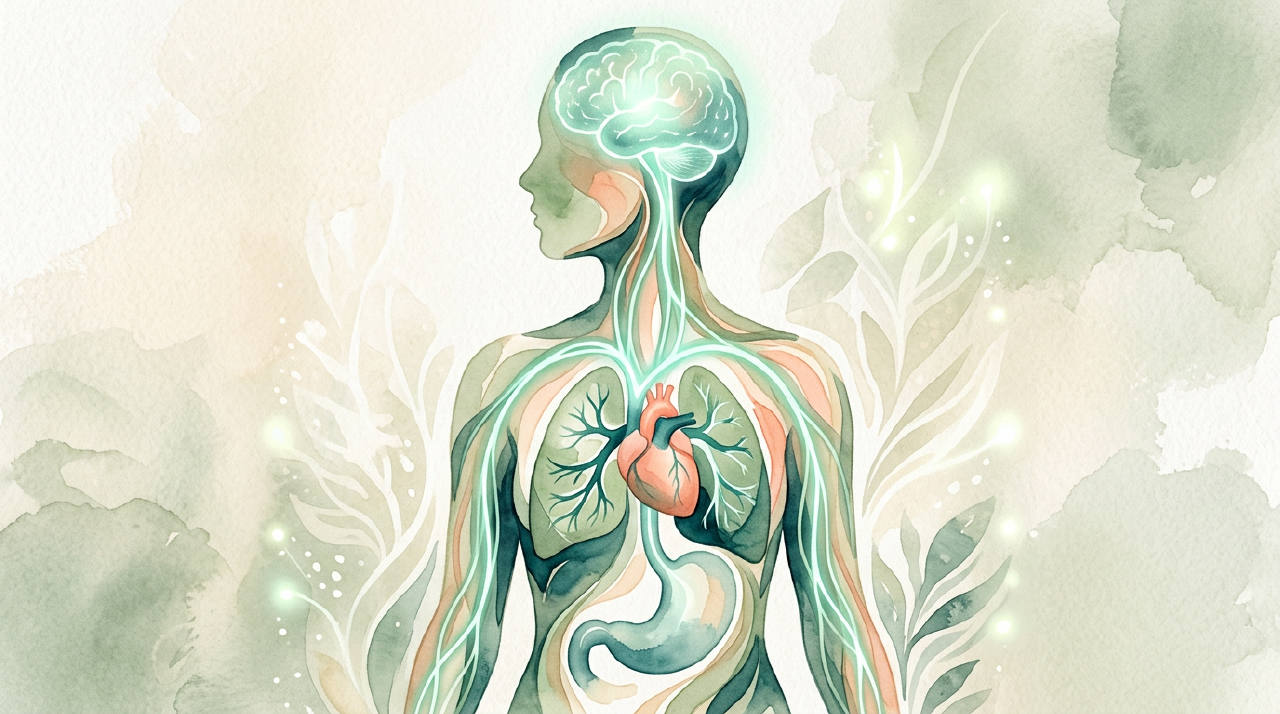
The vagus nerve is the longest cranial nerve in your body, and you can think of it as your body's primary information superhighway. Its name comes from the Latin word for "wandering," which is a perfect description for this complex nerve that travels from your brainstem down through your neck and into your chest and abdomen, touching nearly every major organ along the way. It is the primary driver of your parasympathetic nervous system, the crucial counterpart to your sympathetic nervous system.
The "Wandering" Nerve: Your Body's Superhighway
Your autonomic nervous system has two main branches that are ideally in a state of dynamic balance:
- The Sympathetic Nervous System (SNS): This is your "gas pedal." It's the "fight or flight" response that prepares you for perceived danger. It increases your heart rate, quickens your breathing, and floods your body with cortisol and adrenaline. While essential for survival, chronic activation is what leaves us feeling stressed, anxious, and burnt out.
- The Parasympathetic Nervous System (PNS): This is your "brake pedal." It's the "rest and digest" (or "feed and breed") system that helps you relax, recover, and conserve energy. It slows your heart rate, deepens your breathing, and promotes digestion and healing. The vagus nerve is the star player of this system. 🕊️
When the vagus nerve is stimulated, it sends a signal to your brain and body that you are safe. This message helps to counteract the fight-or-flight response, bringing your system back into a state of balance, or homeostasis.
Vagal Tone: Your Inner Resilience Meter
"Vagal tone" is a term used to describe the activity of the vagus nerve. Think of it as a measure of your physiological and emotional resilience. High vagal tone is associated with a strong "rest and digest" system. People with higher vagal tone tend to be able to relax more quickly after a stressful event, have better emotional regulation, and show lower rates of inflammation. They are more resilient in the face of life's challenges.
Low vagal tone, on the other hand, is linked to a state of chronic stress, anxiety, depression, digestive issues, and inflammation. The good news? Vagal tone is not fixed. Just like a muscle, you can strengthen it through consistent practice. And you don’t need any fancy equipment to do it.
The Science of Vagus Nerve Stimulation (VNS)
Vagus nerve stimulation (VNS) is any action that activates or "tones" this critical nerve pathway, encouraging your body to shift from a state of stress to a state of calm. While it might sound like a new wellness trend, the concept has deep roots in both ancient practices and modern medicine.
From Clinical Devices to Home Practices
In the medical world, VNS often refers to a surgically implanted device, similar to a pacemaker, that sends mild electrical pulses to the vagus nerve in the neck. It's an FDA-approved treatment for certain types of epilepsy and treatment-resistant depression, demonstrating the profound link between this nerve and brain function.
Fortunately, you don't need surgery to access the benefits of vagal toning. Because the vagus nerve travels through so many parts of your body—including your throat, vocal cords, and diaphragm—we can indirectly stimulate it using simple, safe, and surprisingly powerful home-based techniques. These methods work by physically activating the nerve fibers or by creating physiological states (like relaxation) that naturally increase vagal activity.
"Learning to consciously engage with your vagus nerve is like discovering an internal remote control for your own nervous system. It's a fundamental skill for navigating the pressures of the 21st century with more grace and less stress."
9 Safe and Accessible Home Vagus Nerve Stimulation Methods
Here are nine evidence-based methods you can incorporate into your daily life to gently and effectively tone your vagus nerve.
1. Cold Exposure 💧
The science: Exposing your body to cold temperatures triggers the "mammalian diving reflex," a primitive survival reflex that dramatically stimulates the vagus nerve. This reflex slows your heart rate and redirects blood flow to your vital organs to conserve oxygen.
How to do it:
- Beginner: Start by simply splashing your face with cold water for 15-30 seconds.
- Intermediate: Try ending your regular warm shower with a 30-second blast of the coldest water you can tolerate. Focus on breathing deeply and calmly through the initial shock.
- Advanced: You might progress to a full cold shower or even a cold plunge, but always listen to your body and work up gradually.
2. Deep, Slow Breathing (Diaphragmatic Breathing) 🧘
The science: Your heart and lungs are in constant communication via the vagus nerve. When you breathe in, your heart rate naturally speeds up a little. When you breathe out, it slows down. By consciously extending your exhalation, you are telling your vagus nerve to slow your heart rate and activate your parasympathetic "rest" system.
How to do it: Try "Box Breathing."
- Find a comfortable seated position.
- Breathe in through your nose for a count of 4.
- Hold your breath for a count of 4.
- Breathe out slowly through your mouth or nose for a count of 6 or 8. The extended exhale is key.
- Hold at the bottom for a count of 4.
- Repeat this cycle for 5-10 minutes.
3. Humming, Chanting, and Singing
The science: The vagus nerve is connected to your vocal cords and the muscles at the back of your throat. Creating a vibration in this area through humming, singing, chanting, or even loud laughing is a direct and easy way to stimulate it.
How to do it:
- Put on your favorite song in the car and sing your heart out.
- Try a simple "Om" chant during meditation. Feel the vibration in your chest and throat.
- Simply hum a tune to yourself while you do the dishes. The key is the physical vibration.
4. Gargling
The science: Similar to humming, gargling with water contracts the muscles in the back of the throat, activating the vagus nerve. It’s a slightly more intense way to engage these muscles.
How to do it: Take a sip of water and gargle vigorously for 20-30 seconds, or until you feel the need to swallow. You can do this while brushing your teeth in the morning and evening.
5. Probiotics and Gut Health 🌱
The science: The gut is often called the "second brain" for a reason. The vagus nerve forms the primary pathway of the gut-brain axis, a constant two-way communication system. A healthy gut microbiome, rich in diverse beneficial bacteria, appears to send signals of safety and well-being up to the brain via the vagus nerve.
How to do it:
- Incorporate fermented foods like yogurt (with live cultures), kefir, sauerkraut, kimchi, and kombucha into your diet.
- Eat a wide variety of fiber-rich plant foods, which feed your good gut bacteria.
6. Gentle Exercise and Yoga
The science: While intense exercise is a form of stress that activates the sympathetic nervous system, gentle movement like yoga, tai chi, and walking can increase vagal tone. Many yoga postures, especially gentle twists and inversions, combined with mindful breathing, are particularly effective.
How to do it:
- Commit to a 20-minute walk in nature each day.
- Find a beginner's yoga class online or in your community.
- Incorporate gentle stretching into your morning or evening routine.

7. Social Connection and Laughter
The science: The vagus nerve is a key component of what scientist Dr. Stephen Porges calls the "social engagement system." Positive social interactions—feeling safe, connected, and understood by others—activate this branch of the vagus nerve. Laughter, in particular, causes your diaphragm to contract and creates internal vibrations that stimulate the nerve. ✨
How to do it:
- Make time for a meaningful conversation with a friend or loved one.
- Watch a funny movie or stand-up comedy special.
- Prioritize quality time with people who make you feel good.
8. Massage
The science: Gentle pressure and massage in specific areas can stimulate the vagus nerve. Foot massages, in particular, can be very effective as there are pressure points in the feet that correspond to the vagus nerve (a principle of reflexology). A gentle neck and shoulder massage can also be beneficial, as the nerve passes through this area.
How to do it:
- Gently massage your own feet for a few minutes before bed.
- Use your fingers to gently massage the sides of your neck with slow, circular motions.
- Ask a partner for a shoulder rub or consider professional massage therapy.
9. Meditation and Mindfulness 💡
The science: Meditation, especially practices focused on compassion and loving-kindness, has been shown to increase positive emotions and social connection, which are linked to higher vagal tone. Mindfulness helps you become more aware of your body's signals, allowing you to respond with calming techniques before stress spirals.
How to do it:
- Try a guided loving-kindness meditation (many are available on apps like Araam).
- Practice a simple mindfulness exercise: focus on the sensation of your feet on the floor or your hands resting in your lap for one minute.
Creating Your Vagus Nerve Stimulation Routine
The most effective approach is to find a few methods that you enjoy and can realistically incorporate into your daily life. Consistency is more important than intensity.
Comparing the Methods: Which is Right for You?
| Method | Time Commitment | Difficulty | Primary Benefit | Best for... |
|---|---|---|---|---|
| Deep Breathing | 1-10 mins | Very Low | Immediate Calm | In-the-moment stress reduction |
| Cold Exposure | 30 secs - 2 mins | Low to Medium | Resilience, Energy | A morning energy boost |
| Humming/Singing | 1-5 mins | Very Low | Mood Boost | Quick, easy access anywhere |
| Gargling | 30 secs | Very Low | Simplicity | Easy habit stacking with dental care |
| Social Connection | Variable | Low | Emotional Health | Combating loneliness |
| Gentle Exercise | 20-60 mins | Low | Body-Mind Connection | Daily physical & mental health |
| Meditation | 5-20 mins | Low | Mental Clarity | Building long-term emotional regulation |
| Gut Health | N/A | Low | Foundational Health | Long-term systemic wellness |
| Massage | 5-15 mins | Low | Physical Relaxation | End-of-day unwinding |
A Sample "Vagal Toning" Daily Schedule
- Morning (7 AM): Upon waking, gargle with water for 30 seconds while brushing your teeth. End your shower with a 30-second cold rinse.
- Mid-day (1 PM): Before or after lunch, take 5 minutes for a Box Breathing exercise to reset for the afternoon.
- Commute (5 PM): Sing along to your favorite music on the drive or walk home.
- Evening (9 PM): Do a 10-minute guided loving-kindness meditation before bed. Gently massage your feet with lotion.
Tracking Your Progress: Signs of Improved Vagal Tone
How do you know if your efforts are working? While a clinical measurement of vagal tone requires measuring Heart Rate Variability (HRV), there are many subjective signs you can look for. 🌿
Subjective and Objective Measures
You might notice:
- You feel calmer and less reactive to daily stressors.
- Your mood is generally more stable and positive.
- You fall asleep more easily and your sleep quality improves.
- You have better focus and concentration.
- Your digestion feels more regular and comfortable.
- If you have a wearable device (like a fitness watch), you may see a gradual increase in your average HRV over time.
The Stress-Relaxation Balance 📊
Think of your nervous system as a seesaw. When you're stressed, the "fight or flight" side is high. Vagal toning exercises help you push down on the "rest and digest" side, bringing the seesaw back into balance.
       STRESS (Sympathetic)
             ^
             |
             | * <- (You are here: Anxious, Tense, Reactive)
             |
   ----------|----------  <-- Balanced State (Homeostasis)
             |
             |
             |   * <- (Vagal Toning pushes you here: Calm, Relaxed)
             |
             v
      RELAX (Parasympathetic)
The goal isn't to live entirely on the "relax" side—we need the "stress" side to get things done! The goal is flexibility: the ability to move smoothly between states and return to balance with ease.
Frequently Asked Questions (FAQ)
How long does it take to notice the effects of vagus nerve stimulation?
For some methods, like deep breathing, you can feel an immediate sense of calm within minutes. For building long-term vagal tone and resilience, consistency is key. Most people report feeling a noticeable shift in their baseline stress levels, mood, and sleep after practicing these techniques consistently for 2-4 weeks.
Is it possible to "overstimulate" the vagus nerve with these home methods?
It's extremely unlikely. The home methods described here are gentle, indirect forms of stimulation. The body has natural feedback loops to prevent "over-relaxation." The most common side effect from an aggressive technique (like an extreme cold plunge without acclimatization) might be a temporary lightheadedness. It's always important to listen to your body, start slowly, and never push into pain or significant discomfort.
Are there any risks or people who should be cautious?
These nine methods are safe for the vast majority of people. However, if you have a pre-existing medical condition, especially related to your heart, blood pressure, or a psychiatric condition, it's always wise to speak with your healthcare provider before starting any new wellness routine. For example, someone with Raynaud's phenomenon should be cautious with cold exposure. The key is gentle, gradual introduction.
When to See a Professional
These techniques are powerful tools for managing everyday stress and enhancing well-being, but they are not a substitute for professional medical or psychological care. If you are experiencing overwhelming anxiety, persistent low mood, trauma, or other mental health challenges that interfere with your daily life, it is essential to seek help from a qualified therapist, psychologist, or medical doctor.
And for daily support in your pocket, Araam is here to help you build these practices into your life. Explore our library of guided meditations, breathing exercises, and mindfulness tools designed to help you connect with your body's innate capacity for calm. 🌱 Your journey to a more balanced nervous system starts with a single, gentle breath.