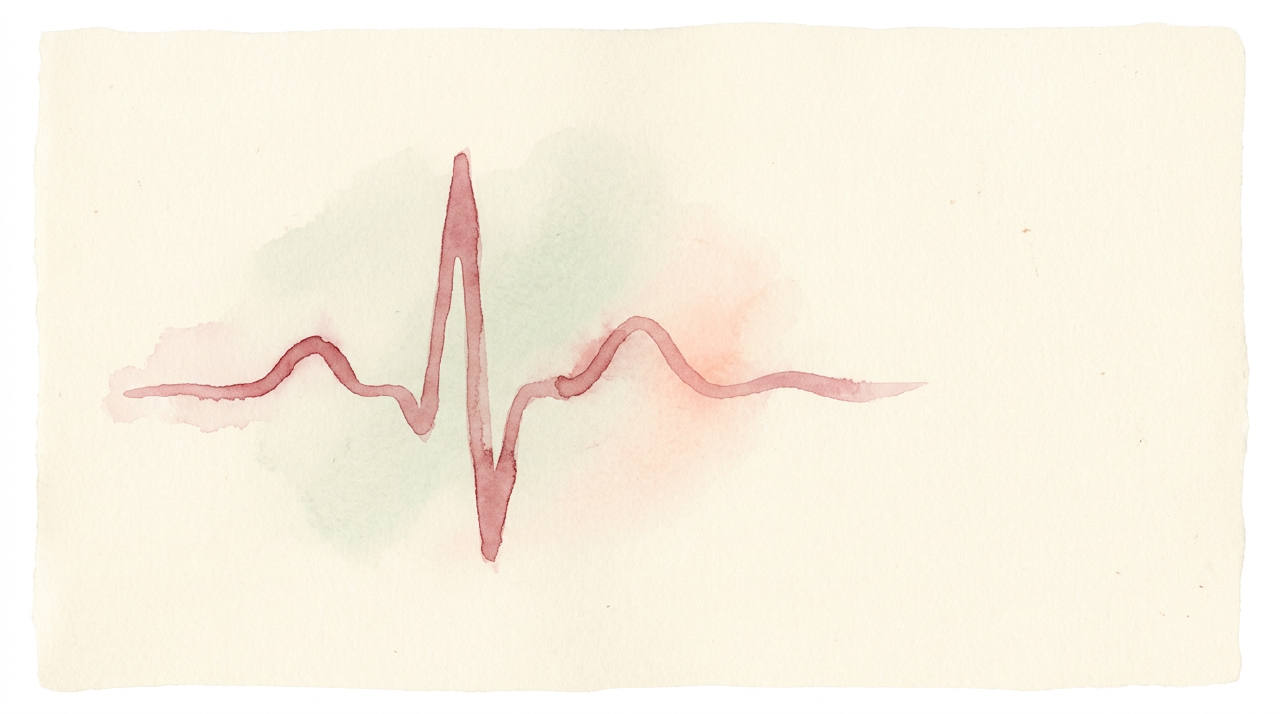
HRV Explained: Why It's the Single Best Nervous-System Resilience Metric
Ever feel like you're doing all the "right" things—meditating, eating well, trying to sleep—but still feel wired, tired, or just plain off? It's a common frustration in our always-on world. We often f
Ever feel like you're doing all the "right" things—meditating, eating well, trying to sleep—but still feel wired, tired, or just plain off? It's a common frustration in our always-on world. We often focus on what our conscious mind is thinking and feeling, but we miss the subtle, powerful signals our body is sending. What if there was a way to listen in on the quiet conversation happening inside you, a conversation that reveals exactly how much stress you're under and how well you're recovering from it? There is. It's called Heart Rate Variability (HRV), and it might just be the single most important number you're not tracking for your mental and physical resilience.
[[IMAGE:fig1|An abstract, beautiful illustration of a human silhouette with a softly glowing heart. Wavy lines in calming colors (blues, greens) emanate from the heart, representing the variable rhythm of HRV.|A stylized human form with a glowing heart showing calm, variable waves of energy representing HRV.]]
What Exactly is Heart Rate Variability (HRV)?
Heart Rate Variability (HRV) is the measurement of the variation in time between each of your consecutive heartbeats. Contrary to what many believe, a healthy heart doesn't beat like a perfect metronome. In fact, a slight, constant irregularity is a sign of a healthy, resilient, and adaptable nervous system. This variation is controlled by your autonomic nervous system (ANS), and the amount of variability gives us a direct, non-invasive look at how well your body is handling stress and balancing its internal resources. A higher HRV generally indicates a state of rest, recovery, and good health, while a lower HRV can be a sign of stress, fatigue, or even impending illness.
Think of it like the steering in a car. A car with responsive steering (high HRV) can make tiny, constant adjustments to stay perfectly in its lane, easily navigating turns and bumps in the road. A car with stiff, unresponsive steering (low HRV) struggles to adapt, making jerky movements and having a much harder time staying on course when challenges arise. Your HRV is a measure of your body's "responsiveness" to the road of life. 🕊️
The Science Behind HRV: Your Autonomic Nervous System at a Glance
To truly appreciate HRV, we need to understand the command center it reports on: the Autonomic Nervous System (ANS). This is the "automatic" part of your nervous system that runs all the background processes you don't consciously think about, like breathing, digestion, and, of course, your heart rate. The ANS has two main branches that are in a constant, delicate dance.
The "Gas Pedal": Your Sympathetic Nervous System
The sympathetic nervous system is your "fight-or-flight" response. When you perceive a threat—whether it's a real danger, a stressful work deadline, or an intense argument—this system kicks into high gear. It releases stress hormones like adrenaline and cortisol, increases your heart rate, and diverts energy to your muscles. This is your body's gas pedal, designed to help you react and survive acute challenges. When this system is dominant, the rhythm of your heart becomes more regular and metronome-like, causing your HRV to drop.
The "Brake Pedal": Your Parasympathetic Nervous System
The parasympathetic nervous system is your "rest-and-digest" (or "feed-and-breed") system. It's the yin to the sympathetic yang. Primarily governed by the vagus nerve, this system is responsible for slowing your heart rate, promoting digestion, and facilitating recovery and repair. It's your body's brake pedal, allowing you to calm down, conserve energy, and heal. When this system is dominant, it actively modulates your heart rate in tune with your breath, creating more variation between heartbeats and thus, a higher HRV.
HRV, therefore, is the tangible result of this push-and-pull. A high HRV shows that your parasympathetic "brake" is effectively engaged, signaling that you are in a state of rest and recovery. A low HRV suggests your sympathetic "gas pedal" is stuck down, indicating a state of stress or arousal. ✨
Why a Higher HRV is Generally Better for Resilience
A high HRV score is a powerful indicator of nervous system resilience because it signifies adaptability. It means your body is primed and ready to shift gears effectively between stress and rest. Someone with a high baseline HRV can handle a stressful event—like giving a major presentation or completing a tough workout—and then quickly return to a calm, relaxed state afterward. Their parasympathetic system is strong and efficient.
Conversely, someone with a chronically low HRV is living with their foot on the gas. Their body is in a persistent state of stress, making it difficult to downshift and recover. This can lead to feelings of anxiety, burnout, poor sleep, and a weakened immune system. They might find that small stressors feel overwhelming, and they take much longer to bounce back from challenging experiences.
[[IMAGE:fig2|A split-panel illustration. On the left, a person looks stressed with a jagged, low-variability heart rhythm line and a dark, stormy background. On the right, the same person is calm and meditating, with a smooth, high-variability heart rhythm line and a bright, sunny background.|A split image showing a stressed person with low HRV versus a calm person with high HRV.]]
Your HRV isn't just a reaction to your day; it's a predictor of your capacity for the day ahead. Waking up with a higher-than-usual HRV might mean you're well-rested and have the resources to tackle a challenging workout or a demanding project. Waking up with a low HRV is your body's whisper to take it easy 🌱, prioritize rest, and perhaps postpone that high-intensity training session.
How to Measure Your HRV Accurately
The most common and accessible way to measure your HRV is by using a wearable device, such as a smartwatch, fitness ring, or a dedicated heart rate monitor chest strap. These devices contain optical sensors or electrocardiogram (ECG) technology to capture the precise timing between your heartbeats, typically while you sleep or during a specific "moment" reading.
Choosing Your Tool: A Comparison
Not all devices are created equal. They differ in accuracy, comfort, and how they collect data. Here's a quick breakdown:
| Device Type | Pros | Cons | Best For |
|---|---|---|---|
| Chest Straps | Gold-standard accuracy (ECG-based); provides real-time data for workouts. | Can be uncomfortable for all-day or sleep wear; requires a separate app/device to view data. | Athletes, biohackers, and anyone wanting the most precise data, especially during exercise. |
| Smartwatches/Fitness Trackers | Convenient (worn on the wrist); multi-functional (notifications, activity tracking); often measures automatically during sleep. | Accuracy can be affected by fit and movement; optical sensors can be less precise than ECG. | Everyday users looking for general wellness trends and convenient sleep tracking. |
| Smart Rings | Extremely comfortable for 24/7 wear, especially during sleep; excellent for overnight readings. | Limited functionality beyond health tracking; higher price point for the form factor. | Individuals prioritizing sleep data, comfort, and a less obtrusive form factor. |
Best Practices for Consistent Measurement
To get meaningful data, consistency is more important than anything else. Your goal is to establish a personal baseline and then monitor trends.
- Measure at the Same Time: The best time is typically first thing in the morning, immediately upon waking, while you're still lying in bed. This provides a consistent "resting" value before the day's stressors begin. Many devices automate this by taking an average reading during your sleep.
- Be Still and Calm: If you're taking a manual reading, sit or lie down comfortably. Breathe naturally and avoid talking or moving for the duration of the measurement (usually 1-5 minutes).
- Stay Consistent with Conditions: Don't measure after drinking coffee, checking your email, or having a stressful thought. Create a simple, repeatable morning ritual.
- Focus on the Trend, Not the Daily Number: A single reading isn't very useful. Look at your 7-day or 30-day average. Is it trending up, down, or staying stable? That's where the real insight lies. 📊
Interpreting Your HRV Score: What the Numbers Mean
The first and most important rule of HRV is: do not compare your absolute HRV number to someone else's. HRV is highly individual and influenced by age, genetics, gender, fitness level, and more. A "good" HRV for a 25-year-old elite athlete will be vastly different from a "good" HRV for a 55-year-old office worker. Your goal is to understand your baseline and the trends that emerge from it.
"Your HRV is not a score to be judged, but a signal to be heard. It's your body's way of telling you what it needs. The wisest thing you can do is learn to listen."
To visualize this, let's look at how HRV might fluctuate over two very different days for the same person. The value itself is less important than the pattern.
          A Tale of Two Days: Your HRV in Action

          |           Day 1: Restful & Resilient
     100ms+-------------------------------------------------* (Deep Sleep)
          |                                               *
          |                                              *
      80ms+---* (Woke up Rested)                          *
          |    *                                  *------*
          |     *        * (Light Walk)          * (Meditation)
      60ms+------*------*-----------------------*
          |       *    *
          |        *  *
      40ms+---------**-------* (Stressful Meeting)
          |                  *
          |                   *
      20ms+--------------------*
          +--------------------------------------------------> Time
            Morning   Midday    Afternoon    Evening


          |           Day 2: Stressed & Fatigued
     100ms+-------------------------------------------------
          |
          |
      80ms+-------------------------------------------------
          |
          |
      60ms+---* (Woke up Tired)
          |    *
          |     *
      40ms+------*---------------* (Argument)----* (Late Coffee)
          |       *             *               *
          |        *--* (Workout) *             *   * (Poor Sleep)
      20ms+-----------*-----------*-------------*--*----
          +--------------------------------------------------> Time
            Morning   Midday    Afternoon    Evening
As you can see, on Day 1, the person's HRV starts high, takes a temporary dip during a stressful event, but quickly recovers and ends high with restorative sleep. On Day 2, the person starts with a lower HRV, and it's suppressed throughout the day by multiple stressors, leading to poor recovery overnight. This pattern, over time, is the key insight.
- A Rising Trend: Suggests your lifestyle choices are promoting recovery. You're adapting well to your training, managing stress effectively, and getting good sleep.
- A Stable Trend: Indicates you've found a good balance between stress and recovery.
- A Falling Trend: This is a warning sign. 💡 It could mean you're overtraining, accumulating mental stress, getting sick, or not sleeping well. It's your body's signal to prioritize recovery.
Practical Ways to Improve Your Heart Rate Variability 🌱
The good news is that you have significant influence over your HRV. By supporting your parasympathetic nervous system, you can actively train your body to be more resilient. Here are some evidence-based practices:
- 💧 Consistent Hydration: Dehydration is a physiological stressor that can lower your HRV. Start your day with a large glass of water.
- 🧘 Mindful Breathing: Slow, diaphragmatic breathing (also known as "belly breathing") is the fastest way to manually activate your vagus nerve and boost your HRV in the moment. Try the 4-7-8 technique: inhale for 4 seconds, hold for 7, and exhale slowly for 8.
- 🌿 Quality Sleep: Sleep is when your body does most of its repair work. A consistent sleep schedule, a dark, cool room, and avoiding screens before bed are crucial for a high overnight HRV.
- 🏃 Smart Exercise: Both high-intensity and low-intensity exercise can improve HRV in the long run. The key is balance. Mix in cardio and strength training with restorative activities like yoga and walking. Avoid overtraining by listening to your body's signals (like a low morning HRV).
- 🍽️ Nourishing Diet: A diet rich in whole foods, omega-3 fatty acids (found in fish and flaxseeds), and leafy greens supports your nervous system. Avoid processed foods and excessive sugar, which can cause inflammation and stress the body.
- 🥶 Cold Exposure: Short bursts of cold, like a cold shower or splashing your face with cold water, can stimulate the vagus nerve and give your parasympathetic system a workout, improving its tone over time.
- 🙏 Gratitude and Connection: Positive social interactions and practicing gratitude have been shown to reduce stress and increase parasympathetic activity, leading to a higher HRV.
Frequently Asked Questions about HRV
What is a "good" HRV number?
There is no universal "good" number. HRV is extremely personal. A healthy range for adults can be anywhere from under 20ms to over 100ms. The most important thing is to establish your personal baseline over a few weeks and then track the trends. An upward trend from your baseline is the goal.
Can my HRV be too high?
For the vast majority of people, a higher HRV is always better. It reflects a state of excellent health and fitness. In very rare cases, extremely high and erratic HRV could be related to certain heart arrhythmias (like atrial fibrillation), but most modern wearables have algorithms to detect and flag these irregularities separately. For general wellness tracking, focus on improving your score.
Why did my HRV drop significantly after a hard workout or a poor night's sleep?
This is completely normal and expected! A hard workout is a major physical stressor, and your sympathetic "fight-or-flight" system is dominant during and immediately after. This naturally suppresses HRV. Similarly, alcohol consumption or poor sleep prevents your body from entering a deep, restorative state, keeping the parasympathetic system from fully taking over. The key metric of fitness and resilience is how quickly your HRV rebounds back to or above your baseline in the following 24-48 hours.
When to See a Professional
Heart Rate Variability is an incredible tool for understanding your body's resilience and guiding your daily wellness choices. However, it is not a diagnostic tool. If you have a persistently low or downward-trending HRV that is accompanied by symptoms like dizziness, chest pain, shortness of breath, or overwhelming fatigue, it's important to consult with a doctor or qualified medical professional. They can help you rule out any underlying health conditions.
Ready to start building a more resilient nervous system? The journey begins with listening to your body. Araam can help you integrate these practices into your daily life, offering guided meditations, breathing exercises, and mindfulness tools to help you manage stress and enhance your recovery. Let's start the conversation with your body, together.