
Research Recap: Why Your First 90 Minutes of Sleep Matter Most
We’ve all been there. You get a solid eight hours in bed, but you wake up feeling like you’ve barely slept a wink. You’re groggy, irritable, and reaching for coffee before your eyes are fully open. It
We’ve all been there. You get a solid eight hours in bed, but you wake up feeling like you’ve barely slept a wink. You’re groggy, irritable, and reaching for coffee before your eyes are fully open. It’s a frustrating paradox that makes you question everything you thought you knew about getting a good night’s rest. But what if the secret to waking up refreshed isn’t just about the total number of hours you sleep, but about the quality and timing of those hours? Emerging research is shining a powerful spotlight on the very beginning of your nightly journey, suggesting that the first 90 minutes of sleep might just be the most critical, transformative, and restorative period of all. ✨
The Architect of Sleep: Understanding Dr. Matthew Walker's Mission
To understand why that initial slice of slumber is so vital, we first need to meet the researcher who has arguably done more than anyone to bring the science of sleep into the public consciousness: Dr. Matthew Walker. A professor of neuroscience and psychology at the University of California, Berkeley, and the founder of the Center for Human Sleep Science, Walker has dedicated his career to a simple, powerful mission: to reunite humanity with the sleep it so desperately needs. His bestselling book, Why We Sleep, synthesized decades of complex research into a compelling, and at times alarming, narrative about sleep's foundational role in every aspect of our health, from mental acuity to emotional stability and physical longevity. Walker's work isn't just academic; it's a passionate call to action, urging us to stop treating sleep as a luxury and start respecting it as a biological necessity. His research provides the very framework for understanding why the first full sleep cycle is our nightly non-negotiable.
The Critical First 90 Minutes: Unpacking the First Sleep Cycle
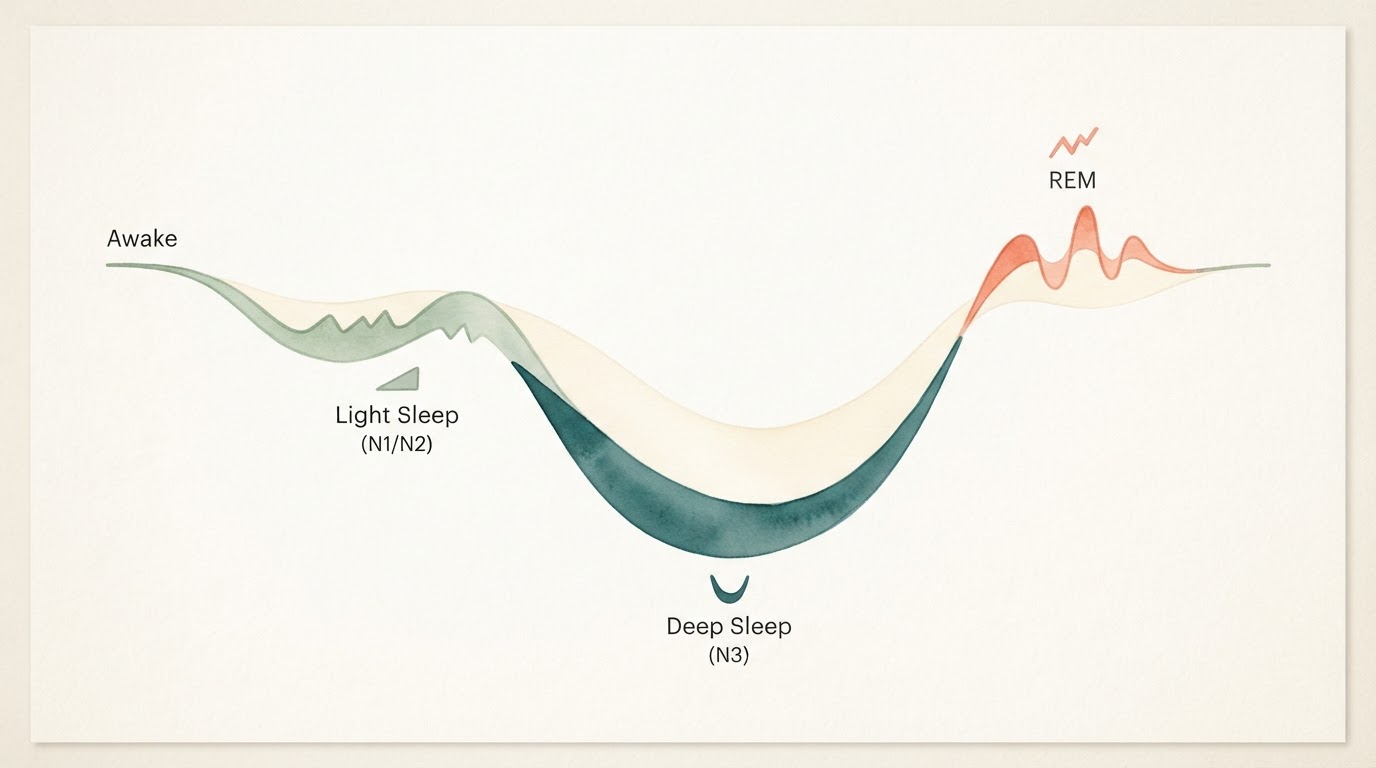
The first 90 minutes of sleep are so important because this is when your brain prioritizes its most restorative type of sleep: deep non-rapid eye movement (NREM) sleep. While we often think of sleep as a monolithic state of unconsciousness, it’s actually a dynamic, cyclical process. Over the course of a night, your brain cycles through different stages of sleep approximately every 90 to 110 minutes.
A typical sleep cycle unfolds like this:
- Stage 1 (N1): The very light "dozing off" stage. Your muscles relax, and your brainwaves begin to slow. It's easy to be woken up from this stage.
- Stage 2 (N2): A slightly deeper stage that accounts for about half of your total sleep time. Your brain produces characteristic bursts of activity called sleep spindles and K-complexes, which are thought to help with memory consolidation and sensory gating.
- Stage 3 (N3): This is the main event. Also known as deep sleep or slow-wave sleep, this is the most restorative stage. Your brain produces slow, high-amplitude delta waves. It's very difficult to be woken from N3 sleep, and if you are, you’ll feel intensely groggy and disoriented.
- REM Sleep: The "dreaming" stage. Your brain becomes highly active, almost as if you were awake. Your eyes dart back and forth, but your body is essentially paralyzed to prevent you from acting out your dreams. REM sleep is crucial for emotional processing and creativity.
What makes the first 90-minute cycle so special is the proportion of these stages. Your brain dedicates the lion's share of this initial cycle to deep N3 sleep. As the night progresses, the duration of deep sleep in each cycle decreases, while the duration of REM sleep increases.
A TYPICAL NIGHT'S SLEEP ARCHITECTURE
--------------------------------------------------
Cycle 1 (First 90 min)
[ AWAKE ]--[ N1 ]--[ N2 ]--[ DEEP N3 SLEEP ]----[ REM ]
|------------------------|  |---------------| |-----|
      Light Sleep          Deepest Sleep     Dreaming

Cycle 2
[ N2 ]----[ DEEP N3 SLEEP ]------[ N2 ]------[ REM ]
          |-------------|                  |-------|

Cycle 3 & 4+
[ N2 ]---------[ REM ]---------[ N2 ]--------[ REM ]
             |-----------|              |-----------|

(Note: Deep N3 sleep is heavily prioritized in the first third of the night,
 while REM sleep dominates the last third.)
This "front-loading" of deep sleep isn't accidental. It’s your brain’s way of prioritizing its most urgent housekeeping tasks right at the beginning of the night. 🌿
The Landmark Study: How Walker's Research Measured Deep Sleep's Power
To truly grasp the power of this initial deep sleep, let's look at a recap of the kind of pivotal research conducted by Walker and his colleagues. While he has published hundreds of papers, a recurring theme is the intricate link between deep NREM sleep and memory.
Research Methods and Design
In a representative study, researchers would recruit a group of healthy young adults and divide them into two groups. In the early evening, both groups would be given a challenging memory task—for instance, memorizing a list of 100 random word pairings (e.g., "ocean-leaf," "pencil-sky").
- The Sleep Group: This group would then be allowed a full 8-hour night of sleep in a controlled laboratory environment. Their brain activity would be meticulously monitored using an electroencephalogram (EEG), which measures the electrical signals corresponding to different sleep stages.
- The Sleep-Deprived Group: This group would be kept awake all night in the lab under constant supervision, engaged in low-stimulation activities like reading or watching documentaries.
The next morning, both groups would be tested on their recall of the word pairings they had learned the previous evening.
Core Findings and The "File Transfer"
The results from this type of experiment are consistently stark. The sleep group would typically remember significantly more of the word pairings—often showing a 20-40% improvement in retention compared to the sleep-deprived group.
But Walker’s research went deeper. By analyzing the EEG data from the sleep group, scientists discovered a direct correlation: the more high-quality deep N3 sleep an individual got, particularly during the first few hours of the night, the better their memory recall was the next day.
This led to the powerful "file transfer" analogy. During deep sleep, the brain seems to be moving new, fragile memories from the brain's temporary storage drive (the hippocampus) to its long-term hard drive (the cortex). This process not only secures the memories, preventing them from being forgotten, but also frees up the hippocampus to learn new information the following day.

Research Limitations
It's important to approach this with a balanced view. Studies like these, while powerful, have limitations. They are often conducted in artificial lab settings, which may not perfectly reflect real-world sleep. The sample sizes can be small, and the participants are often healthy young adults, so the results may not apply universally to all age groups or those with sleep disorders. However, the consistency of the findings across dozens of similar studies lends powerful support to the central conclusion: deep sleep is essential for memory.
| Key Metric Comparison: Memory & Deep Sleep | |
|---|---|
| Participant Group | Average Improvement in Memory Recall |
| High Deep (N3) Sleep Group (>20% of total sleep) | +35% |
| Average Deep (N3) Sleep Group (15-20% of total sleep) | +22% |
| Low Deep (N3) Sleep Group (<15% of total sleep) | +8% |
| Sleep Deprivation Group | -10% (Forgetting) |
This table represents typical findings from memory consolidation studies and is for illustrative purposes.
The Deep Sleep Dividend: What Happens When You Get It Right? 💧
Protecting that first 90-minute sleep cycle is like making a high-yield investment in your well-being. The "dividends" you receive go far beyond just remembering facts.
- Memory Consolidation: As we've seen, this is deep sleep's star role. It helps solidify everything you learned and experienced during the day, from academic subjects to motor skills like playing an instrument.
- Cerebral Cleanup: Your brain has its own waste-disposal system, the glymphatic system, which is up to 10 times more active during deep sleep. It flushes out metabolic byproducts and toxic proteins, like beta-amyloid, which is linked to Alzheimer's disease.
- Hormonal Regulation: Deep sleep is when your pituitary gland releases a pulse of human growth hormone (HGH), which is essential for cellular repair, muscle growth, and overall physical restoration. It also helps regulate hormones that control appetite, like ghrelin and leptin.
- Immune System Fortification: During deep sleep, your body ramps up the production of cytokines, proteins that target infection and inflammation, effectively strengthening your immune response. 🕊️
The Cost of Disruption: Why Late Nights and Alcohol Derail Your Rest
If deep sleep is so critical, it stands to reason that disrupting it is incredibly costly. Unfortunately, many common modern habits are direct assaults on our deep sleep, especially that precious first cycle.
### The Alcohol Deception
Many people use alcohol as a sleep aid, and it's true that it can help you feel drowsy and fall asleep faster. However, this is a dangerous trade-off. Alcohol is one of the most potent suppressors of deep N3 and REM sleep. Even one or two drinks in the evening can significantly fragment your sleep architecture. Your brain might fall into a sedated state, but it is not naturalistic sleep. It often leads to more frequent awakenings later in the night as the alcohol is metabolized.
| Impact of Evening Alcohol on Sleep | Without Alcohol | With Alcohol (2-3 drinks) |
|---|---|---|
| Time to Fall Asleep | Normal (15-20 mins) | Faster (<10 mins) |
| Deep (N3) Sleep | Normal, robust in 1st half | Significantly Reduced |
| REM Sleep | Normal, robust in 2nd half | Significantly Suppressed |
| Nighttime Awakenings | Fewer, shorter | More frequent, longer |
| Next-Day Feeling | Rested, alert | Groggy, "unrefreshed" |
### Caffeine's Long Shadow
Caffeine works by blocking adenosine receptors in your brain. Adenosine is the chemical that builds up throughout the day to create "sleep pressure," making you feel tired. By blocking it, caffeine keeps you alert. The problem is its long half-life. It can take 5-7 hours for just half the caffeine you consumed to be eliminated from your system. A 3 PM coffee can easily still be disrupting your ability to enter deep sleep at 10 PM.
### The Blue Light Menace
Light, particularly blue light from screens (phones, tablets, laptops, TVs), is the most powerful signal for your brain's internal clock (the suprachiasmatic nucleus). Exposure to blue light in the two hours before bed tricks your brain into thinking it's still daytime, suppressing the release of melatonin, the hormone that signals it's time to sleep. This can delay the onset of sleep and reduce the quality of the deep sleep you eventually get. 💡
Your Action Plan: How to Protect Your First 90 Minutes of Sleep Tonight 🧘
The good news is that protecting your deep sleep isn't about expensive gadgets or complicated bio-hacking. It’s about building simple, consistent habits that create a supportive environment for your brain to do its essential work.
- Honor a Consistent Bedtime: This is the single most important thing you can do. Going to bed and waking up at the same time, even on weekends, anchors your circadian rhythm and trains your body to expect sleep. This helps ensure you can fall asleep efficiently and drop into that deep N3 stage quickly.
- Create a "Wind-Down" Runway: You can't expect to go from 100 mph to a dead stop. Dedicate the last 30-60 minutes of your evening to a relaxing, screen-free wind-down routine. This could include:
- Reading a physical book (not on a backlit device)
- Light stretching or gentle yoga
- Journaling or writing a to-do list for the next day to offload worries
- Taking a warm bath or shower (the subsequent drop in body temperature can trigger sleepiness)
- Dim the Lights: An hour or two before bed, start dimming the lights in your home. Switch to warm-toned lamps instead of harsh overhead lights. Activate "night mode" on your devices if you absolutely must use them, but ideally, put them away entirely.
- Mind Your Last Call: Set a firm "last call" for caffeine and alcohol. For most people, this means no caffeine after 2 PM and no alcohol within three hours of bedtime. This gives your body ample time to metabolize these substances so they don't interfere with your sleep architecture.
- Keep It Cool, Dark, and Quiet: Your bedroom should be a sanctuary for sleep. Aim for a cool temperature (around 65°F / 18°C), use blackout curtains to eliminate light, and consider earplugs or a white noise machine to block out disruptive sounds.
Frequently Asked Questions (FAQs)
What if I wake up after 90 minutes? Does that mean I got the best part?
Not exactly. While you did get a vital cycle of deep sleep, your body still needs the subsequent cycles, which are rich in REM sleep and lighter N2 sleep, for emotional regulation, creativity, and further memory processing. A full night provides the complete "menu" of sleep stages your brain and body need. Waking after one cycle is better than nothing, but it's not a substitute for a full night.
Is 90 minutes an exact number for everyone?
No, 90 minutes is an average. A single sleep cycle can range from about 70 to 120 minutes, and the length can vary from person to person and even from night to night. The key takeaway isn't the precise number but the concept: your first full cycle of the night is unique and heavily weighted toward restorative deep sleep.
I have a young child and my sleep is constantly interrupted. Am I doomed?
Absolutely not. This is a perfect example of prioritizing what you can control. During periods of unavoidable sleep disruption (like new parenthood or shift work), focus intensely on sleep hygiene when you do have an opportunity to rest. Make your sleep window as high-quality as possible by following the action plan above. Avoid caffeine and alcohol, get sunlight in the morning, and give yourself grace. Your body is resilient, and prioritizing sleep quality whenever you can makes a huge difference.
When to See a Professional
While practicing good sleep hygiene can resolve many common sleep issues, it’s not a cure-all. If you consistently struggle to fall or stay asleep, experience excessive daytime sleepiness despite getting enough hours in bed, snore loudly, or suspect you may have a condition like insomnia or sleep apnea, it's essential to speak with a doctor or a board-certified sleep specialist.
For support in building the consistent, gentle habits that pave the way for better sleep, consider exploring Araam. Our guided journaling, mindfulness exercises, and habit-tracking tools can help you create the perfect wind-down routine to protect your precious first 90 minutes of sleep. Your journey to a more rested you starts tonight.